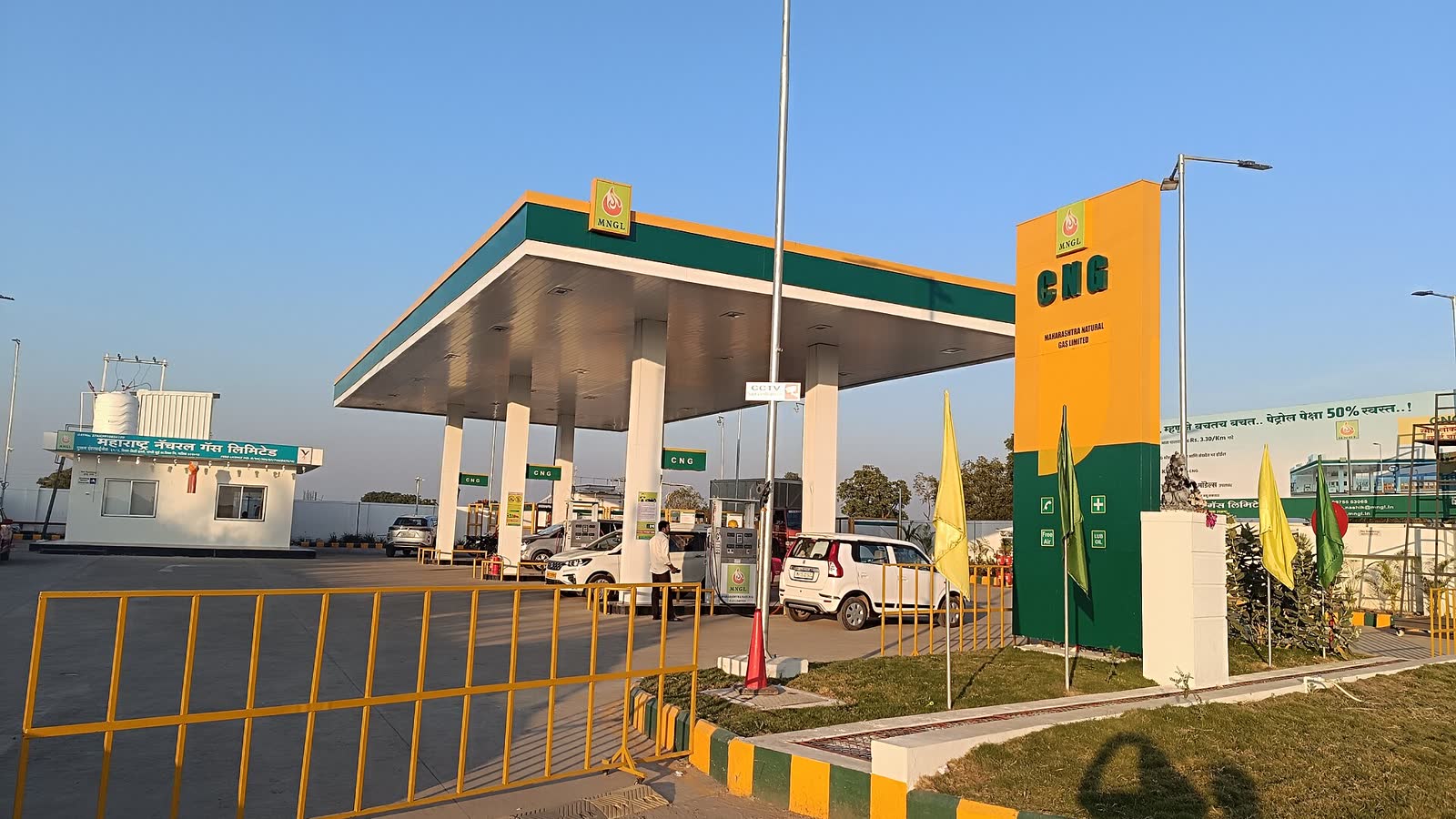
Petrol vs CNG is a mileage-and-usage decision, not just a cheaper-fuel decision. This guide shows Indian drivers how to compare fuel cost per km, calculate the break-even distance for a CNG premium, and check the practical trade-offs before buying a factory-fitted CNG car or considering a retrofit.
The dated example below uses Delhi fuel rates as of 06 Oct 2026 and a compact 1.0-litre manual car so the calculation is easy to reproduce. Replace those rates and the working mileage with your city and your measured figures, then verify the result with the FuelPrice fuel-cost calculator.
Key takeaways
- CNG can reduce fuel cost per kilometre, but the saving depends on the local price, real mileage and how far the car travels each month.
- In the Delhi illustration, a rounded working figure gives petrol at about ₹5.11 per km and CNG at about ₹3.22 per km; these are calculated examples, not a promise of actual mileage.
- A CNG purchase premium only pays back after enough kilometres. Low-use owners may wait much longer than high-use commuters.
- CNG changes the ownership experience through station access, boot packaging, performance, queues and the need for an approved fuel system.
- Factory-fitted CNG and an aftermarket conversion are different decisions. Approval, installation quality, RC endorsement and cylinder checks matter.
Petrol vs CNG: what the comparison really measures
Petrol is priced per litre, while CNG is sold per kilogram. A direct comparison of the pump prices alone is therefore misleading. The useful measure is fuel price divided by the distance the vehicle covers on one litre or one kilogram.
For any fuel, use this formula: running cost per km = fuel price ÷ actual efficiency. To compare a trip, multiply the result by the distance. For a monthly budget, multiply it by the kilometres driven in that month. This approach also makes it clear why a CNG car is not automatically cheaper overall: the fuel bill is only one part of ownership.
Worked Delhi example: fuel cost for 1,000 km
For a transparent illustration, the table uses Delhi petrol at ₹102.12 per litre, recorded by the Petroleum Planning & Analysis Cell for an IOCL outlet on 06 Oct 2026 and cross-checked with India Today. Delhi CNG is ₹86.98 per kg according to Indraprastha Gas Limited's price schedule effective 29 Aug 2026; India Today's Delhi CNG tracker showed the same rate on 06 Oct 2026.
The official WagonR brochure available from Maruti lists 24.35 km/l for the 1.0-litre petrol manual and 33.47 km/kg for the 1.0-litre CNG manual. Autocar India also lists those certified figures. For a more cautious budget, the worked calculation uses rounded independent reported figures of 20 km/l for petrol and 27 km/kg for CNG; Autocar's mileage data reports 20.07 and 26.84, while CarWale reports 20 and 27 for the comparable manual variants.
| Powertrain | Delhi rate, as of 06 Oct 2026 | Certified efficiency | Working efficiency | Calculated cost per 100 km |
|---|---|---|---|---|
| Petrol 1.0 manual | ₹102.12/litre | 24.35 km/l | 20 km/l | ₹510.60 |
| Factory CNG 1.0 manual | ₹86.98/kg | 33.47 km/kg | 27 km/kg | ₹322.15 |
Using the working figures, the petrol calculation is ₹102.12 ÷ 20 = ₹5.106 per km. CNG is ₹86.98 ÷ 27 = ₹3.2215 per km. At 1,000 km a month, that becomes about ₹5,106 for petrol versus ₹3,221.50 for CNG, a difference of ₹1,884.50 before maintenance, insurance, financing, parking or the cost of the vehicle itself.
This is a planning example, not a city-wide promise. Traffic, air-conditioning, tyre pressure, load, driving style, fuel quality and the way a CNG dispenser fills the cylinder can move the result. Check your own receipts over several refills and update the calculation with the current price on the live fuel prices page. For city-level comparisons, use the city-wise CNG price pages.
Break-even: when does the CNG premium pay back?
Break-even means the distance at which fuel savings equal the extra amount paid for the CNG version. The formula is:
Break-even kilometres = CNG purchase premium ÷ (petrol cost per km − CNG cost per km)
Autocar India reported a ₹95,000 premium for the equivalent WagonR CNG version in its August 2026 real-world test. CarWale's variant prices also showed a ₹95,000 gap between the comparable petrol and CNG versions when its page was checked for this guide. Using the Delhi example's ₹1.8845 per-km difference, the fuel-only break-even point is about 50,400 km, or roughly 4.2 years at 1,000 km a month.
- At 500 km a month, the same fuel-only calculation takes about 8.4 years.
- At 1,000 km a month, it takes about 4.2 years.
- At 2,000 km a month, it takes about 2.1 years.
The result changes if your on-road price gap, fuel prices or mileage changes. Treat the premium as the amount on your actual comparable quotation, not as a permanent market price. Also remember that a payback calculation does not include resale value, insurance differences, service costs, loan interest or the value of your time spent finding a CNG station.
What changes beyond the fuel bill?
Station access becomes part of the route
CNG works best when a station is close to home, work or the regular highway route. A low per-kilometre figure loses practical value if a driver has to detour, queue frequently or switch to petrol on longer journeys. Before comparing variants, check the stations you can use at the times you travel. The FuelPrice road-trip planner can help you estimate the route distance and fuel requirement, but station availability still needs a local check.
Performance and packaging are different
A factory CNG car normally carries a cylinder and related hardware. In the WagonR example, the official brochure lists lower output in CNG mode than in petrol mode, and Autocar's test describes the CNG model as roughly 95–100 kg heavier than the comparable petrol car. The CNG cylinder also occupies boot space; the precise effect depends on the vehicle's layout and whether the manufacturer provides a usable parcel tray or revised luggage arrangement.
- Compare the same transmission and broadly similar equipment; a cheaper CNG variant may not be equivalent to the petrol variant.
- Take a test drive with air-conditioning and the normal passenger load if hill roads, flyovers or highway overtaking are part of the use case.
- Open the boot and check whether the cylinder position works for luggage, a spare wheel and family travel.
- Ask for the warranty and service schedule that applies to the fuel system, not only the engine.
Fuel-price volatility matters
Petrol and CNG do not move in lockstep, and CNG rates can differ sharply between gas areas. A calculation made with one city's price should not be presented as an India-wide saving. Record the rate, unit and date whenever you compare the options, and update the maths if your regular route crosses into another pricing area.
Factory-fitted CNG versus an aftermarket conversion
A factory-fitted system is designed, tested and sold as part of that vehicle variant. An aftermarket conversion modifies an existing vehicle and adds a separate approval and documentation layer. Neither label removes the need to check the exact kit, installer and vehicle compatibility.
MoRTH's 11 Aug 2022 notification says type approval for vehicles retrofitted or modified for CNG operation is tied to specified vehicle makes and engine-capacity ranges, and that CNG vehicles and kit components must meet the applicable safety requirements. The older AIS-024 guidance also requires an installation certificate and RC endorsement for an alteration. These are compliance checks, not optional paperwork.
PNGRB's consumer guidance says not to refill a vehicle without a valid hydrotested CNG cylinder. It also says passengers should get out before refuelling, the ignition should be off and the handbrake should be applied. Use these as minimum station-safety checks and keep the cylinder-test record with the vehicle documents.
Which option fits which driving pattern?
- High, predictable monthly running: CNG may produce a quicker fuel-only payback when a suitable station is already on the daily route and the owner expects to keep the car long enough.
- Low or irregular running: Petrol avoids paying a higher purchase price mainly to reduce a small number of fuel kilometres each month.
- Frequent long-distance travel: Compare the actual CNG network on the routes, the time spent refuelling and the luggage requirement, rather than relying only on the city fuel rate.
- Existing petrol car: Calculate the full approved-conversion cost and check the RC, insurer, warranty, cylinder and service implications before treating the conversion as a fuel-saving shortcut.
What to check before choosing or converting
- Record your actual kilometres for a typical month, separating daily commuting from occasional trips.
- Measure your car's efficiency over more than one refill; do not use the brochure figure as the only input.
- Enter the dated petrol and CNG prices for your city in the fuel-cost calculation.
- Compare like-for-like on-road quotations, including the CNG premium, registration, insurance and financing effect.
- Map the CNG stations on your home-work and regular highway routes, including an alternative petrol plan.
- Check boot space, performance with passengers, transmission choice and the manufacturer's fuel-system warranty.
- For a retrofit, verify the kit's approval, authorised installer, installation certificate, RC endorsement and insurer notification.
- Recalculate break-even if the fuel-price gap, annual distance or purchase premium changes.
Petrol vs CNG: frequently asked questions
Is CNG always cheaper than petrol?
No. CNG often produces a lower fuel cost per kilometre in cities where its price and vehicle efficiency work in its favour, but a higher purchase premium, limited station access and low annual running can reduce or delay the total saving.
How do I calculate petrol vs CNG cost per km?
Divide the local fuel price by the vehicle's measured efficiency in km per litre or km per kilogram. Use the same distance, such as 100 km or your monthly kilometres, for both fuels so the comparison is consistent.
Is a factory-fitted CNG car different from a converted petrol car?
Yes. A factory-fitted car is sold with its fuel system integrated into the approved vehicle variant. A conversion modifies an existing vehicle and requires an approved kit, authorised installation, installation documents, RC endorsement and insurer checks.
Can I use CNG for every road trip?
That depends on the route and station network. Check the CNG stations available on the route, the expected queue or detour, luggage needs and whether the car can switch to petrol when required before planning the trip.
Sources
- Petroleum Planning & Analysis Cell — RSP of Petrol in Delhi as per IOCL outlet, 06 Oct 2026
- Indraprastha Gas Limited — CNG Retail Prices, effective 29 Aug 2026
- India Today — Petrol Price in New Delhi, updated 06 Oct 2026
- India Today — Delhi CNG Price Today, updated 06 Oct 2026
- Maruti Suzuki — WagonR brochure, April 2025
- Autocar India — Maruti Suzuki Wagon R model and mileage details, accessed 07 Oct 2026
- Autocar India — Maruti Suzuki Wagon R Mileage, updated 05 Oct 2026
- Autocar India — Maruti Wagon R CNG real-world fuel economy tested, 08 Aug 2026
- CarWale — Maruti Suzuki Wagon R Mileage, accessed 07 Oct 2026
- MoRTH — Gazette notification on retrofitment in BS VI vehicles, 11 Aug 2022
- MoRTH — AIS-024 amendment on CNG installation and RC endorsement, accessed 07 Oct 2026
- PNGRB — Consumer Responsibilities for CNG, 04 Nov 2025