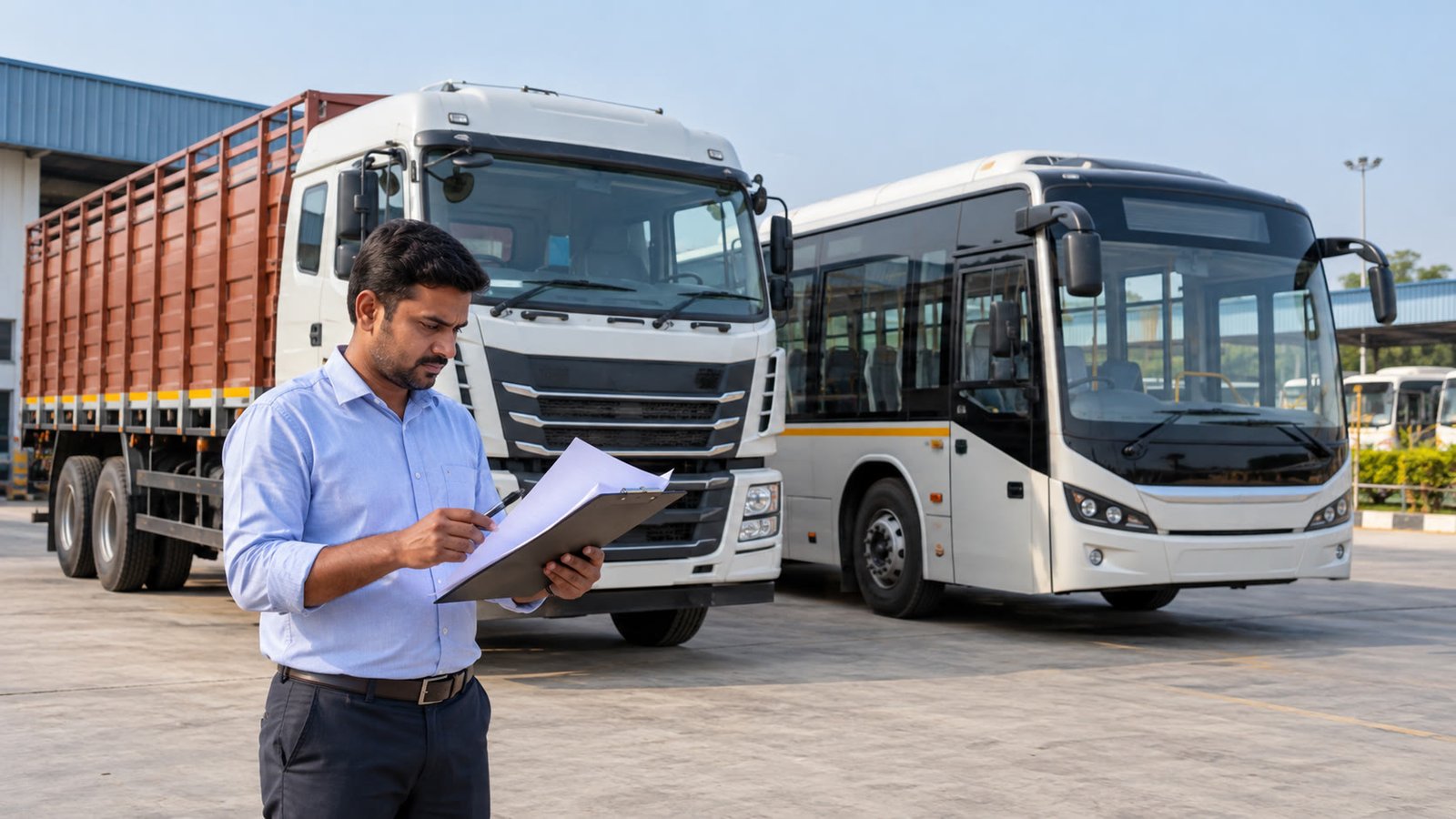
Ashok Leyland and Union Bank of India have signed a memorandum of understanding to provide vehicle-financing facilities for customers buying Ashok Leyland trucks and buses. For fleet operators and small transport businesses, the immediate change is another lender channel to compare; no interest rate, loan amount, tenure or approval guarantee has been announced.
Key takeaways
- The MoU covers financing for customers purchasing Ashok Leyland trucks and buses.
- Union Bank is expected to provide end-to-end financing with repayment options tailored to customer requirements, according to the company announcement.
- The announcement does not disclose the interest rate, processing charges, margin, loan tenure or repayment schedule.
- This is a financing partnership, not a new subsidy, a universal reduction in commercial-vehicle loan rates or a change to vehicle prices.
What Ashok Leyland and Union Bank announced
The MoU was announced on 13 October 2026. Ashok Leyland said Union Bank would offer end-to-end financial solutions to its customers, with flexible and manageable repayment options tailored to individual requirements. The companies described the arrangement as a way to widen access to finance for businesses buying commercial vehicles.
Autocar Professional reported that the signing involved Neelakantan, Ashok Leyland's vice-president of finance, and Alok Kumar, Union Bank's general manager and zonal head. The announcement also referred to Ashok Leyland's sales-finance and retail and inventory-finance teams.
What is not in the announcement matters just as much. Neither the company statement nor the independent trade report gives a rate card, a fixed or floating-rate structure, a maximum loan-to-value ratio, a processing fee, a repayment tenure or a rollout date for branches and dealers. A buyer therefore cannot treat the MoU as a final loan offer.
Why the move matters to fleet operators
A commercial vehicle is both a purchase and an earning asset. The financing cost has to sit alongside fuel, tolls, maintenance, permits, tyres, driver wages and periods when the vehicle is not operating. A lender with a wider branch network may make an additional application route available, but access to a channel does not establish that the resulting offer will be cheaper or easier for every borrower.
The practical value of the partnership will depend on the final product sheet. A repayment plan that looks manageable in a low-demand month may not suit a vehicle whose revenue changes with season, route or cargo availability. Fleet operators should therefore compare the complete cash outflow over the loan period rather than focusing only on the quoted monthly instalment.
Before discussing a loan, an operator can model the route's running costs with the fuel cost calculator and check current diesel rates through the live fuel prices tool. For highway-heavy operations, the toll-charge calculator can help keep tolls in the same operating-cost view as the proposed repayment.
Checks to make when terms are published
Ask for the full cost, not only the EMI
The written offer should identify the interest basis, annualised cost, processing and documentation charges, applicable taxes, insurance requirements and any other fee linked to disbursement. If the rate can reset, the offer should explain the reference rate, reset frequency and how a change affects the repayment schedule.
Match repayment to the vehicle's work cycle
Operators can compare the repayment calendar with expected collections from the vehicle. The relevant questions include whether the plan is monthly, seasonal, stepped or otherwise structured; whether any moratorium carries interest; and what charges apply to part-prepayment, foreclosure or a change in repayment date.
Check the upfront contribution and disbursement conditions
The final document should state the margin or down payment, the point at which funds are released, the documents needed for a new or existing business, and whether the vehicle must be purchased through a particular dealer process. These details affect the amount of working capital left after delivery.
Separate the vehicle decision from the lender decision
A financing tie-up does not replace checks on payload, route suitability, service support, fuel use, insurance and likely downtime. A business can compare the vehicle's operating assumptions separately from the lender's terms, then record both sets of costs before signing.
What the announcement does not change
The MoU does not announce a new RBI policy, a government interest subsidy, a guaranteed approval timeline or a uniform rate for all Ashok Leyland customers. It also does not say that existing loans will be refinanced, that every Ashok Leyland model will carry the same terms, or that electric and alternative-fuel vehicles will receive a separate financing product.
Actual offers can vary with the borrower's business records, credit assessment, vehicle configuration, down payment and lender policy. Those differences should be stated clearly in the sanction or loan documents rather than inferred from the partnership announcement.
What to watch next
The next useful update would be a product note or dealer-level communication setting out the eligible vehicle categories, rate structure, tenure, fee schedule, document list and service process. It will also show whether the arrangement is available nationally at once or is introduced through selected locations first.
Until those details are published, the most accurate reading is limited but useful: Ashok Leyland customers have a new financing channel to ask about, while the price of that finance remains unconfirmed. Fleet owners and transport businesses can compare the written offer with other available quotations using the same total-cost and cash-flow measures.
This article is for general information only and is not financial, insurance or legal advice.