Five people were killed in a car–bus crash on the Khamgaon–Pandharpur National Highway near Majalgaon in Maharashtra's Beed district on 18 Oct 2026, after the car reportedly swerved to avoid a pothole. The incident matters to anyone on a rough highway because a sudden steering move can turn a road defect into a head-on risk; the immediate response is to reduce speed early and keep the vehicle stable.
Key takeaways
- Reports from The Economic Times/PTI, NDTV India and Loksatta say five people died in the crash near Shindewadi Cross Road.
- The collision involved a car carrying residents of Majalgaon and an oncoming Maharashtra State Road Transport Corporation bus.
- The pothole-avoidance account comes from police and media reports; it should not be read as a final engineering finding about the road.
- Local complaints about cracks and poor maintenance have put the condition of the route under scrutiny, while the investigation continues.
What happened on the Beed highway
The Economic Times, carrying a PTI report dated 18 Oct, said the collision took place on the Khamgaon–Pandharpur National Highway in Majalgaon tehsil. The report said the car was travelling towards Tuljapur when it collided head-on with an MSRTC bus coming from the opposite direction. Loksatta's same-day report also placed the crash near Shindewadi Phata and said the occupants were travelling for a Tuljapur visit.
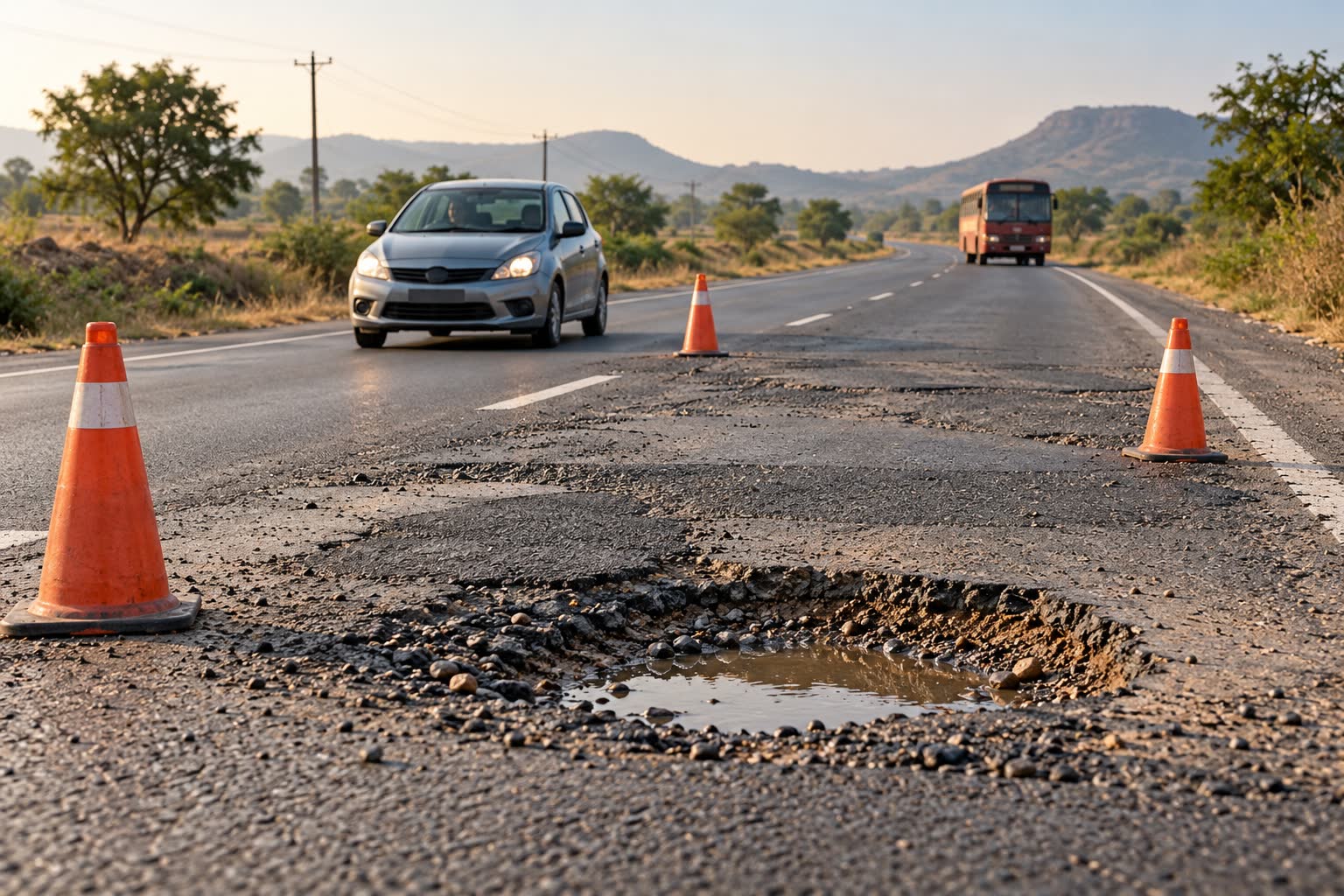
Both the Economic Times and NDTV India reported that the car lost control while its driver was trying to avoid a pothole. The Economic Times said police referred to CCTV footage showing the vehicle losing control on a bridge. That account explains the reported sequence, but it does not by itself establish whether the pothole, vehicle speed, visibility, road design or another factor was legally responsible. Those questions belong to the police and road-authority investigation.
The crash also triggered local anger about the road surface. The Economic Times reported that residents staged a road blockade and alleged fissures, uneven surfaces and poor maintenance on the Majalgaon–Telgaon stretch. The report said traffic was restored after senior police and district officials intervened. The allegation is important for public accountability, but it remains an allegation until an authorised inspection or investigation establishes the condition and cause.
Why sudden pothole avoidance is dangerous
A pothole creates two risks at once: the impact can damage a tyre, wheel or suspension, while an abrupt swerve can move a vehicle into another lane. On a two-way highway, the second risk can be more severe because an oncoming vehicle may have little time to react. The safe response depends on visibility, speed, traffic and the size of the hazard, so no single manoeuvre is right for every road.
In general, drivers can reduce the risk by scanning beyond the vehicle immediately ahead, easing off the accelerator before a visibly rough patch and keeping both hands ready on the steering wheel. If a pothole appears suddenly, controlled braking and a stable lane position are preferable to a sharp movement into an occupied or blind lane. A driver should not overtake near a bridge, curve or road defect when the view ahead is limited.
What drivers can check before a long trip
First, check the route and current advisories rather than relying on an old travel-time estimate. The road-trip planner can help compare the route, distance and planned stops before departure. It cannot certify the condition of every kilometre, so drivers should still follow cones, police directions and temporary signs on the ground.
Second, leave a time buffer for rough surfaces, local traffic and possible work zones. Sudden braking and repeated acceleration can also change the fuel needed for a journey. Use the fuel-cost calculator to recheck the running-cost estimate when a detour or slower route changes the distance.
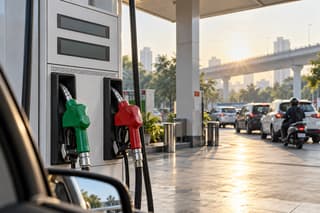
Third, check the rate that applies where the vehicle will actually refuel. Fuel prices vary by city, state taxes and outlet, so the live fuel-prices page is more useful than carrying forward a price from an older article or message.
What happens next
The next useful updates are an official account of the investigation, a road-condition inspection and any repair or traffic advisory for the affected stretch. A case or complaint about maintenance would establish that an allegation is being examined; it would not by itself prove negligence. Until authorities publish a fresh route notice, travellers should treat the reported blockade as a past disruption, remain alert near the crash location and avoid assuming that a repaired patch has removed every hazard.
The crash report is a road-safety warning, not a new toll rule or a nationwide road closure. For private motorists, bus passengers and freight operators, the practical lesson is to slow down before rough sections, avoid blind swerves and leave enough space to react to oncoming traffic. For authorities, the reader-relevant question is whether the reported defects are inspected and corrected in a way that remains safe after the immediate attention fades.
Reader takeaway
Five people died in the Beed collision after reports said a car swerved to avoid a pothole. The cause and responsibility still require investigation, but the mobility lesson is clear: on an uneven highway, early speed reduction and a stable lane are safer starting points than a last-second steering change.
Sources
- The Economic Times/PTI — “5 killed as car crashes into state transport bus in Maharashtra's Beed district” — 18 Oct 2026
- NDTV India — “Horrific road accident in Beed, Maharashtra: five people killed in a collision between a car and a bus” — 18 Oct 2026
- Loksatta — “तुळजापूरला निघालेल्या भाविकांच्या वाहनाला खड्डा चुकवताना अपघात; पाच ठार” — 18 Oct 2026