NHAI will open the first 34 km of the Ghazipur–Ballia greenfield NH-31 stretch for a trial run from 1 Oct 2026. The limited opening matters to drivers because access will be through designated points, while the new road will not yet function as a complete Ghazipur–Ballia through corridor.
The trial is expected to change route choices for commuters, local traffic and goods vehicles around eastern Uttar Pradesh. Drivers planning to use it need to check where the open section begins and ends, how they will rejoin the existing road network, and whether their return journey needs a separate route plan.
Key takeaways
- Trial traffic is scheduled to start on 1 Oct 2026 on the chainage 0–34 section of Package I.
- The reported access and exit points connect the new road to existing highways and local roads around Ghazipur.
- The trial is a partial opening; it should not be treated as a full, uninterrupted drive to Ballia or the Bihar border.
- NHAI has asked residents not to walk, jog, cycle or play on the new carriageway because live traffic operations are being assessed.
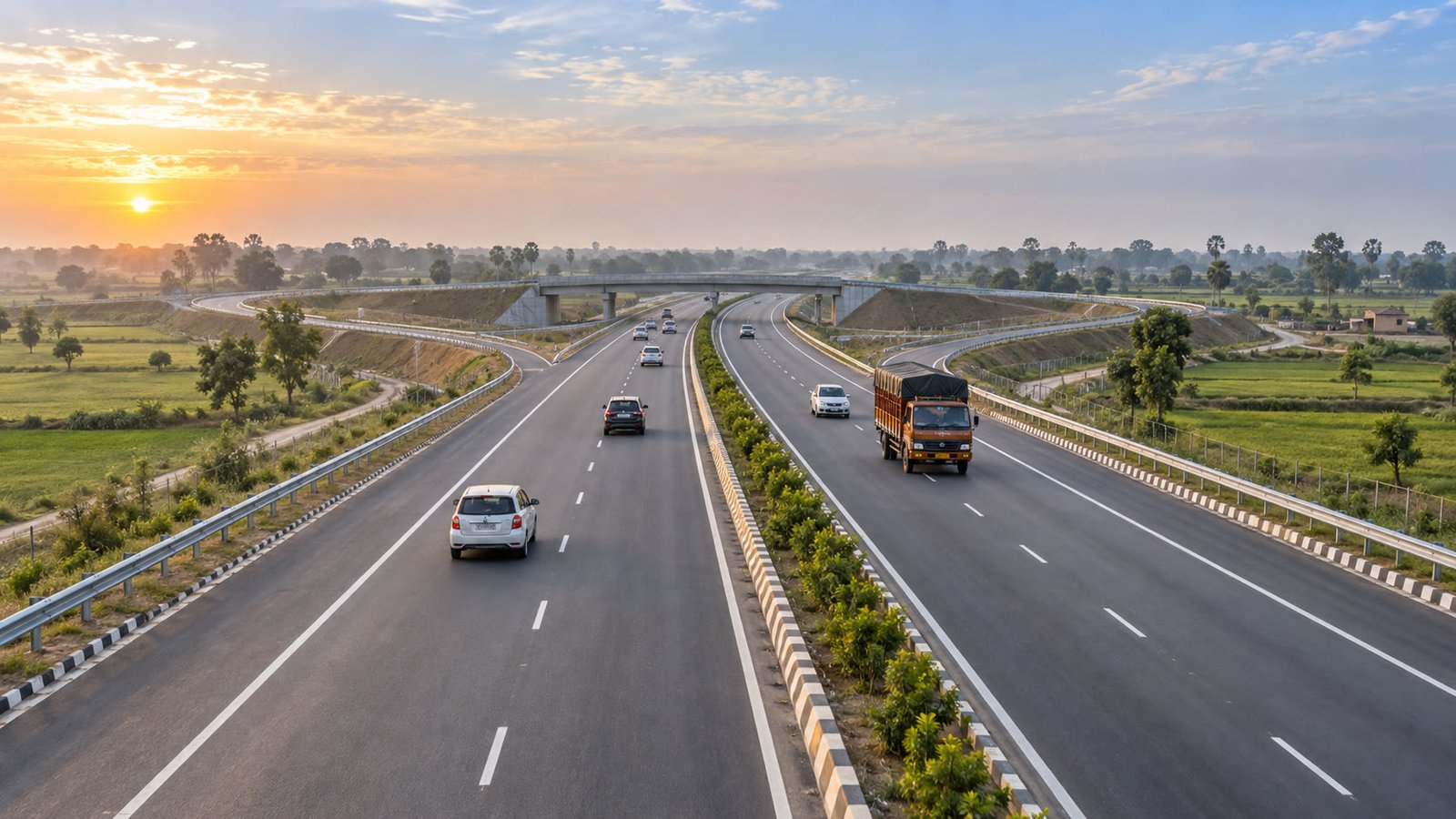
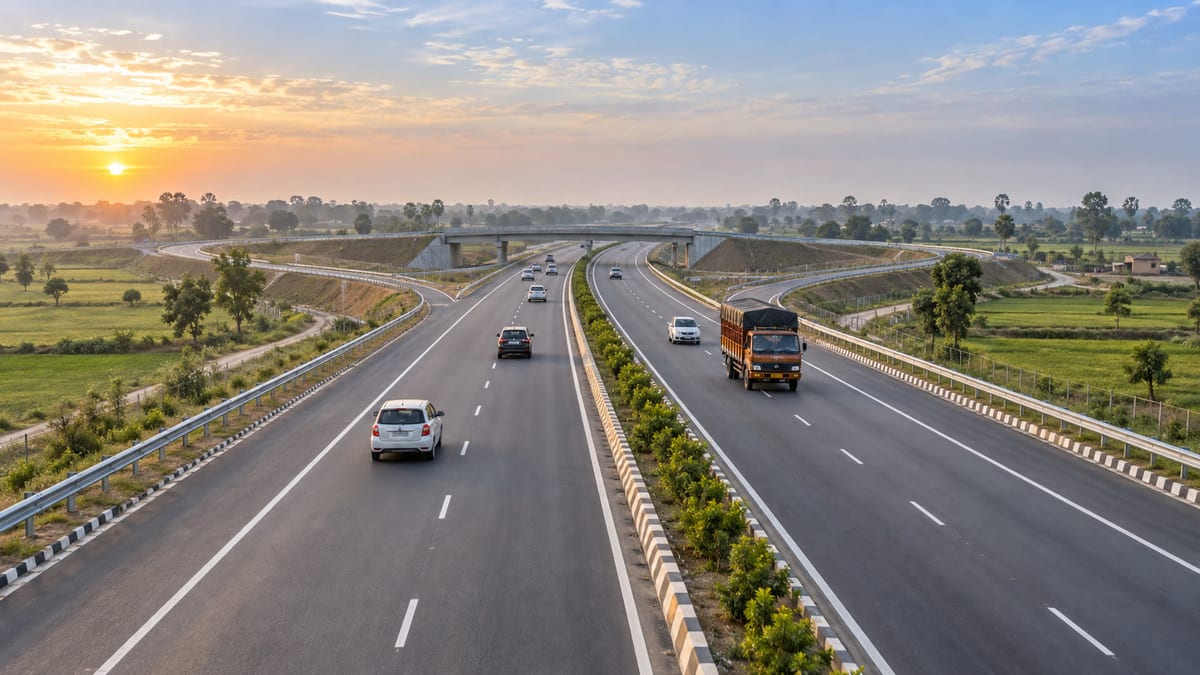 New greenfield highway and rural interchange shown in an AI-generated editorial illustration; not an official photograph of the Ghazipur–Ballia project.
What NHAI is opening on 1 Oct
Reports published on 25 Sep said the National Highways Authority of India will permit vehicles on the first operating section of the Ghazipur–Ballia greenfield highway from 1 Oct. The Times of India quoted NHAI Azamgarh project director Piyush Agrawal as saying that the trial movement will cover chainage 0 to 34. Amar Ujala separately reported the same opening date and stretch, describing Package I as nearly complete and the initial traffic operation as a trial.
The distinction between a trial section and a fully open corridor is important. The reports say there is no exit point beyond the initial stretch, so a motorist travelling towards a destination farther along the project must leave through the permitted connection and continue on the existing road network. This is a new link for selected local journeys, not a promise of uninterrupted travel from Ghazipur to Ballia.
The access arrangements reported for the trial include Sarai Bandi on the Varanasi–Gorakhpur Highway, Ghazipur–Kasimabad Road, Yusufpur–Kasimabad Road, Parsa–Barachawar Block Road, the Purvanchal Expressway flyover for traffic towards Lucknow, and Latoodeeh–Pradhanpur Road. These are the connections named in the reports; drivers should still follow the signs and directions in force at the time they arrive.
Why this matters to drivers and fleets
For people living near Ghazipur and the first part of the project, the trial creates another option for reaching nearby corridors. It may be useful when the new road produces a shorter or more predictable movement than the older route, but the advantage depends on which entry point is practical and where the journey ends. A route that looks direct on a map can still require an exit and a continuation on local roads.
That makes trip budgeting a little different. A driver comparing the old and new options can use the fuel-cost calculator to estimate the effect of a changed distance. The toll-charge calculator can help compare route costs once the applicable toll information is confirmed. The current reports focus on the trial opening and access arrangements; they do not establish a new user-facing toll tariff, so drivers should not assume a fee from the project announcement alone.
For transport operators, the trial is also an operating test. New junction behaviour, roadside stopping, emergency response and the way vehicles merge at the connections will matter more than a headline distance. Fleet managers should treat the opening as a route change to be checked against delivery timings and vehicle restrictions, rather than immediately changing every scheduled trip.
Safety instructions during the trial
NHAI’s local project director issued a specific warning to residents not to walk, jog, cycle or play on the new highway, especially as vehicles begin using it. A newly paved carriageway can look like an extension of the local road network, but during a trial run it is being operated and observed as a high-speed road. Non-motorised activity on the carriageway can create a serious collision risk.
Motorists should use only the designated connections, avoid stopping where signs do not permit it, and follow the lane, speed and diversion instructions displayed on the road. Because trial arrangements can be adjusted after real-world observation, a driver should check current signs rather than rely only on an old map pin or a social-media route video.
What the project record shows
NHAI’s project-status record dated 3 Feb 2025 lists the Ghazipur–Ballia–Uttar Pradesh/Bihar border greenfield section of NH-31 as a four-lane project divided into packages in Uttar Pradesh. That background confirms the trial section is part of a larger planned corridor, but it does not turn the 1 Oct trial into a full project opening. Later package openings and wider access remain separate developments.
What drivers should check before leaving
- Confirm that the trial section is operating on the day of travel and identify the permitted entry point nearest to your route.
- Plan the exit before joining the new road, particularly if your destination lies beyond chainage 34.
- Keep a route alternative ready in case access is restricted, changed or temporarily closed for safety work.
- Use the road-trip planner to map the complete journey, including the road after the trial section ends.
- Budget fuel and toll costs only after checking the signs or official travel information available at the time of departure.
What to watch next
The immediate question is whether the trial operates smoothly enough for NHAI to widen access. The Times of India reported that the authority will assess the stretch under real operating conditions before making wider-opening decisions. For now, the useful takeaway is narrower: from 1 Oct, the first section may help selected Ghazipur-area trips, but drivers must plan around its fixed access points and its limited length.