Hyderabad's public EV-charging network could move to private operation under a TGREDCO tender covering 200 stations across the city. The reported operating terms include a notified energy charge of ₹13 per kWh before applicable taxes and a minimum 95% monthly uptime target, but the tender should not be read as confirmation that all of the stations are already live or that an operator has been appointed.
For EV owners, the important change is not simply the number of chargers. It is the attempt to put a public network under one operating framework covering availability, maintenance, payments and customer complaints. That could make public charging easier to plan, while leaving the actual user experience dependent on commissioning, connector availability and station-level reliability.
Key takeaways
- TGREDCO's request for selection covers 200 public EV charging stations in the GHMC, Cyberabad Municipal Corporation and Malkajgiri Municipal Corporation areas.
- Private charge point operators are being sought for operation, maintenance, upgrades and commercial management for an initial 10-year period.
- The reported consumer tariff is ₹13 per kWh plus applicable taxes; operators cannot independently change the notified rate.
- A 95% monthly uptime requirement is intended to make charger availability measurable, with service support and grievance handling included in the operating responsibilities.
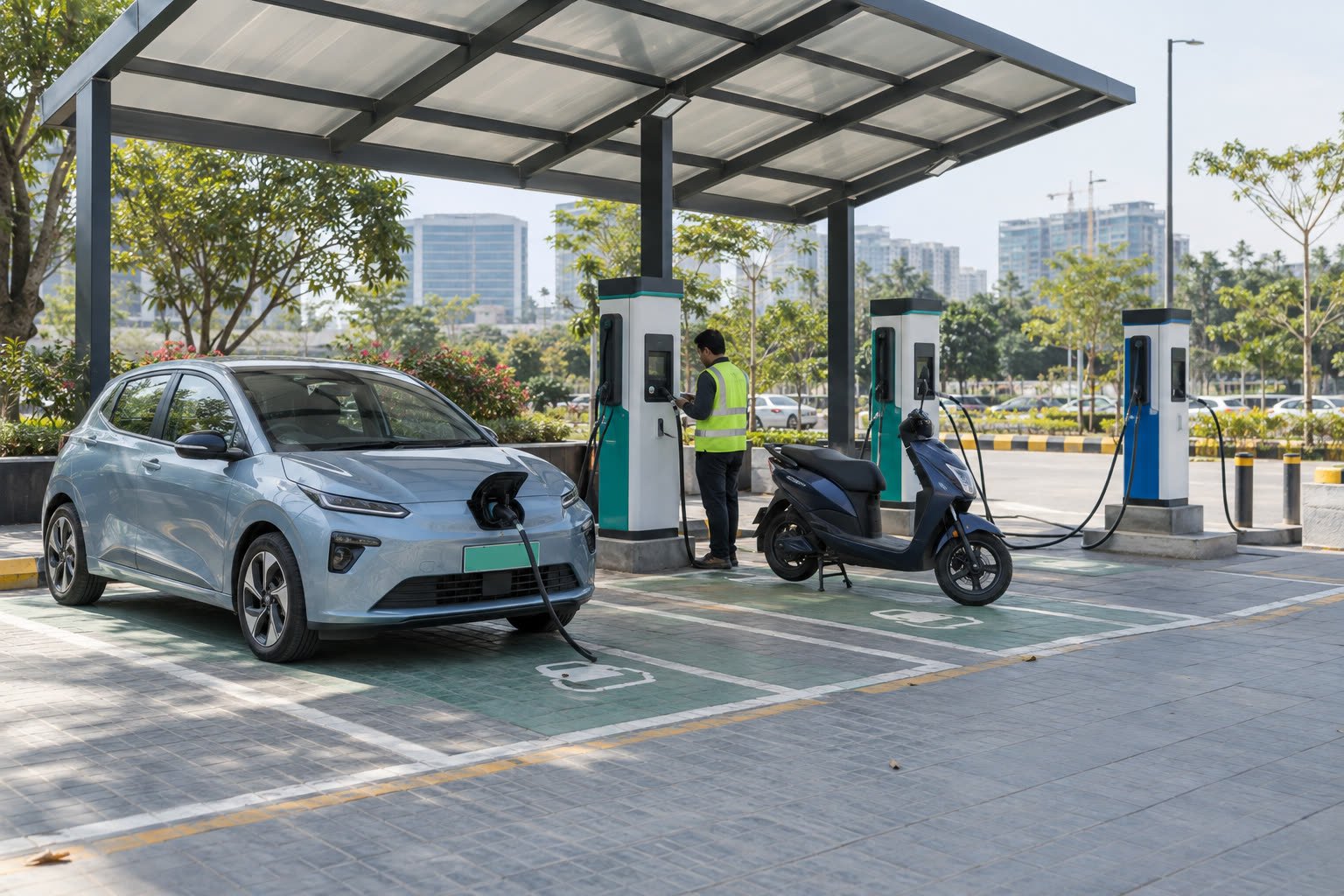
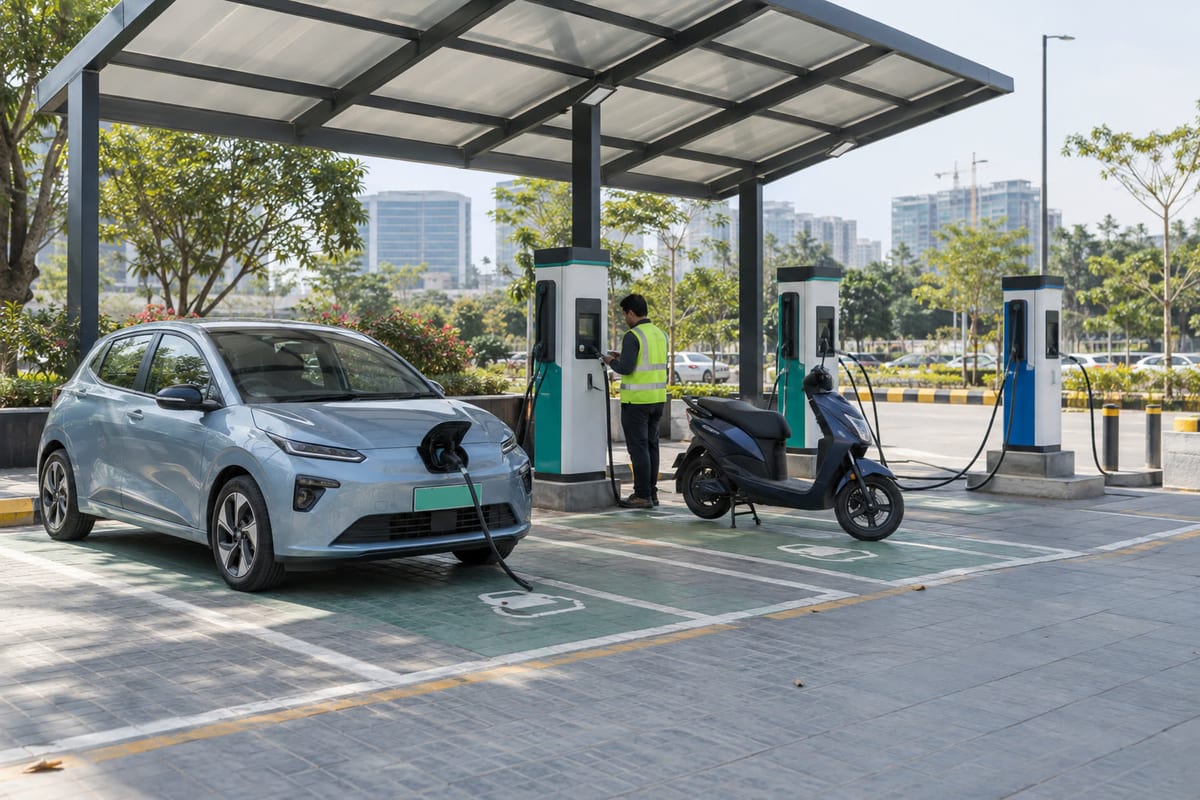 Editorial illustration of an urban public EV-charging hub; it is not an official photograph of a TGREDCO site. Credit: FuelPrice, AI-generated.
What TGREDCO's tender proposes
TGREDCO's official request for selection identifies 200 electric-vehicle public charging stations in the limits of the Greater Hyderabad Municipal Corporation, Cyberabad Municipal Corporation and Malkajgiri Municipal Corporation. The scope is broader than handing over a set of plugs: the selected charge point operators would be responsible for operation, maintenance, upgradation and commercialisation of the stations for an initial 10-year period.
The tender is therefore a procurement and operating plan, not a statement that Hyderabad has suddenly added 200 new live charging locations. The authority's listing describes a request for operators, and the independent reports describe the same project as a move to hand over management. EV owners should wait for the operator appointment, commissioning status and station-wise locations before treating the network as available for a particular trip.
How the ₹13 per kWh tariff affects a charge
The reported rate is ₹13 per kWh, excluding applicable taxes. As a simple planning reference, 10 kWh of energy at that rate works out to ₹130 before tax. The final amount for a session will depend on how much energy the vehicle draws and on the applicable tax treatment; this article does not assume that every charger, vehicle or payment channel will have identical losses or service conditions.
The rate is useful because it gives EV owners a visible benchmark for public charging in the covered areas. It is not a guarantee that every charger in Hyderabad will use the same price forever: the reported terms say TGREDCO can revise the notified tariff, while private operators cannot alter it independently. For a trip involving a petrol or diesel vehicle, the fuel-cost calculator can help compare the energy-cost side of the journey with a public-charging estimate.
Why the 95% uptime condition matters
Public charging is valuable only when a driver can depend on the station being usable. The tender's reported 95% monthly uptime condition gives the network a service metric instead of measuring success only by the number of chargers installed. In a 30-day month, the remaining 5% corresponds to about 36 hours, although the practical effect will depend on how TGREDCO measures downtime and whether a station has more than one working point.
The operating responsibilities reported by The Times of India also cover repairs, defective cables and charging guns, payment gateways, QR and RFID systems, customer support, refunds and complaints. That matters to commuters and commercial EV users because a failed payment or unavailable cable can turn a nominally short stop into a delayed trip. Users can also check the EV charging station directory when planning a route, while remembering that a directory listing is not proof of live availability.
What EV owners should watch next
- Operator appointment: The tender must progress from selection to a confirmed agency and operating agreement.
- Commissioning status: Drivers need station-wise addresses, connector types, charging speeds and live-status information before relying on a location.
- Actual billing: The ₹13 per kWh figure is before applicable taxes and may be revised by TGREDCO; check the amount shown before starting a session.
- Service quality: The 95% target will matter only if downtime, refunds and charger faults are recorded and resolved consistently.
What this means for Hyderabad's wider EV transition
A managed public network can reduce one barrier for people who cannot charge at home, including apartment residents, visitors and some fleet operators. It can also help drivers plan stops around known locations rather than treating charging as an improvised detour. But more plugs alone do not solve every practical issue: utilisation, parking discipline, queueing, electrical capacity and the mix of slow and fast chargers will determine how much the network changes daily travel.
For now, the reader takeaway is straightforward: Hyderabad has a formal plan to put 200 public EV charging stations under private operators for a long operating term, with a reported tariff and uptime framework. The next meaningful update is not another promise of scale; it is confirmation of who operates the stations, where each site is live and whether the service standards hold in practice. Drivers planning a longer journey can also use the road-trip planner to map stops, then verify each charging location before departure.
Sources
- Telangana Renewable Energy Development Corporation, “Request for Selection (RfS) of Charge Point Operators for 200 Electric Vehicle Public Charging Stations” — 2 Sep 2026
- Telangana Renewable Energy Development Corporation, “Request for Selection (RfS) of Charge Point Operators for 200 Electric Vehicle Public Charging Stations” tender listing — 3 Sep 2026
- The Times of India, “Private operators to run 200 EV charging stations in Hyderabad” — 28 Sep 2026
- Telangana Today, “TG REDCO invites tenders for 369 public EV charging stations” — 6 Sep 2026