Hyundai Motor India reported consolidated profit after tax of ₹1,196.16 crore for the quarter ended 30 September 2026, down 23.9% from a year earlier, even as revenue from operations rose 18.5% to ₹20,696.06 crore. The company also recorded its highest-ever quarterly sales of 219,072 vehicles, making the result a mixed signal for Indian car buyers: demand is strong, but higher costs are putting pressure on profitability and could keep pricing under watch.
The figures come from Hyundai Motor India's 28 October results release, with the headline profit and revenue numbers independently reported by ETAuto and Business Standard. The release is a company statement about its Q2 FY27 performance; it does not announce a new retail-price change for customers.
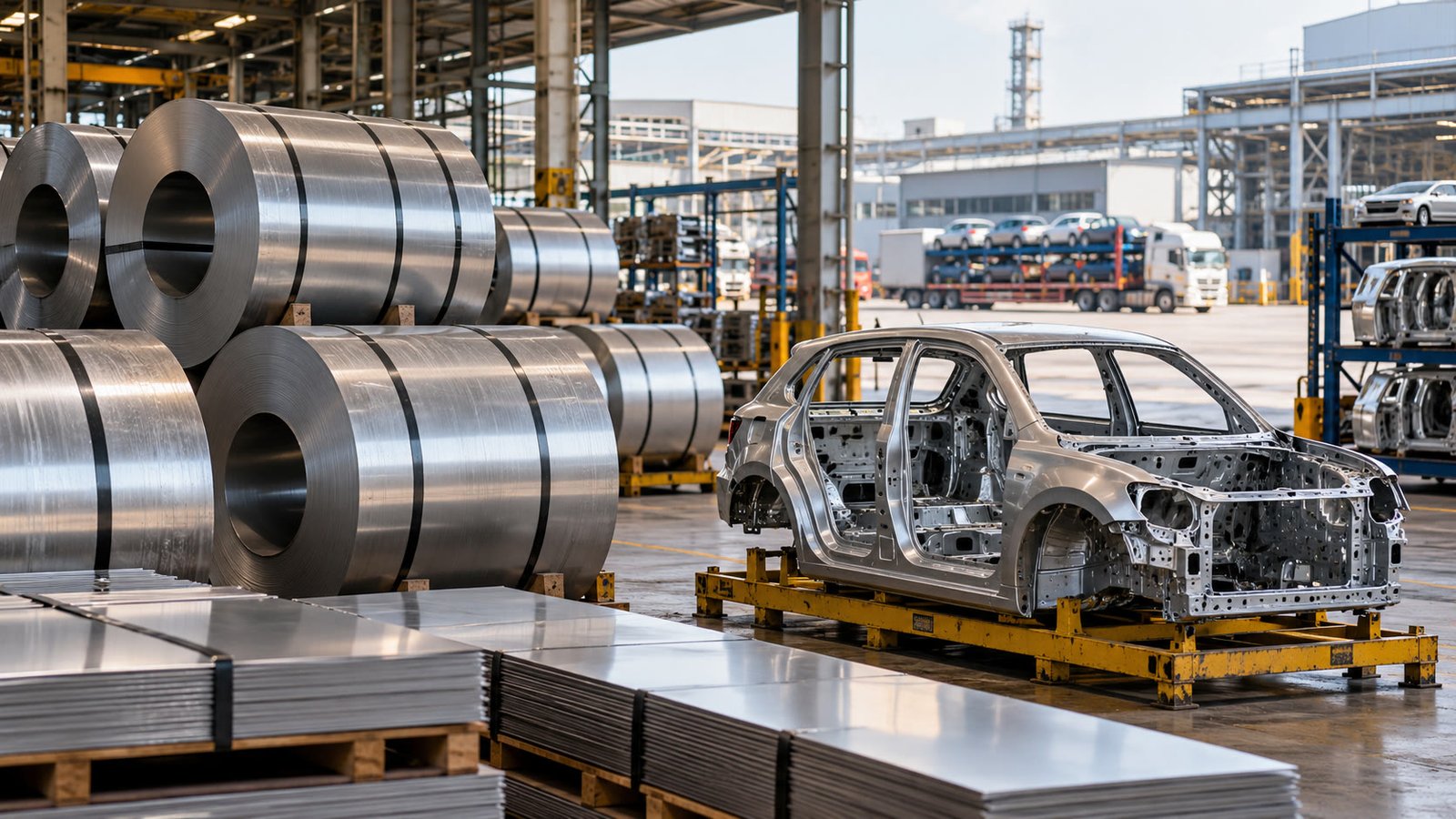
Image note: AI-generated illustrative assembly-line scene; it is not a photograph of a Hyundai facility.
Key takeaways
- Quarterly sales reached 219,072 units, up 15% year on year and 23% sequentially, according to the company release dated 28 October 2026.
- Consolidated revenue rose 18.5% year on year to ₹20,696.06 crore, while profit after tax fell 23.9% to ₹1,196.16 crore.
- EBITDA margin was 9.5% in Q2 FY27, below 13.9% in Q2 FY26 but above 9.3% in Q1 FY27.
- Domestic volumes grew 19%; rural penetration reached 26.6% and CNG vehicles contributed a record 19.1% of quarterly sales.
- Hyundai said it is preparing a dedicated mass-market EV launch in Q4 FY27, but has not announced a price, range or booking date in this results release.
What Hyundai reported for Q2 FY27
The quarter ended on 30 September 2026 and the board approved the unaudited standalone and consolidated results on 28 October 2026. The company said revenue crossed ₹20,000 crore for the first time since its inception, while total sales reached a quarterly record. ETAuto separately reported the same consolidated profit, revenue and first-half figures, and Business Standard also reported the profit decline and cost pressure.
| Metric | Q2 FY27 | Comparison |
|---|---|---|
| Revenue from operations | ₹20,696.06 crore | Up 18.5% year on year |
| Profit after tax | ₹1,196.16 crore | Down 23.9% year on year |
| Total sales | 219,072 units | Up 15% year on year; up 23% quarter on quarter |
| EBITDA margin | 9.5% | 13.9% in Q2 FY26; 9.3% in Q1 FY27 |
| H1 FY27 revenue | ₹37,030.69 crore | Up 9.3% year on year |
The contrast is important. Hyundai sold more vehicles and generated more revenue, but profit did not rise with volume. Business Standard reported that higher raw-material costs and employee expenses, including costs associated with the Pune plant becoming operational, weighed on the quarter. The company's own release described commodity costs as a profitability headwind.
Why the result matters to car buyers
No immediate price change, but cost pressure remains
Hyundai's results do not automatically change the price of a Creta, Venue, Bayon or any other model. The 28 October release did not announce a price revision, and a quarterly profit figure is not a customer quote. However, Business Standard reported that Hyundai management was monitoring input costs and could consider a price increase if pressure persisted. That makes the next official price circular, offer sheet or dealer quote more relevant than the result alone.
For someone comparing a new car, the practical check is the final on-road amount on the date of purchase: ex-showroom price, registration, insurance, accessories and any offer should be treated as separate lines. A strong sales quarter does not guarantee a discount, and a weak margin does not guarantee a price hike.
CNG demand is a market signal, not a mileage promise
Hyundai said CNG vehicles accounted for 19.1% of sales in Q2 FY27, its highest quarterly contribution. That indicates meaningful demand for a lower-running-cost powertrain in the company's mix, but it does not predict the fuel economy of a particular model or the availability of CNG on every route. Drivers can compare current petrol, diesel and CNG rates on the live fuel prices page before estimating running costs.
The more useful comparison is route-specific. A driver can enter expected distance, mileage and local fuel rate in the fuel-cost calculator and compare the result with the vehicle's purchase price, service schedule and boot-space or performance trade-offs. The calculation should use the owner’s likely city and highway mix rather than the company’s quarterly sales share.
What the planned EV launch changes
Hyundai said it is fully geared up for a dedicated mass-market EV launch in Q4 FY27. This is a company outlook, not a confirmed retail launch date, price, battery size or range figure. Those details will matter more to buyers than the earnings headline because they determine purchase cost, charging time, warranty terms and daily usability.
Until Hyundai publishes the model’s specifications and ownership terms, an EV comparison should include the availability of charging where the vehicle will be used. FuelPrice’s state-wise EV charging directory can help readers identify the infrastructure question, but it cannot replace a manufacturer’s final range, battery-warranty or service information.
For readers following Hyundai’s current product cycle, FuelPrice has already covered the Bayon launch price and mileage details. That earlier launch story is separate from the Q2 result; the new development here is the company’s performance update and its stated pipeline for the second half of FY27.
What to watch next
- Input costs and pricing: whether commodity pressure eases or leads to an official price revision, and whether customer offers change.
- H2 FY27 margins: the company said operating leverage, product mix and cost-reduction measures improved the margin sequentially; the next results will show whether that improvement holds.
- Rural and CNG demand: rural penetration and CNG contribution are company-reported indicators of the buyers and powertrains supporting volumes.
- Mass-market EV details: the final model, price, range, charging support, warranty and launch schedule will determine its practical relevance.
Bottom line
Hyundai Motor India’s Q2 FY27 result shows a company selling more vehicles and crossing a new revenue milestone while absorbing a sharp profit squeeze. For Indian buyers, the useful takeaway is not that prices must rise or fall, but that cost pressure, a strong CNG mix and a planned mass-market EV could shape the company’s next set of prices, offers and products. Check the official quote and running-cost assumptions at the time of purchase, and treat future EV timing as a company plan until final specifications and dates are published.