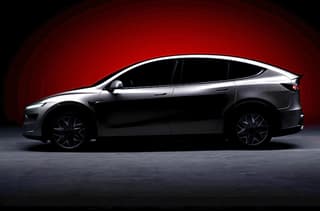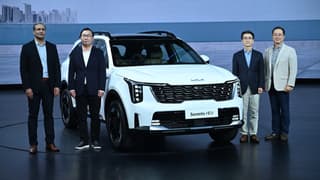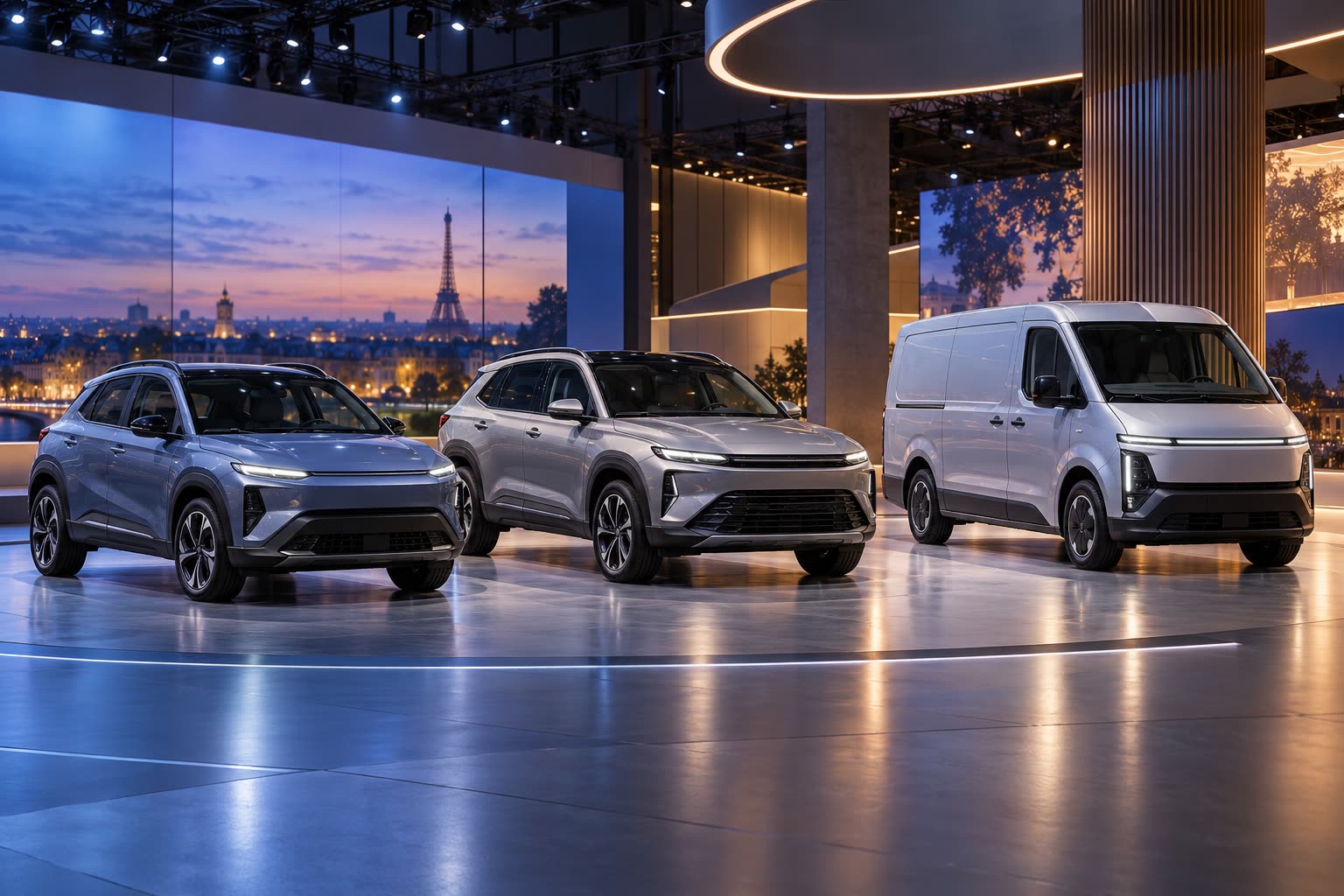
Hyundai has showcased the all-new BAYON, the European-specification TUCSON and the all-electric STARIA Cargo at the 2026 Paris Motor Show. For Indian buyers and fleet operators, the important qualification is that this is a Europe-focused presentation: it does not announce India prices, bookings or launch dates for these displayed versions.
The presentation still matters because it shows how Hyundai is combining compact-SUV comfort, hybrid powertrains and electric commercial-vehicle capability. The practical takeaway is to separate confirmed product technology from future India availability, especially when comparing a new vehicle's fuel or charging costs.
Key takeaways
- Hyundai's all-new BAYON made its world premiere in Paris, while the TUCSON made its European premiere.
- The new TUCSON range includes hybrid and plug-in hybrid powertrains, but the specifications cited are for the European programme.
- The electric STARIA Cargo is aimed at commercial users, with a claimed WLTP range of up to 450 km and 10–80% charging in about 20 minutes.
- Hyundai's official release describes the showcase as part of its European growth strategy; it does not confirm an India launch for the Paris-show vehicles.
What Hyundai showed in Paris
Hyundai's official release said the all-new BAYON was the headline world premiere, alongside the European-specification TUCSON and TUCSON N Line. Mint's 17 Oct 2026 report described the same three-vehicle presentation, while the IAA mobility roundup also listed Hyundai's BAYON, TUCSON and all-electric STARIA Cargo among the Paris highlights. The company positioned the display around European customers, local development and electrified mobility rather than an India sales announcement.
BAYON focuses on compact-SUV practicality
The BAYON is presented as a B-SUV with more rear passenger room, driver-assistance technology and connected features. Hyundai quotes 440 litres of luggage capacity and says the opening powertrain is a 1.0-litre T-GDI petrol engine in 90 PS and 115 PS versions. A 1.6-litre hybrid is planned for 2027 with projected output of 138 PS, according to the company and the Mint report.
Those details describe the European model programme. They should not be read as the final specification of an India-market vehicle, where engine choices, equipment, safety certification and pricing would need a separate Hyundai Motor India announcement.
TUCSON combines hybrid hardware and new software
The new TUCSON is Hyundai's larger family-SUV showcase. The company's European release lists a hybrid system producing 245 PS and a plug-in hybrid system producing 292 PS and using a 17.1 kWh battery. Hyundai and Mint both report an estimated electric-only range of up to 81 km for the plug-in hybrid with 17-inch wheels, subject to final homologation.
The technology story is not limited to the powertrain. The TUCSON introduces Hyundai's Pleos Connect infotainment platform, a central display available in 12.9-inch and 17-inch sizes, over-the-air updates and the Gleo AI voice assistant. These features may influence how buyers judge a vehicle for long journeys, but they do not replace checks on local service support, charging access or the final ownership price.
STARIA Cargo brings the fleet angle
For transport operators, the electric STARIA Cargo is the most directly useful part of the Paris presentation. Hyundai says the light commercial vehicle uses an 800-volt architecture and can charge from 10% to 80% in about 20 minutes. Its claimed WLTP range is up to 450 km, while the 160 kW motor is rated at 218 PS. The company also lists a 1,040 kg payload and space for three Euro pallets; Mint reported the same headline specifications.
Range and charging time matter differently for a delivery fleet than for a private car. A van that returns to base between shifts may benefit more from a short charging window than from a large headline range, while an intercity operator must check whether the route has suitable high-power chargers and whether the usable payload changes with operating conditions. Indian operators tracking electric commercial vehicles can use the state-wise EV charging directory to review the current network, but the STARIA Cargo itself is not confirmed for India.
For a proper operating-cost comparison, a fleet should use its own daily distance, load pattern, electricity tariff and charging losses. A petrol or diesel benchmark can be built with the fuel cost calculator, while the road-trip planner can help test route distance and stops. These tools do not turn the manufacturer's WLTP figure into a guaranteed real-world result.
What Indian buyers should not assume
Hyundai's release repeatedly frames the BAYON and TUCSON as products designed and engineered for Europe. It also describes STARIA Cargo as part of Hyundai's European light-commercial-vehicle expansion. That wording is important: a global showcase can signal the direction of the brand, but it is not the same as a confirmed India launch.
There is also no India price, booking amount, delivery date or India-specific efficiency figure in the Paris announcement. If Hyundai decides to bring any of these vehicles or related technology to India, the useful confirmation will be an India-market release stating the model, variant, homologation status, price and customer timeline. Until then, Indian buyers should treat the quoted range, power and equipment as overseas specifications.
What to watch next
The next meaningful update would be a country-specific availability announcement, followed by final prices and variant details. For the STARIA Cargo, fleet users would also need clarity on payload certification, warranty terms, service coverage and the charging hardware available in the intended operating area. For the TUCSON, the key question is whether any hybrid or plug-in hybrid version is planned for India rather than assuming that a European powertrain will transfer unchanged.
The Paris presentation is therefore best read as a product and technology signal, not a booking alert. It gives Indian readers a useful view of Hyundai's European SUV and commercial-EV direction while leaving the India-market decision to a future official announcement.
Sources
- Hyundai Motor Company, “Presents All-New BAYON and TUCSON SUVs Plus Key Brand Initiatives at Paris Motor Show” — 12 Oct 2026
- Mint, “Hyundai showcases 3 new models at Paris Motor Show: What’s new in BAYON, TUCSON and STARIA Cargo?” — 17 Oct 2026
- IAA MOBILITY, “These Are the Mobility Highlights from Paris!” — accessed 18 Oct 2026