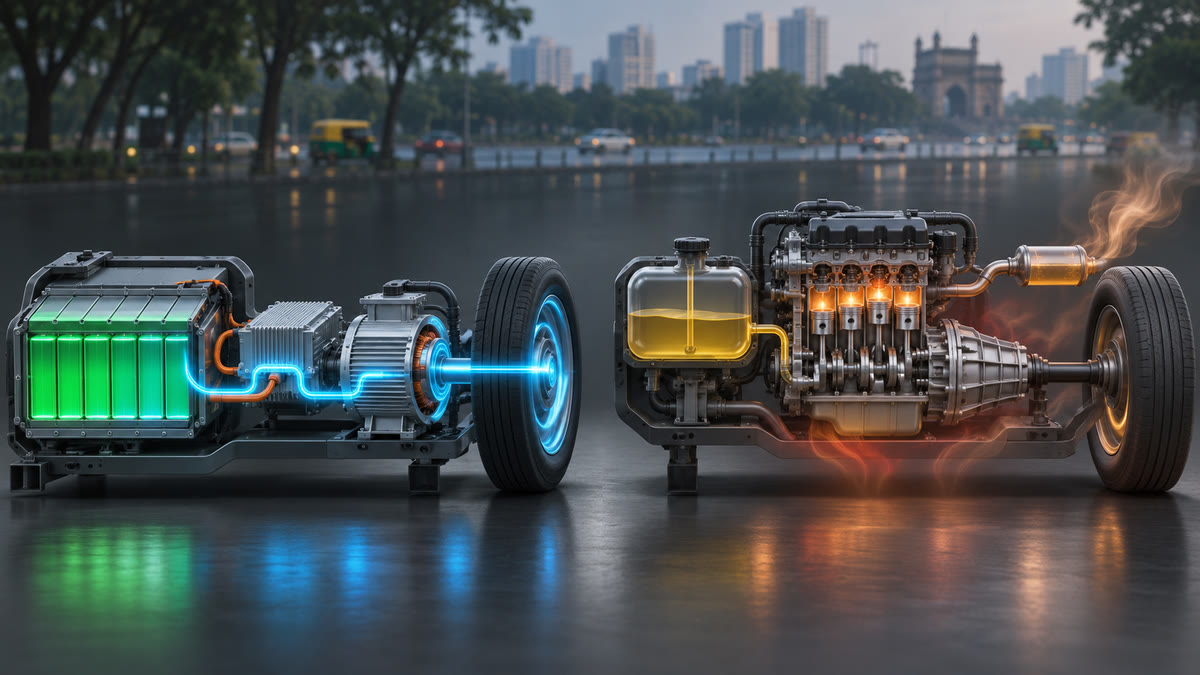
The International Energy Agency (IEA) expects India’s primary energy intensity to improve by 4.1% in 2026, the strongest rate among the major economies it compares. For Indian drivers, that is an economy-wide measure—not a promise of cheaper petrol or 4.1% better mileage—but it points to the growing role of efficient vehicles and electrification.
+Key takeaways
+-
+
- The IEA’s Energy Efficiency 2026 report, released on 23 Nov 2026, puts India’s projected improvement in primary energy intensity at 4.1% for 2026. +
- The report says some of the improvement reflects the energy crisis, including forced reductions or changes in how households and businesses use energy. +
- The IEA says electric vehicles are around three times more energy-efficient than internal-combustion vehicles, but that does not guarantee a lower bill for every driver. +
- For owners and fleet operators, the useful checks remain vehicle energy use, route conditions, current fuel or charging prices and charger availability. +
What the IEA found
+Energy intensity measures the amount of primary energy needed to produce a unit of economic output. A positive percentage in the IEA’s comparison means energy intensity is improving: the economy is producing more output for each unit of energy, or using less energy for a similar level of activity.
+In its 2026 regional estimates, the IEA places India’s improvement at 4.1%, ahead of China at 3.6%, Southeast Asia at 2.8% and the global average of nearly 3%. The Times of India reported the India result as an improvement of more than 4% and described it as the fastest among major economies. These are estimates for the year, not a daily reading of petrol, diesel or electricity consumption.
+Why the number is not a mileage promise
+A national energy-intensity figure is different from the fuel economy shown on a car’s dashboard. It can change because of economic growth, industrial activity, weather, fuel availability, travel behaviour and the types of vehicles or equipment being used. It does not mean that every petrol car will suddenly travel 4.1% farther on a litre.
+The IEA has also warned that 2026’s gains partly reflect crisis conditions. Supply disruptions and higher prices have pushed some households and businesses to reduce consumption, change activities or switch fuels. That can lower demand in the short term without proving that the underlying technology or infrastructure has become permanently more efficient.
+What it means for Indian drivers
+Petrol and diesel users still need vehicle-level numbers
+For a petrol or diesel owner, the immediate takeaway is not that pump prices will fall. Fuel prices remain separate from an economy-wide energy-intensity estimate and depend on crude markets, taxes, exchange rates and domestic pricing decisions. The practical comparison is the cost of a particular journey, based on the vehicle’s real consumption and the current rate at the pump.
+Drivers can check current rates on the live fuel-price pages and estimate a route through the fuel cost calculator. Recording litres used over a familiar route, while noting traffic, load and air-conditioning use, gives a more useful personal efficiency baseline than applying the national 4.1% figure to a vehicle.
+EV efficiency is meaningful, but charging access matters
+The IEA says EVs are around three times more energy-efficient than internal-combustion vehicles because electric drivetrains convert a larger share of input energy into movement. That is a technology comparison, not a guarantee that every EV trip will cost less: the result for an individual owner also depends on the vehicle, electricity tariff, public-charging fee, charging losses, traffic and the purchase cost of the vehicle.
+For an EV trip, compare kilowatt-hours used per kilometre with the distance and conditions of the journey. Check the state-wise EV charging directory before a long drive, especially when the route depends on public charging. A charger’s listed presence is not the same as guaranteed availability, so drivers should also allow time for a busy or unavailable point.
+Fleet operators should measure energy per delivered kilometre
+For taxis, delivery vehicles and goods carriers, the relevant question is how much energy is used to move a passenger or a load over a real operating route. Useful records include litres or kilowatt-hours per kilometre, empty and loaded running, idling, stop-and-go traffic, charging downtime and maintenance. That data can show whether a change is coming from a better vehicle, a better route or simply lower activity.
+What could make the improvement last
+The IEA’s warning is also its policy message: crisis-driven savings can disappear when supply conditions normalise. Longer-lasting gains need regularly updated efficiency requirements, sustained investment and consistent signals for businesses and consumers. In transport, that means more efficient new vehicles, reliable charging, sensible route planning and energy systems able to support additional electricity demand.
+For Indian vehicle buyers, the next useful signals will be real-world running costs, the pace and reliability of public charging, and how future fuel-efficiency standards affect the models available in each segment. A national improvement in energy intensity is encouraging, but it becomes a household benefit only when it reaches the vehicle, the route and the bill.
+What to check now
+-
+
- Use the correct measure: litres per kilometre for a combustion vehicle, or kilowatt-hours per kilometre for an EV. +
- Compare the same route under similar traffic, load and weather conditions before judging efficiency. +
- Check the latest fuel rate before calculating a petrol or diesel trip, rather than using an old price. +
- For an EV journey, use the charging directory and the road-trip planner to review stops, distance and time before leaving. +
Sources
+-
+
- International Energy Agency — “Energy Efficiency 2026: Executive summary”, 23 Nov 2026. +
- International Energy Agency — “Energy crisis disrupts global demand trends in 2026, underscoring benefits of efficiency”, 23 Nov 2026. +
- The Times of India — “India leads major economies in energy efficiency gains in 2026”, 24 Nov 2026. +