India reached an average 19.99% ethanol blending level in petrol during the 2025–26 Ethanol Supply Year (ESY), which ended on 31 October 2026, according to the All India Distillers’ Association (AIDA) and a current Ministry of Petroleum and Natural Gas release. For drivers, the milestone confirms E20 as the operating baseline for petrol, but it does not mean every litre at every outlet contains exactly 20% ethanol or that retail pump prices change automatically.
The practical question is now vehicle-specific: how well does a car or two-wheeler handle E20, and what does its actual mileage do over time? Newer petrol vehicles are generally designed around the blend, while owners of older vehicles should check the manufacturer’s compatibility guidance and track their own fuel consumption.
Key takeaways
- AIDA reported an average 19.99% ethanol blend for ESY 2025–26, effectively meeting the 20% national milestone.
- The milestone covers the supply year ending 31 October 2026; it is not a new overnight change at the pump.
- A February 2026 Gazette notification directed oil companies to sell petrol blended with up to 20% ethanol to the prescribed standards from 1 April 2026.
- The petroleum ministry says mileage effects vary by vehicle category and calibration, so owners should use their own fuel records rather than a blanket estimate.
What the 20% milestone actually means
E20 means petrol blended with ethanol up to a 20% share. The new milestone is an average for the ESY, not a claim that every retail transaction has the same blend ratio. The current report from The Economic Times, published on 20 November 2026, attributed the 19.99% result to AIDA. ETAuto’s same-day report quoted AIDA as describing the result as an average blending level of 19.99%.
The legal framework was already put in place earlier this year. Gazette notification S.O. 860(E), dated 17 February 2026, directed oil companies to sell ethanol-blended motor spirit with ethanol up to 20% in states and Union territories, subject to Bureau of Indian Standards specifications and the notified octane requirement. The notification took effect on 1 April 2026. In other words, the latest figure records the policy’s performance over a completed supply year; it does not announce a separate price hike, discount or new vehicle tax.
What changes for car and bike owners
Compatibility comes before assumptions
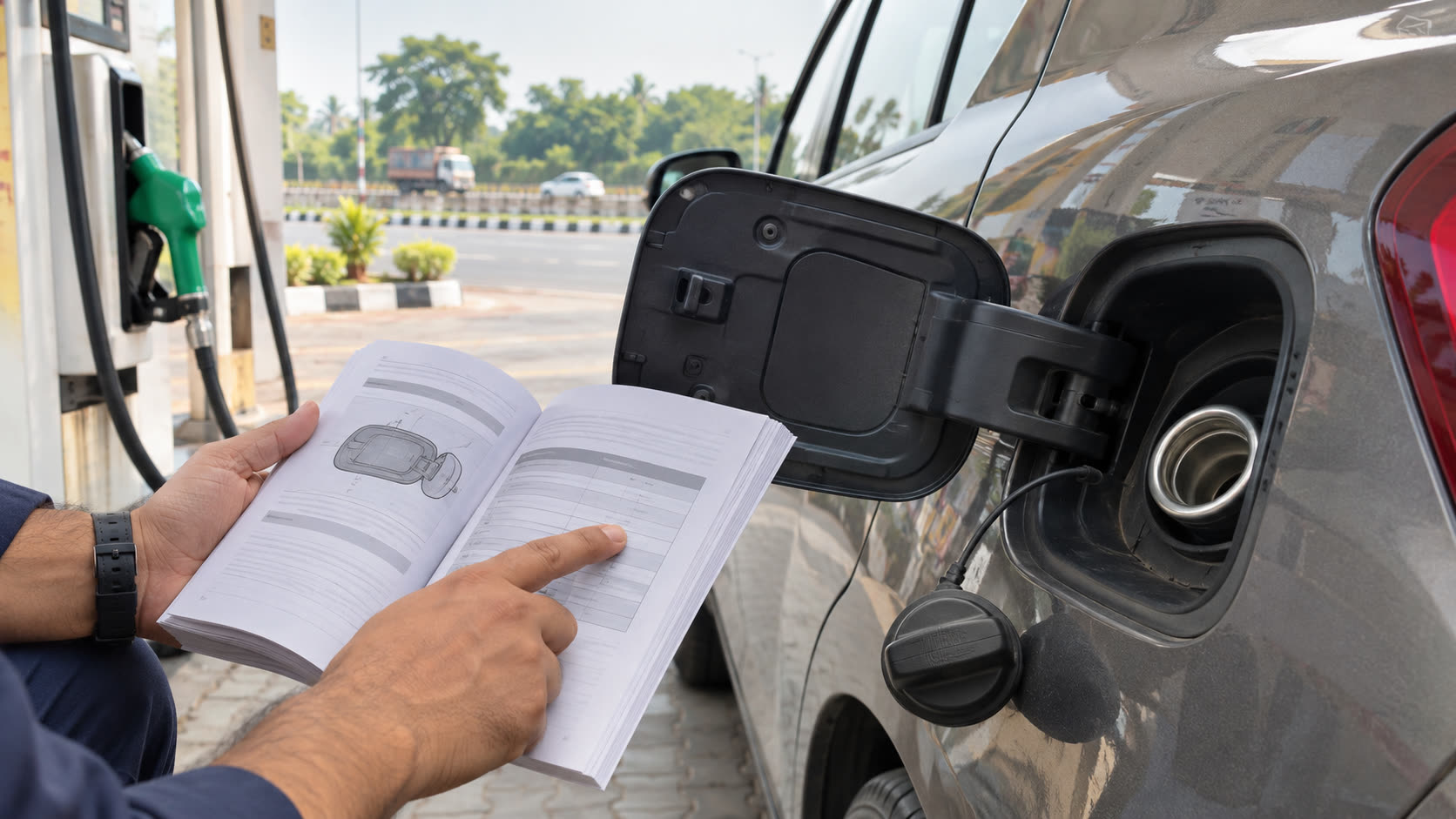
Owners should check the fuel flap, owner’s manual or the manufacturer’s documentation for the vehicle’s ethanol compatibility. Model year alone is not a complete answer because fuel-system materials, engine calibration and the manufacturer’s certification can differ. A vehicle that is not described as E20-compatible should not automatically be treated as unsafe, but its maintenance history and the manufacturer’s instructions matter more than a general online claim.
The petroleum ministry’s 7 November 2026 release said E20 quality is monitored against the applicable BIS specification and cited studies involving Indian Oil Corporation, the Automotive Research Association of India and the Society of Indian Automobile Manufacturers. It also said vehicles calibrated for E20 can see an approximate 1–2% mileage reduction, while certain other vehicles may see approximately 3–6%, depending on vehicle category and calibration. Autocar India’s testing and explainer likewise found that the effect varies materially by vehicle, so these ranges should not be treated as a promise or a diagnosis for any one car or bike.
Track fuel use, not just the pump rate
A small change in fuel efficiency can affect a monthly budget even when the posted petrol price is unchanged. The cleanest way to measure it is to record the odometer, litres filled and driving conditions across more than one tank. Traffic, tyre pressure, air-conditioning use, load and driving style can move the result as much as the fuel blend, so a single tank is not enough to establish a trend.
Once the vehicle’s real-world mileage is known, drivers can estimate the effect on a regular commute or highway journey with the FuelPrice fuel cost calculator. Use a current local rate rather than a national average; petrol prices can differ substantially by state and city. The live fuel prices page provides the starting point for that check.
Why the policy matters beyond the pump
For the government, ethanol blending is part of a broader effort to reduce reliance on imported crude, support domestic agricultural feedstocks and improve energy security. For fleet operators, the more immediate issue is predictable route costing: if a vehicle’s litres-per-kilometre figure changes, the difference flows directly into operating estimates. For buyers comparing a petrol vehicle with a CNG or EV alternative, the relevant comparison is not only the advertised fuel price but the vehicle’s verified consumption, service requirements and availability on the routes they actually use.
The milestone also gives manufacturers and fuel suppliers a clearer base from which to plan future vehicles and infrastructure. That does not mean a higher blend is already mandated. Any move beyond E20 would require a separate policy decision, technical validation and communication to vehicle owners.
What drivers should check now
- Look for the vehicle’s E20 compatibility note in the fuel flap, owner’s manual or official documentation.
- Log litres filled and kilometres travelled over several refuelling cycles before comparing mileage.
- For an older vehicle, follow the scheduled service plan and ask an authorised workshop about worn hoses, seals or other fuel-system parts if symptoms appear.
- For a long trip, combine the vehicle’s observed mileage with the latest fuel rate in the FuelPrice road-trip planner rather than relying on the brochure figure.
The reader takeaway is straightforward: India has now recorded the E20 target across a completed supply year, but the cost and performance effect remains vehicle-specific. Check the compatibility information, measure your own fuel use and watch for future notifications before assuming that the next blend change has already been approved.
Sources
- The Economic Times — “Ethanol blending touches 20% milestone in FY26” (20 Nov 2026)
- ETAuto — “Ethanol blending touches 20% milestone in FY26” (20 Nov 2026)
- Ministry of Petroleum and Natural Gas / PIB — “E20 Petrol Supplied by PSU Oil Marketing Companies Meets Prescribed Quality Standards” (7 Nov 2026)
- Gazette of India — Notification S.O. 860(E), ethanol-blended motor spirit up to 20% (17 Feb 2026)
- Autocar India — “Worried about E20 fuel? We answer all your burning questions” (accessed 20 Nov 2026)