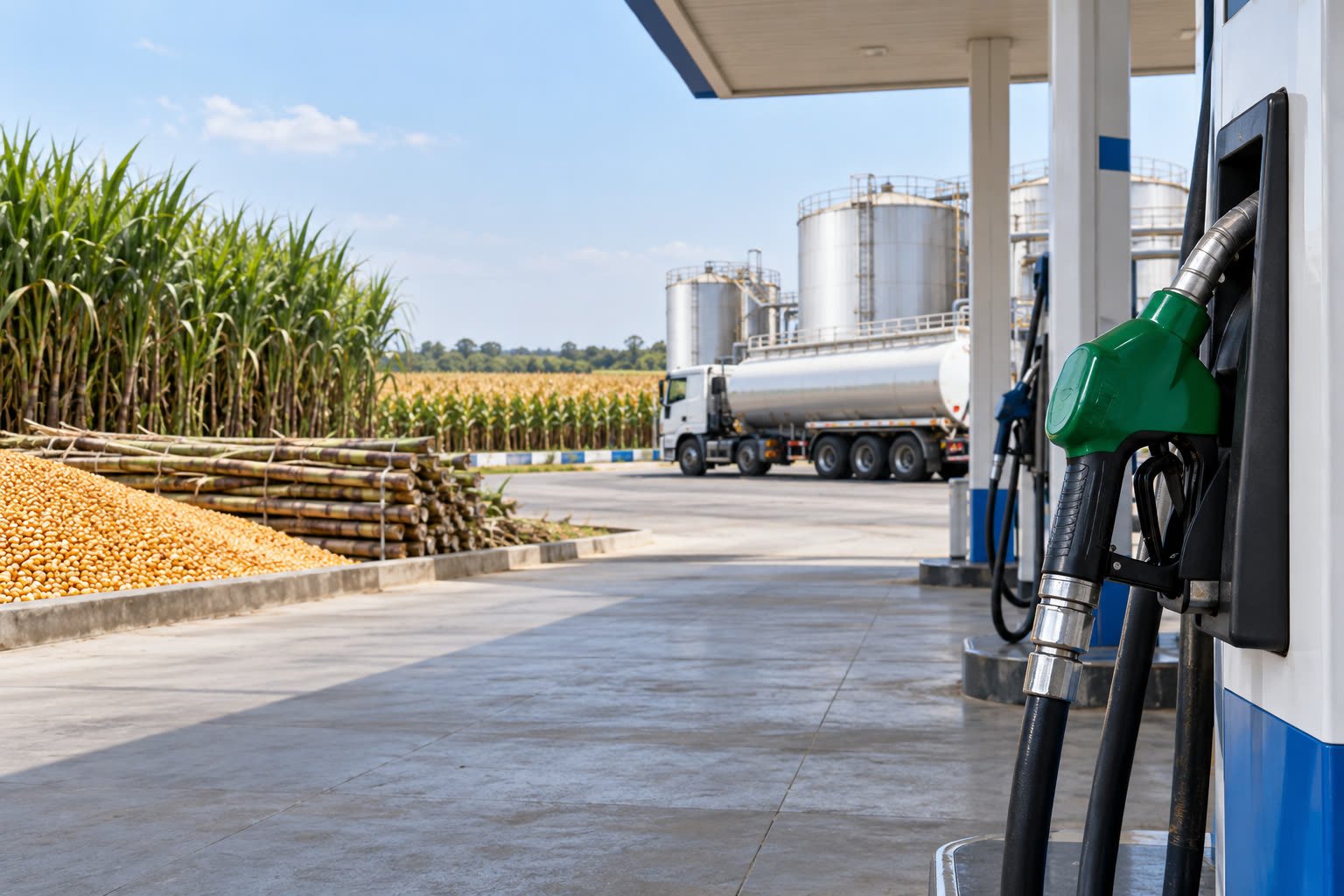
India’s state-run oil marketing companies (OMCs) have set sugar diversion for ethanol at zero in their 2026–27 supply tender issued on 16 Oct 2026, excluding sugarcane juice, sugar, sugar syrup and B-heavy molasses from this quantity bid. For drivers, the immediate point is that this is a procurement and feedstock decision: it does not itself announce a new petrol price or replace the nationwide E20 rule.
Key takeaways
- The Cycle 1 tender seeks about 11 billion litres, or 1,100 crore litres, of denatured anhydrous ethanol for Ethanol Supply Year (ESY) 2026–27.
- No offers are being sought in this bid for ethanol made from sugarcane juice, sugar, sugar syrup or B-heavy molasses.
- Maize, damaged food grains, surplus rice procured by the Food Corporation of India (FCI), C-heavy molasses and other permitted feedstocks remain eligible categories.
- The tender changes how ethanol is sourced; it does not by itself announce a change in the pump price of petrol.
What changed in the 16 Oct tender
The tender covers the first procurement cycle for ESY 2026–27, which runs from 1 Nov 2026 to 31 Oct 2027. Reuters reported that the joint document issued by Indian Oil Corporation, Bharat Petroleum Corporation and Hindustan Petroleum Corporation records a Government of India direction to reduce sugar diversion for ethanol to zero for the supply year.
That wording is narrower than saying that ethanol blending has been stopped. The document does not remove ethanol from petrol. Instead, it sets the feedstock categories that can be offered in this tender. The change matters because some sugar-linked materials can otherwise be used for ethanol rather than remaining in the sugar supply chain.
Feedstocks excluded from this quantity bid
- Sugarcane juice
- Sugar and sugar syrup
- B-heavy molasses
Feedstocks listed as eligible
The tender lists C-heavy molasses, damaged food grains, surplus rice procured by FCI, maize and other feedstocks permitted under the National Policy on Biofuels. ChiniMandi’s report on the tender said quantities will be offered feedstock-wise and quarter-wise for the period from 1 Nov 2026 to 31 Oct 2027.
Why the government is making this trade-off
India has used surplus sugar and sugar-linked materials as part of its effort to expand ethanol blending and reduce dependence on imported crude oil. Reuters linked the latest restriction to concern about domestic sugar availability, after poor rainfall in Maharashtra and Karnataka raised worries about the new sugar season and pushed prices higher.
The policy therefore balances two objectives that can pull in different directions: securing an alternative component for petrol and protecting the amount of sugar available for domestic use. Moving the tender towards maize, rice, damaged grains and C-heavy molasses keeps ethanol procurement open while reducing the role of feedstocks that can reduce sugar output.
What this means for E20 motorists
There is no new per-litre charge for drivers in this tender. It is a supplier-side procurement document, not a retail price notification. It also does not announce a new vehicle-compatibility rule or withdraw the nationwide E20 petrol standard reported by Reuters.
For a trip budget, the useful distinction is between the policy signal and the number at the pump. Drivers can check current city-wise rates on the live fuel prices page rather than changing a trip estimate because of the tender alone. When planning a long drive, the fuel cost calculator can apply the current petrol rate to the vehicle’s expected consumption.
The tender may still matter over time. Feedstock availability, supplier economics and later OMC procurement decisions can affect the cost and resilience of ethanol supply, but the 16 Oct 2026 document does not quantify any future change in petrol retail prices. A future price revision would need to be communicated separately through the relevant oil marketing and government channels.
The supplier-side price signal
Reuters reported one concrete change inside the tender: the incentive for corn-based ethanol was cut to ₹2.79 per litre from ₹5.79 per litre. The reported procurement price for that category fell to ₹68.86 per litre from ₹71.86 per litre. These are dated ESY 2026–27 tender figures for suppliers, not the price paid for petrol at a retail outlet.
That distinction is important for readers comparing fuel options. The tender gives a signal about how OMCs are trying to source the volumes required for blending; it does not provide a new petrol-price formula for a particular city or state. Retail prices can be checked separately through the state-wise petrol price directory.
What to watch next
- Whether later ESY 2026–27 procurement cycles keep the same feedstock exclusions or change the mix after production and supply data are reviewed.
- How much ethanol suppliers offer from maize, rice, damaged grains and C-heavy molasses against the 11-billion-litre requirement.
- Domestic sugar output and prices as the new season progresses, especially in the states identified in reporting as facing production concerns.
- The pending court proceedings referenced in the tender. The document reserves the OMCs’ right to revise, reallocate, reduce, withdraw, modify or cancel quantities if a court or tribunal outcome requires it.
Reader takeaway
For now, the change is best understood as a fuel-supply and sugar-availability decision, not a pump-price hike or a new rule for filling an E20 vehicle. The practical check for a driver remains the current petrol price, vehicle consumption and route distance; the policy question to follow is whether alternative feedstocks can support the blending programme without adding pressure to either sugar availability or future fuel costs.
Sources
- BPCL e-procurement tender document for ESY 2026–27, Quantity Bid Tender C1 — 16 Oct 2026.
- Reuters, “India sets zero sugar diversion for ethanol in 2026/27 tender” — 16 Oct 2026.
- ChiniMandi, “ESY 2026-27: OMCs invite bids for around 1100 crore litres of ethanol; Sugarcane Juice and B-Heavy Molasses excluded” — 16 Oct 2026.