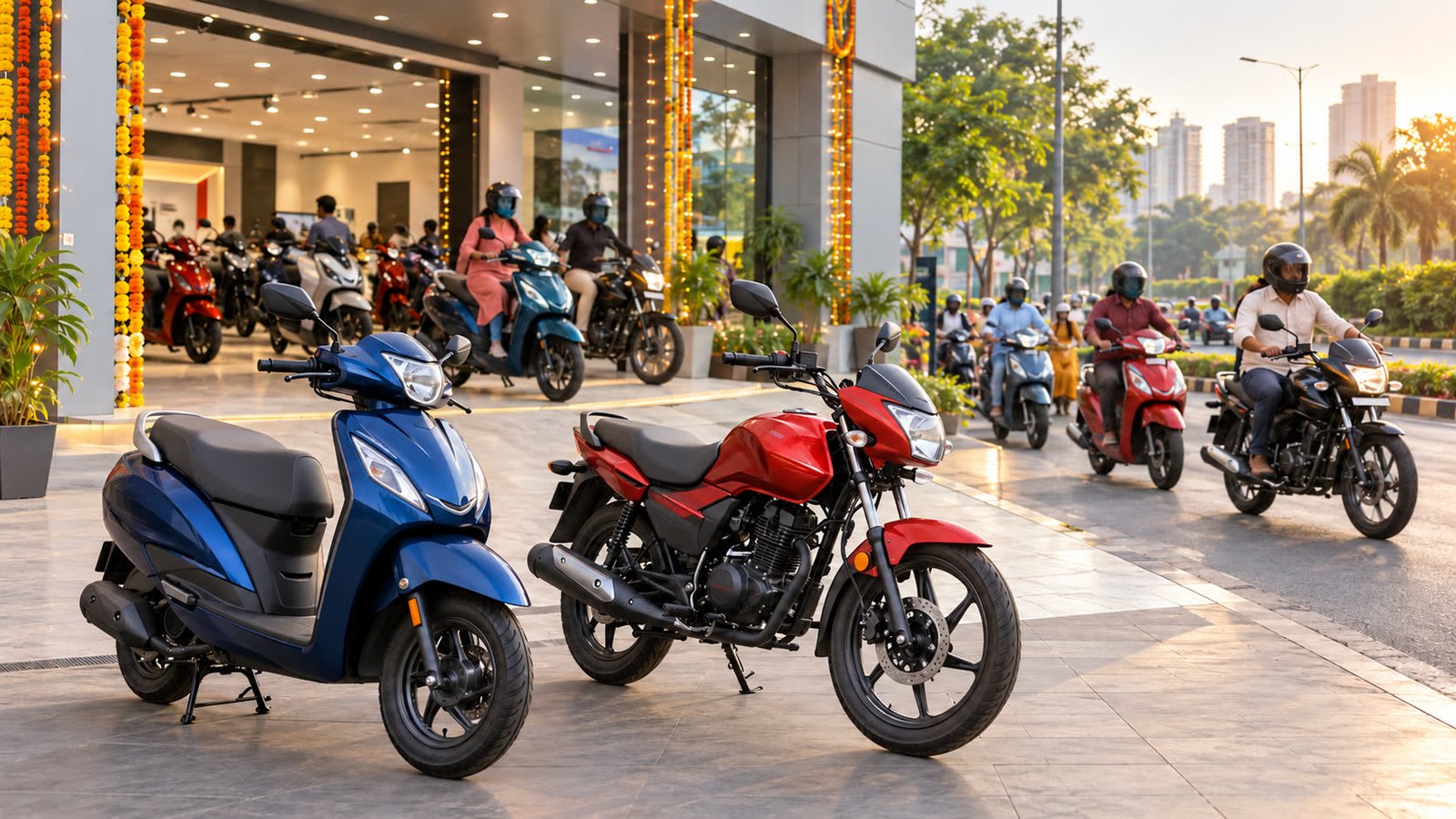
India sold 1,20,86,812 two-wheelers in the April–September 2026 half-year, according to the Society of Indian Automobile Manufacturers (SIAM), keeping the market on a strong FY27 footing. The latest data matters to buyers because scooters are growing faster than motorcycles in the latest quarter, while fuel use, maintenance and the kind of riding a vehicle will do remain bigger ownership questions than headline sales alone.
For a household, the useful takeaway is not that one body style is automatically better than another. It is that the market is widening: scooters are gaining share in urban and convenience-led use, while motorcycles remain central to daily commuting and are seeing demand move towards more powerful segments. A buyer can turn that distinction into a more realistic ownership estimate with the fuel cost calculator, using actual monthly kilometres and observed mileage.
Key takeaways
- SIAM reported domestic two-wheeler sales of 1,20,86,812 units from April to September 2026, the first half of FY2026–27.
- Sales in July–September 2026 were 64,32,842 units, up 15.2% from the same quarter of FY2025–26, according to SIAM.
- In that quarter, scooter sales grew 27.7% year on year, while motorcycle sales grew 7.4%.
- Autocar India’s 26 October analysis of manufacturer dispatches found the motorcycle segment had its second-highest first half, with demand shifting within the segment.
What the official sales data says
SIAM’s 15 October 2026 industry release reported 64,32,842 domestic two-wheeler sales in the second quarter, covering July to September 2026. That was a 15.2% year-on-year increase and the highest second-quarter sales figure for the two-wheeler segment in the association’s comparison. The same release puts April–September domestic sales at 1,20,86,812 units.
September was an important part of that total. SIAM recorded 24,63,103 domestic two-wheeler sales in September 2026. The association linked the broader quarter’s growth to improved affordability after GST 2.0, an emerging replacement cycle and demand across markets with different levels of two-wheeler penetration. These are industry-level explanations; they do not mean that every model or every buyer saw the same price or financing outcome.
The data also needs to be read correctly. SIAM’s figures are manufacturer sales and dispatches to the market, not a promise that every unit was bought by an individual commuter in the same month. Dealer inventory, registrations, exports and the timing of festive deliveries can all affect how a wholesale number reaches the road. For consumers, registrations and the actual on-road quotation remain separate checks.
Scooters are growing faster than motorcycles
The clearest segment difference is in SIAM’s Q2 comparison. Scooter sales grew 27.7% year on year in July–September 2026, while the motorcycle sub-segment grew 7.4%. SIAM said scooters led the two-wheeler expansion, while the wider market also benefited from the low comparison base and replacement demand.
Autocar India’s 26 October analysis adds detail to the motorcycle side of the market. It reported 69.2 lakh motorcycle dispatches in April–September 2026, up 10% from the same period a year earlier, making it the second-highest first half on record for that segment. The analysis also said September’s 14.1 lakh motorcycle dispatches were a record month and that higher-capacity categories were growing faster than the large entry-level base. Those are manufacturer-dispatch findings, so they should not be read as a direct measure of every rider’s purchase decision.
What the shift means for buyers and riders
1. Running cost should be calculated from actual use
A sales trend cannot tell an individual owner which vehicle will cost less to run. The relevant inputs are monthly distance, real-world fuel economy, fuel price in the city where the vehicle is used, service intervals and the cost of consumables. The simple calculation is monthly kilometres divided by real-world kilometres per litre, multiplied by the current price per litre. Current rates can be checked on the live fuel prices page before updating a monthly budget.
That comparison is especially useful when a buyer is looking at a scooter and a motorcycle with different purchase prices. A lower showroom price does not automatically produce a lower monthly cost, and a higher-capacity motorcycle may be chosen for highway use, load carrying or longer-distance comfort rather than for the shortest urban commute. The right comparison depends on the work the vehicle will actually do.
2. A bigger motorcycle segment does not erase commuter demand
Autocar’s manufacturer breakdown points to a gradual change inside motorcycles: the entry-level categories remain the volume base, but higher-capacity categories are gaining share. That can reflect tax-led price changes, product launches, upgrades by existing owners and a preference for more performance. It should not be mistaken for a collapse in practical commuter demand. A rider covering a regular city route may value predictable mileage and easy service access more than the segment’s headline growth.
3. Check ownership costs beyond the first invoice
Before comparing models, buyers can list the costs that repeat after delivery: fuel, insurance renewal, scheduled service, tyres, brakes, battery replacement and parking or charging arrangements where relevant. Dealer discounts and festive offers may change the initial quotation, but they do not remove the recurring costs. The comparison should use the final on-road price, the policy and registration details, and the vehicle’s expected use rather than only a promotional monthly payment.
Why the next six months matter
SIAM expects the industry to maintain positive momentum in October 2026 to March 2027, while warning that reported growth rates may moderate against the higher post-GST base. The association expects the festive period, new launches, last-mile mobility needs, infrastructure spending and fleet replacement to support demand. It also flags inflation and interest-rate conditions as factors that could affect the pace of growth.
For riders, the next useful signal will be whether festive demand converts into registrations and remains healthy after the season. For manufacturers and dealers, the mix between scooters, commuter motorcycles and higher-capacity bikes will show where replacement and upgrade demand is strongest. For anyone planning a long ride, fuel cost is only one part of the budget; the road-trip planner can help map distance and stops before a route is chosen.
Reader takeaway
India’s two-wheeler market crossed 1.2 crore domestic sales in the first half of FY2026–27, with scooters leading Q2 growth and motorcycles showing a more varied internal mix. The useful consumer response is to separate the industry headline from the personal decision: verify the on-road price, use real-world mileage, check current fuel rates and compare the vehicle with the daily route, load and distance it will actually handle.