The Karnataka High Court has refused to quash a culpable-homicide charge against a father after his 14-year-old son allegedly drove a car and a crash on the Mysuru-Bengaluru Road killed three people. For vehicle owners, the order keeps alive a case about whether an adult knowingly gave a car to a minor, but it is not a finding of guilt.
In its 16 Oct 2026 order, the court allowed the prosecution to proceed to trial. The ruling does not create a blanket rule making every parent criminally liable after a minor drives.
Key takeaways
- The Karnataka High Court refused to quash the Section 304 Part II culpable-homicide charge against the father at the preliminary stage.
- The court record says the alleged driver was 14 years old and that the 10 Dec 2020 crash killed three people and injured another.
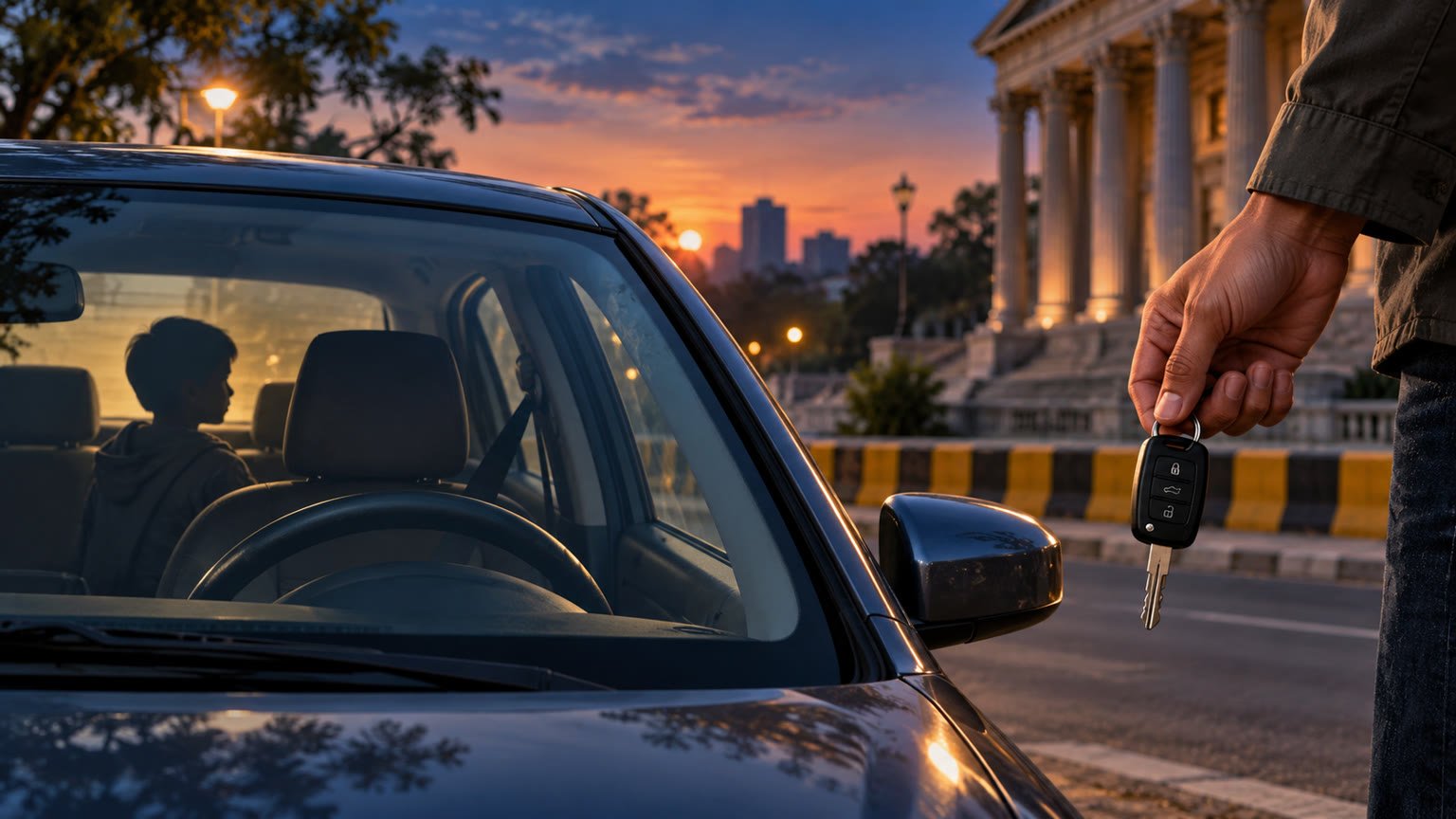
- The prosecution says the father handed over the keys and had allowed the child to drive earlier; the father’s case is that the child took the car without his knowledge.
- The trial court must still examine the evidence and decide whether the charge is proved. The High Court’s order is not a conviction.
What the Karnataka High Court decided
The order was pronounced on 16 Oct 2026 in a criminal petition filed by Nadeem Ur Rehman, a Mysuru resident. He asked the High Court to quash the charge sheet against him insofar as it alleged culpable homicide not amounting to murder under Section 304 Part II of the Indian Penal Code. The challenge did not seek to erase every allegation in the case.
According to the judgment, the alleged incident took place on 10 Dec 2020 on the Mysuru-Bengaluru Road. The minor was allegedly driving a Volkswagen Vento that had been entrusted to his father by the father’s employer. The car is alleged to have collided with a two-wheeler. Three people died and another person was injured.
The High Court said the material in the charge sheet could not be tested as if the court were conducting a full trial. At this stage, the question was whether the prosecution material, if accepted for the limited purpose of the challenge, disclosed enough to continue the case. The court held that the allegation of conscious entrustment of a vehicle to a 14-year-old could not be dismissed at the threshold.
What the prosecution and father argued
The prosecution’s position, as recorded in the judgment, is that the father handed the keys to his son and had permitted him to drive on earlier occasions. It argued that these allegations, if proved, could support the knowledge element required for the more serious charge.
The father’s defence was that the minor took the car without his knowledge or consent and drove it rashly. His lawyers argued that the material, even if accepted, could at most point to negligence and could not automatically establish culpable homicide. The court did not finally resolve this conflict. It said the disputed facts and the required mental element must be assessed in the trial.
Why the order matters to vehicle owners
The practical point is narrow but important: a vehicle owner’s conduct before a crash can matter separately from the minor’s conduct behind the wheel. The High Court did not say that a parent is automatically responsible for every act by a child. It said the prosecution should not be stopped before evidence is tested where the record alleges that the adult knowingly made the vehicle available to a child who could not legally drive.
For families and vehicle owners, the immediate road-safety checks are straightforward:
- Do not allow a minor to drive on a public road, even for a short practice run or a local errand.
- Keep car and motorcycle keys out of unsupervised reach when a child cannot legally drive.
- Do not treat an empty road, private familiarity with the vehicle or a short distance as a substitute for a valid licence and lawful driving age.
- If a crash or police case arises, preserve the vehicle, licence and insurance records and obtain qualified legal advice for the specific facts. This article does not determine anyone’s liability.
Families planning a lawful road journey can use the FuelPrice road-trip planner to organise routes and stops, and the fuel cost calculator to estimate the trip budget. Both tools assume that the vehicle is driven by a licensed adult and cannot replace safe, lawful driving.
What happens next
The case now remains for determination before the trial court in Mysuru. The evidence will have to address what happened to the keys, whether the father permitted earlier driving and whether the prosecution can prove the legal ingredients of the charge. The High Court’s observations at the quashing stage are limited to whether the case should continue.
For readers, the next meaningful update will be a trial-court development, not a presumption that the reported allegations have been proved. FuelPrice will continue to track material road-safety developments in its latest news archive.
Sources
- Karnataka High Court, “Shri. Nadeem Ur Rehman vs The State of Karnataka” judgment, 16 Oct 2026
- The Times of India, “Car not a toy, says HC; dad to face trial for crash by minor that killed 3”, 20 Oct 2026
- Mirror Now, “Karnataka High Court Refuses to Quash Culpable Homicide Case Against Father After Minor Son’s Fatal Crash”, 20 Oct 2026