Delhi’s District Consumer Disputes Redressal Commission-II, New Delhi, has held Kia India Pvt. Ltd. and authorised dealer Allied Motors Ltd. guilty of unfair trade practice over dashboard reflections reported in a Kia Seltos GTX Plus. In its 6 Oct 2026 order, the commission directed the two opposite parties to pay ₹5,00,000 compensation, but stopped short of declaring the car’s design or windshield glass defective.
Key takeaways
- The complaint concerned persistent dashboard reflections on a Kia Seltos GTX Plus bought in April 2025, with the owner reporting visibility problems in daytime and nighttime driving.
- The commission’s finding was about how the complaint was handled; it was not a finding that every Seltos, its design or its windshield glass is defective.
- The order directs Kia India and the dealer to pay ₹5,00,000 within two months; the order records 6% annual interest from the complaint filing date if payment is delayed.
- The commission referred to a Bureau of Indian Standards response saying reflection-control requirements were not specified under IS 2553 (Part 2): 2019.
What the Delhi consumer commission decided
The order dated 6 Oct 2026 was reported by The Indian Express on 19 Oct and by LiveLaw in an update dated 15 Oct. The commission said the glare and dashboard reflections were noticeable during an inspection, while the manufacturer had described the phenomenon as natural. It held Kia India and Allied Motors responsible for unfair trade practice in the way the visibility complaint was treated.
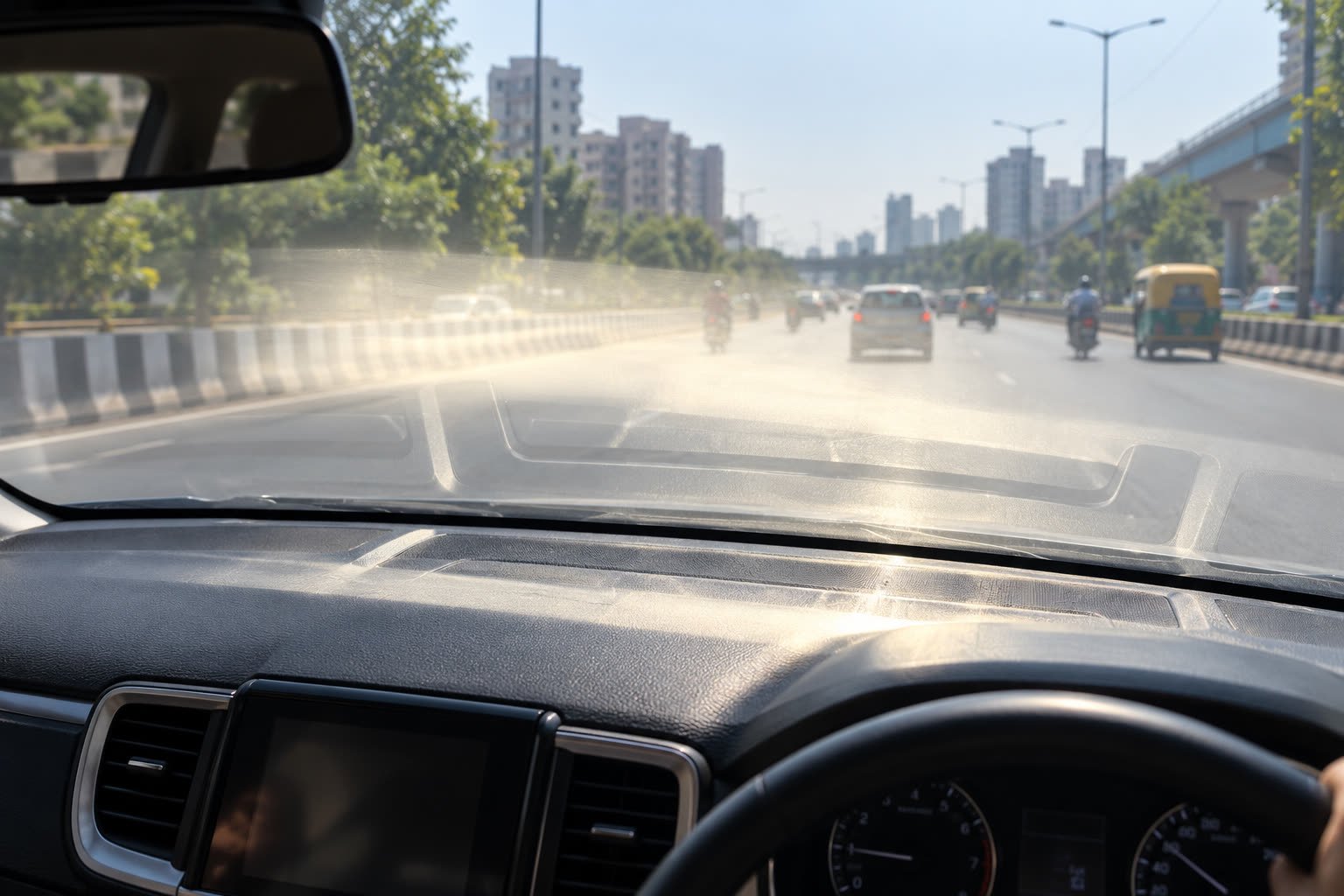
The case was brought by Pradeep Kumar Chhabra, who purchased the Kia Seltos GTX Plus in April 2025. The complaint alleged that dashboard reflections appeared on the windshield during both day and night driving, obstructing the view and creating a potential safety risk. The owner sought a refund and compensation for the safety concern, mental agony and litigation costs.
Kia India and the dealer denied that the vehicle had a defect. According to the LiveLaw report, they said the car had gone through quality checks, inspections and homologation, and argued that reflections could be affected by dashboard geometry, windshield angle, lighting conditions and individual visual perception. They also relied on a joint inspection and re-examination conducted on 8 Dec 2025, which they said found no abnormality.
Why the ruling is narrower than a safety recall
The commission did not declare the Kia Seltos unsafe, order a recall or establish a design defect. The ruling instead separates two questions: whether a technical defect has been proved, and whether the manufacturer’s response to a customer’s visibility complaint amounted to unfair trade practice.
The order referred to a response from the Bureau of Indian Standards stating that IS 2553 (Part 2): 2019 did not specify reflection-control requirements for laminated windshields. The commission also noted that such a requirement was not shown to be mandatory under the international automotive glazing safety standards it considered. Because the available standards and evidence did not allow a design finding, the compensation order rests on the handling of the complaint rather than a blanket technical conclusion about the model.
That distinction matters for owners and prospective buyers. A report of glare is not, by itself, proof that a vehicle has a manufacturing defect. At the same time, a concern that affects the driver’s view is more consequential than a purely cosmetic complaint and should be described precisely, recorded and examined rather than dismissed without explanation.
What windshield glare can mean on the road
The commission referred to a 2003 University of Michigan study on daytime veiling luminance from windshield scattering and reflection. In simple terms, light reflected towards the driver can create a bright veil over the road scene, reducing the contrast between the road and objects ahead. The order used that research to explain why a reflection visible during an inspection could have a practical visibility impact, while still stopping short of deciding that the vehicle’s design was defective.
For drivers, the relevant check is the actual view from the normal driving position under the conditions in which the problem occurs. Low-angle sunlight, a bright sky, dashboard material, glass angle and night lighting can produce different results. The case does not establish a single test that applies to every car, so any report should distinguish between a persistent reflection, a temporary lighting effect and a problem linked to a damaged or replaced windshield.
What owners can document when visibility is affected
A clear record can make a complaint easier to understand. The useful details include the vehicle variant, purchase and service dates, time of day, weather or lighting conditions, where the reflection appeared, whether it affected the driver’s view, and what the manufacturer or dealer said after inspection. Photographs or video should be made only when the vehicle is safely parked; recording while driving creates a separate safety risk.
Service job cards, email replies, inspection notes and any proposed remedy should be kept with the same timeline. If a windshield repair or replacement becomes part of the record, FuelPrice’s guide to checking vehicle insurance online explains how to confirm policy details. For a genuine repair or glass claim, the car insurance claim process in India guide covers commonly requested documents and timelines; the policy wording and insurer’s assessment control the actual outcome.
For a longer drive where glare or low sunlight is a concern, the road-trip planner can help organise the route and stops. It cannot diagnose a visibility issue, but it can help separate trip planning from the vehicle complaint itself.
What the ruling means for buyers and manufacturers
For a buyer considering a car, the case is a reminder to evaluate the view from the driver’s seat in more than one lighting condition and to ask for a written response if a visibility concern is raised during inspection. That is a general vehicle-check step, not evidence that the Kia Seltos has a model-wide defect. Buyers comparing cars should also distinguish the vehicle’s purchase terms, service response and insurance arrangements rather than treating one consumer order as a forecast of ownership experience.
For manufacturers and dealers, the order highlights the importance of giving a specific, evidence-based response to a safety-related complaint. Calling an issue natural may not settle the matter if the customer says it interferes with driving and a remedy is available in another market. The commission’s finding is case-specific, but it shows that complaint handling can be examined separately from whether a technical design defect is ultimately proved.
What happens next
The order gives the manufacturer and dealer two months to pay ₹5,00,000. If that direction is not met, the order records interest at 6% per annum from the date the complaint was filed until realisation. As of 20 Oct 2026, the material reported by the sources used here is the consumer commission’s case-specific order; it does not announce a national windshield standard, a recall or a model-wide safety finding.
Illustration: AI-generated representative dashboard and windshield-glare scene; it is not an official image of the Kia Seltos.
Sources
- Delhi District Consumer Disputes Redressal Commission-II, “Pradeep Kumar Chhabra v. Kia India Pvt. Ltd. & Anr., Consumer Complaint No. 304/2025” — order dated 6 Oct 2026 (PDF).
- The Indian Express, “Windshield glare raises ‘safety concerns’, owner wins Rs 5 lakh from car company” — 19 Oct 2026.
- LiveLaw, “Kia Seltos Dashboard Glare Case: Delhi Consumer Commission Holds Kia India, Authorised Dealer Guilty Of Unfair Trade Practice” — updated 15 Oct 2026.