Madhya Pradesh restarted its public bus service on 25 Sep 2026 after a gap of 21 years, with 351 buses flagged off across seven cities. The first phase combines CNG-powered buses with electric buses and gives commuters an additional option for intercity and city travel, while giving private operators a regulated public-transport opportunity.
Key takeaways
- The first phase covers Bhopal, Indore, Jabalpur, Rewa, Dewas, Katni and Bhind, according to the 25 Sep launch report from News on AIR.
- The 351-bus fleet is split between 120 intercity services and 231 intracity services, according to the New Indian Express.
- The state target is 1,500 buses in the first year and 15,000 buses by 2031.
- Reported onboard and network features include CCTV, panic buttons, live location tracking, passenger information and command-and-control monitoring.
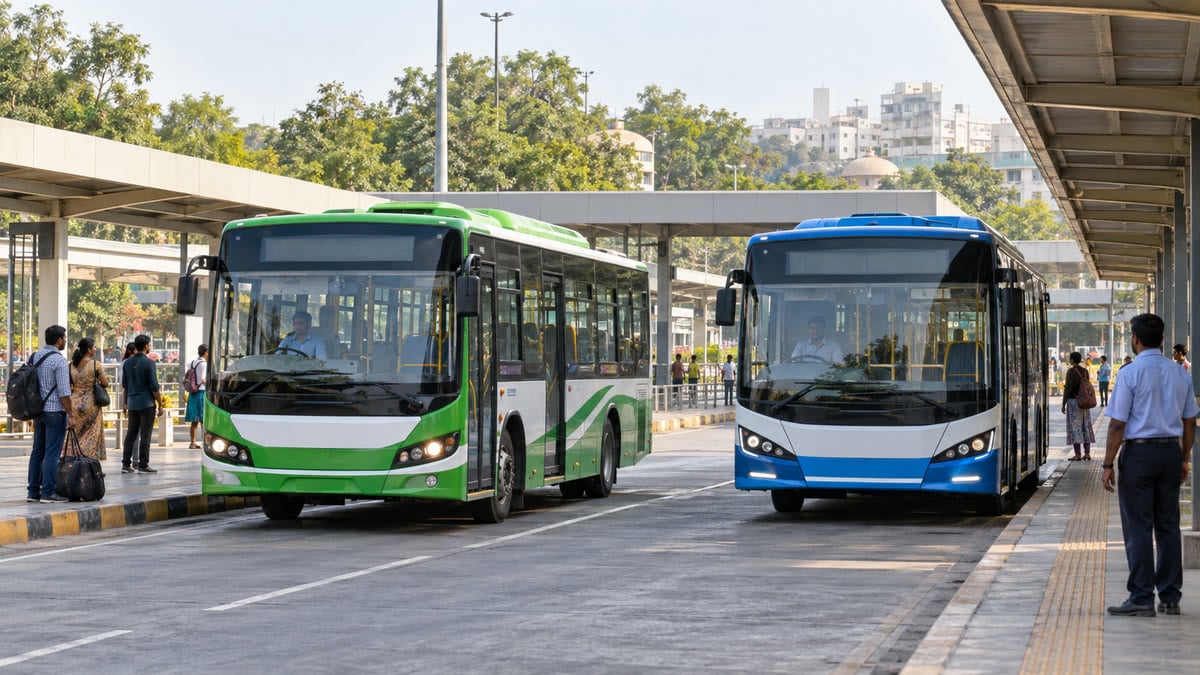
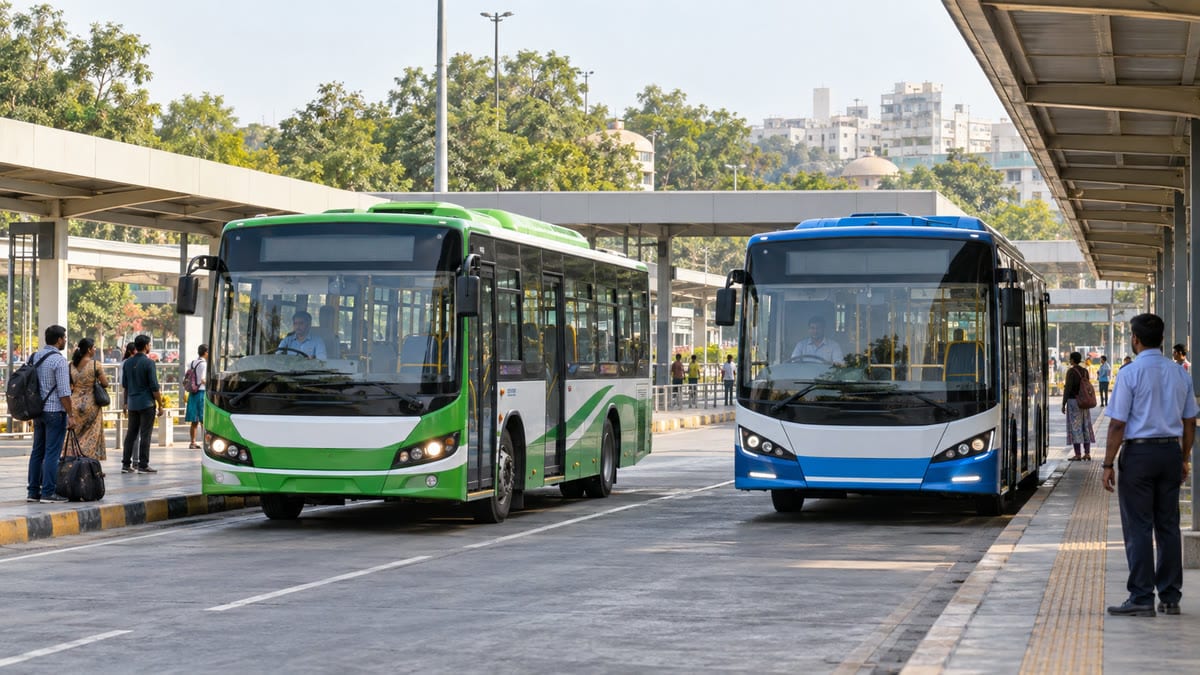 Editorial illustration of the CNG-and-electric bus mix reported for the Madhya Pradesh service. Credit: FuelPrice/AI-generated.
What changed on 25 Sep
Union Road Transport and Highways Minister Nitin Gadkari and Madhya Pradesh Chief Minister Mohan Yadav launched the Mukhyamantri Sugam Parivahan Seva at BHEL Dussehra Maidan in Bhopal. News on AIR reported that the service reconnects seven cities through intercity and intracity operations after public transport was relaunched in a new form.
The New Indian Express reported that the initial fleet uses CNG buses under the state service alongside electric buses being introduced through the PM Shri e-Bus Sewa. The service is planned on a public-private partnership model: private operators will run buses under government-regulated contracts, with the state also allowing additional revenue opportunities such as advertising and cargo services.
Initial city-wise allocation
The New Indian Express and DD India reported the following allocation for the launch phase on 25 Sep 2026. The split is useful for travellers because it distinguishes local city services from buses intended to connect cities.
| City | Total buses | Reported deployment |
|---|---|---|
| Indore | 145 | 50 intercity, 95 intracity |
| Bhopal | 106 | 23 intercity, 83 intracity |
| Jabalpur | 67 | 14 intercity, 53 intracity |
| Rewa | 18 | 18 intercity |
| Dewas | 10 | 10 intercity |
| Katni | 3 | 3 intercity |
| Bhind | 2 | 2 intercity |
Why the relaunch matters for drivers
For people travelling between the seven launch cities, a dependable bus option can change the choice between taking a private car, riding a two-wheeler or using public transport. The impact will depend on the final route map, frequency, fare and punctuality; the launch reports confirm the fleet and city coverage but do not publish a complete route-wise fare and timetable.
There is also a direct operating-cost question. CNG buses shift part of the service’s exposure toward gas prices and refuelling availability, while electric buses move the operating requirement toward depot charging, electricity supply and vehicle uptime. The state has not published a city-wise split of the first 351 buses in the sources reviewed, so it would be premature to estimate how much fuel demand or private-car traffic the first phase will displace.
Drivers comparing a bus trip with their own vehicle can first estimate the fuel portion through the fuel cost calculator.
For a longer journey, the road-trip planner can help compare travel time and stops.
For an expressway route, the toll-charge calculator shows the highway-fee portion that a private car would add.
Scale-up plan and electric-bus context
The state government says the service will expand to 1,500 buses in its first year, then add around 2,500 to 3,000 buses annually, with a stated goal of 15,000 buses by 2031. News on AIR also reported an ambition to extend the service to 75% of Madhya Pradesh’s gram panchayats. That would make the programme more than a city-bus relaunch: its success will depend on whether the network reaches villages, feeder routes and the intercity corridors that currently push many travellers toward private vehicles.
Electric-bus deployment is a related but separate milestone. A Heavy Industries Ministry reply dated 12 Mar 2026 lists 972 PM-eBus Sewa e-buses allocated to Madhya Pradesh. That allocation should not be read as proof that all 972 buses are already running or that they are part of the 351 buses flagged off on 25 Sep; the launch reports do not provide that reconciliation.
Safety features and what to check now
The reported safety and service layer includes CCTV cameras, panic buttons, GPS or live location tracking, digital passenger information and command-and-control monitoring. The New Indian Express also reported that drivers are being trained on modern vehicle technology, safety standards and the operation of CNG and electric buses.
For commuters, the practical next step is to verify four details before travelling: the boarding point, whether the trip is intercity or intracity, the published fare and payment method, and the latest timetable or service status. These details matter more than the headline fleet number because a 351-bus launch does not mean every city has the same frequency or route coverage.
Reader takeaway
Madhya Pradesh has restarted regulated public bus operations with 351 buses in seven cities, blending CNG and electric services and adding technology intended to make the network trackable and safer. The immediate benefit is a new travel option; the larger test will be whether the promised expansion to 1,500 buses in year one and 15,000 by 2031 becomes reliable coverage for both urban commuters and rural travellers.
Sources
- News on AIR: Union Minister Nitin Gadkari & Madhya Pradesh CM Dr. Mohan Yadav launch ‘Mukhyamantri Sugam Parivahan Seva’ in Bhopal — 25 Sep 2026
- The New Indian Express: Madhya Pradesh revives public bus transport after 21 years; CM Sugam Parivahan Sewa launched in Bhopal — 25 Sep 2026
- DD India: MP govt relaunches public bus service on Pandit Deendayal Upadhyay’s birth anniversary — 25 Sep 2026
- Ministry of Heavy Industries: Rajya Sabha reply on PM e-Bus Sewa allocated e-buses — 12 Mar 2026