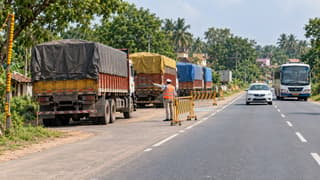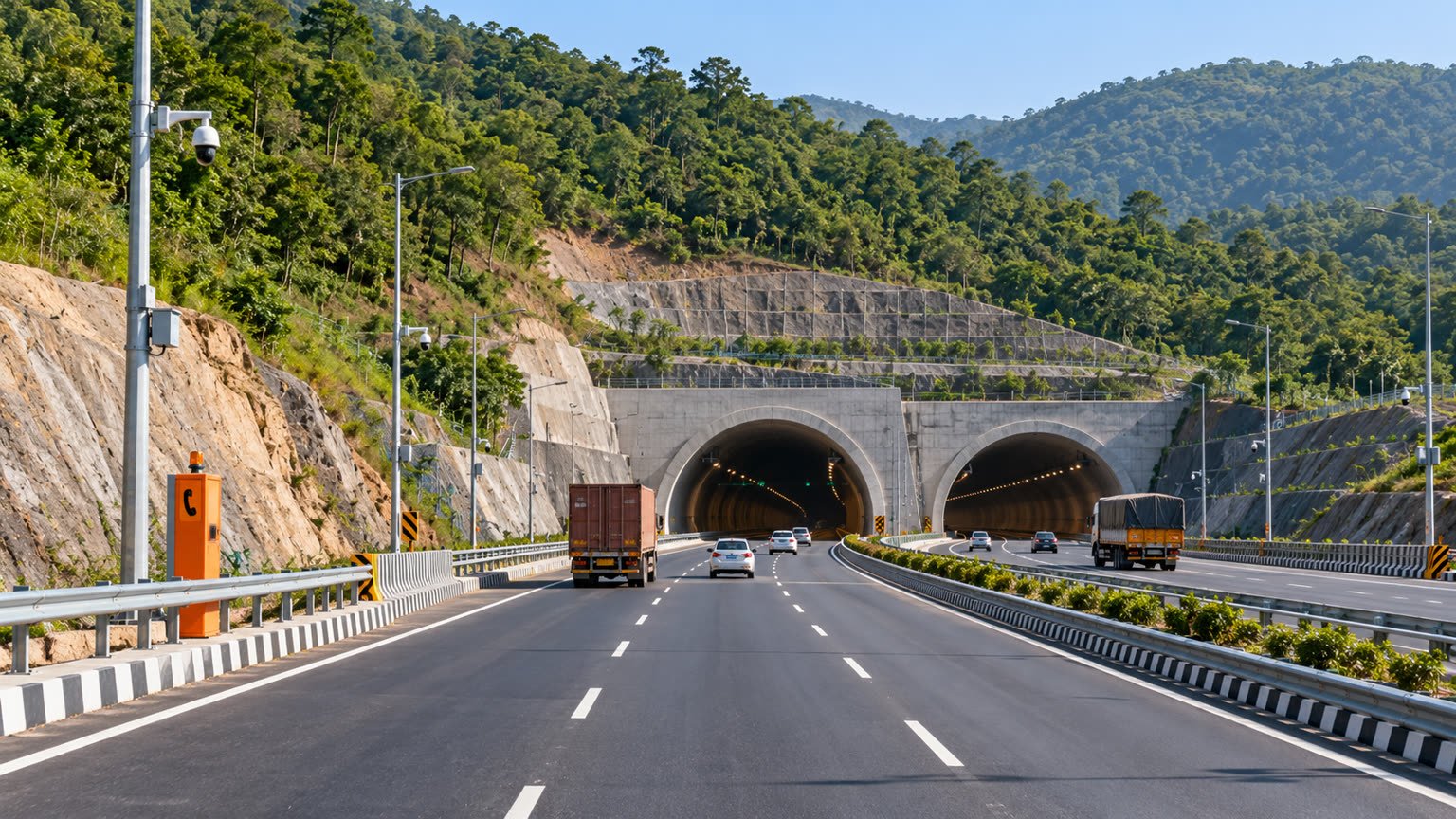
The under-construction Raipur–Visakhapatnam Economic Corridor is being designed with modern traffic-management, road-engineering and safety systems, according to an NHAI project director quoted by The New Indian Express on 17 Oct 2026. The planned 465-km six-lane route is expected to shorten the Raipur–Visakhapatnam journey after completion, but it is not a new open route or a new toll rule for drivers today.
Key takeaways
- The latest update followed an inspection of road and tunnel infrastructure near Pottangi in Odisha’s Koraput district.
- The greenfield corridor will connect Chhattisgarh, Odisha and Andhra Pradesh and is intended to improve passenger and freight movement.
- Official and media estimates put the future Raipur–Visakhapatnam journey at about five to seven hours, compared with roughly 12 hours on the existing route; this is a projection, not a current travel time.
- Drivers should wait for an official opening and toll notification before changing routes, schedules or trip budgets.
What the 17 October update says
The New Indian Express reported on 17 Oct 2026 that Bharatmala project director Prakash Kumar inspected the corridor’s road and tunnel works in Pottangi. The report said the National Highways Authority of India is using modern traffic management, road engineering and safety facilities to support safer movement and reduce travel time.
This is a construction-progress and design update, not an announcement that the full corridor is ready for public traffic. It also does not announce a new toll rate, a change to FASTag rules or an immediate diversion for motorists. Until the competent authority issues an opening or traffic notice, the existing road network remains the practical route.
What route is being built
The corridor is a six-lane, access-controlled greenfield project linking Abhanpur near Raipur in Chhattisgarh with Sabbavaram near Visakhapatnam in Andhra Pradesh, through Odisha. The New Indian Express describes it as 465 km long and puts the estimated cost at around ₹16,500 crore.
Official Ministry of Road Transport and Highways material uses slightly different rounded figures. A January 2026 PIB release described a 464-km project with an investment of ₹16,491 crore, while a December 2025 PIB release described a 465-km corridor costing ₹16,482 crore. These are source-attributed project estimates, not evidence of a new cost revision; the small differences should be read as rounding or estimate differences rather than silently merged into one number.
The expected distance and time benefit is also a forecast. The December PIB release compares the existing roughly 597-km journey with a planned 465-km alignment, a difference of about 132 km, and says the journey could fall from around 12 hours to about five hours. The January PIB release gives a more cautious estimate of six to seven hours, while the 17 October report says nearly five hours after completion. The safe reader takeaway is a projected five-to-seven-hour range, subject to commissioning, access points, traffic controls and operating conditions.
For a current trip estimate, use the road-trip planner with the route and vehicle details you actually intend to use. It should not be replaced by a future corridor projection.
Safety features mentioned in official material
The January PIB update says the corridor includes wildlife and road-safety measures such as animal overpasses, animal underpasses, monkey canopies and traffic-impact attenuators. It also says advanced camera systems are being deployed to support monitoring and safer traffic flow.
The same official release identifies a 2.79-km twin-tube tunnel through the Udanti Sitanadi Tiger Reserve and says the Chhattisgarh packages were projected to reach likely completion dates between April and November 2026. Those dates are package-level projections, not a guarantee that the entire three-state route will open on the same day. The release also describes a design speed of 100 km/h; that should not be treated as a blanket instruction to drive at that speed, because posted limits and road conditions will govern any operational section.
What it means for drivers and freight operators
The strongest potential benefit is capacity and predictability on a corridor used by private vehicles, buses and goods carriers. A shorter alignment can reduce fuel use on a completed trip, but the actual saving will vary with vehicle type, load, gradients, traffic and the final route to each access point.
As a simple illustration, if a vehicle returns 15 km per litre, a 132-km distance difference corresponds to about 8.8 litres of fuel on paper. That is an editorial calculation based on an assumed efficiency, not an official saving estimate. Compare it with your vehicle’s measured efficiency and current rate using the fuel cost calculator.
There is no verified new toll amount in the sources for this update. Travellers should check the current route and vehicle category in the toll-charge calculator rather than assume that a future access-controlled road will have the same toll treatment. Fuel rates can also vary by location, so the live fuel-price pages are more useful than an old rate quoted in a project projection.
What to watch next
The next material updates will be package completion, safety-system commissioning, an official public-opening notice and a notified toll schedule. Until then, fleet operators should not build a five-hour journey assumption into delivery windows, and private drivers should not change a planned trip solely because the corridor is under construction.
For readers in Chhattisgarh, Odisha and Andhra Pradesh, the project’s practical value will depend on where vehicles can enter and exit, whether local traffic is separated from long-distance traffic, how emergency response works and when the full route is legally opened. The reported safety focus is useful progress, but the benefit arrives only when those systems and the road are operational.
Sources
- Advanced tech to ensure safer travel on Raipur-Visakhapatnam economic corridor — The New Indian Express, 17 Oct 2026
- Travel Time from Raipur to Visakhapatnam to be Reduced by Half — Ministry of Road Transport & Highways/PIB, 28 Jan 2026
- Turning Struggles into Strength: The Human Impact of Raipur-Vizag Corridor — Ministry of Road Transport & Highways/PIB, 7 Dec 2025