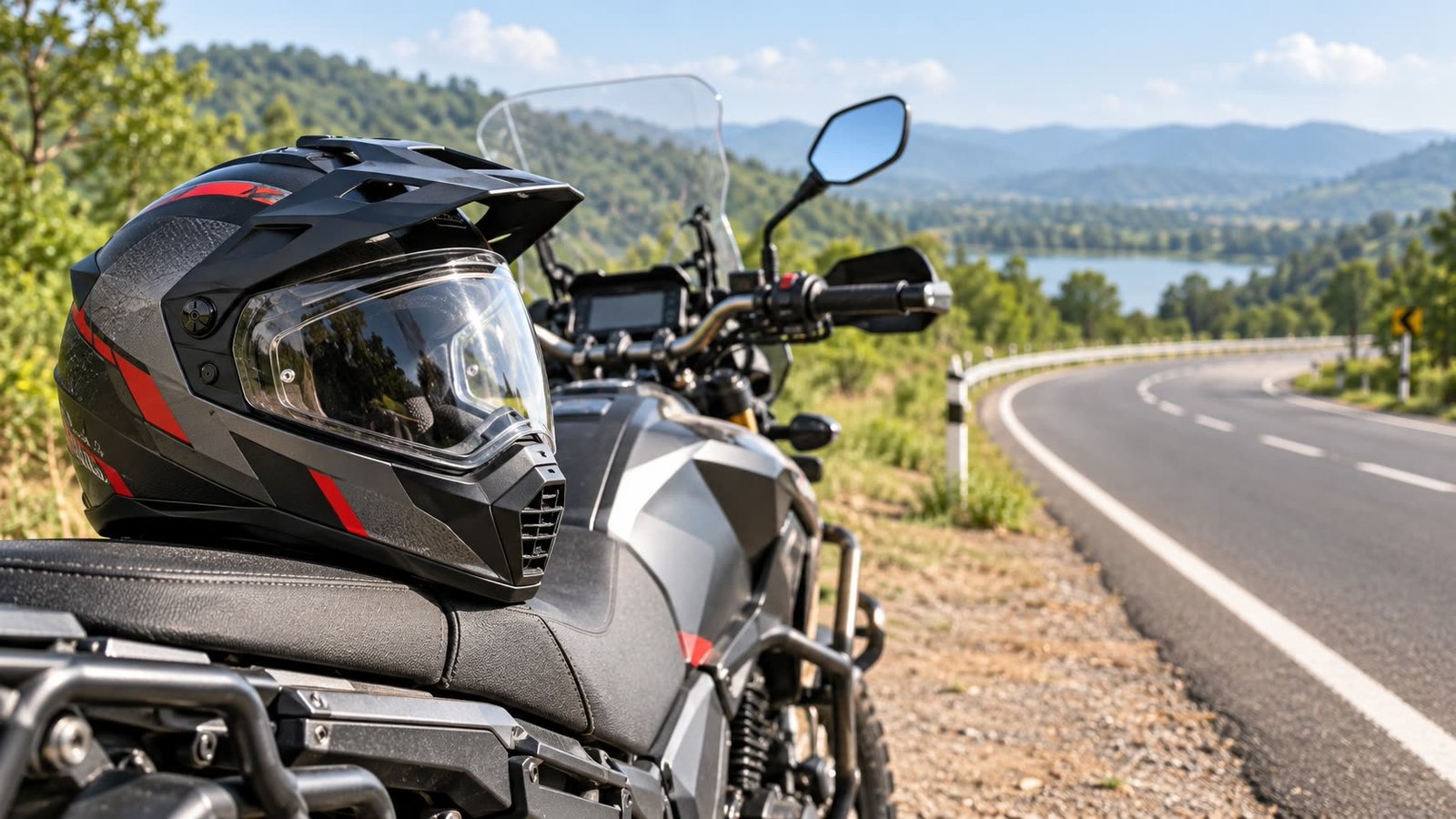
SMK Helmets has launched the Ares dual-sport full-face helmet in India from ₹6,950, giving riders a new option for daily commuting and weekend touring. The Solid version is the entry point, while graphic Ares Claw and Ares Infinity variants cost ₹7,250 each, according to launch reports published on 30 Oct 2026.
The company’s 2026 catalogue describes the Ares as a dual-sport helmet for on- and off-road use. For buyers, the important checks are not just the graphic or the starting price: fit, certification markings, visor equipment and what is included by the authorised seller will determine whether the helmet suits a particular riding routine.
Key takeaways
- The Ares Solid is priced at ₹6,950, while the Claw and Infinity graphic versions are ₹7,250 each, as reported on 30 Oct 2026.
- SMK offers the range in Ares Solid, Ares Claw and Ares Infinity versions, with 18 colour combinations reported for India.
- Launch reports list ECE 22.06, DOT and ISI certifications, plus a dual-visor layout and detachable sun peak.
- Sizes run from XS to XXL through the authorised dealer network; stock and online availability can vary.
- The official catalogue calls the visor Pinlock 70-ready, while launch coverage says an India-market Pinlock 70 lens is included, so buyers should confirm the box contents.
SMK Ares price and availability in India
BikeWale and Motoring Trends reported the same India pricing on 30 Oct 2026. Ares Solid costs ₹6,950 inclusive of taxes, while Ares Claw and Ares Infinity cost ₹7,250 each. The ₹300 difference between the Solid and graphic versions is calculated from those listed prices; it is not a claim about a discount or a dealer offer.
| Variant | Reported price | What changes |
|---|---|---|
| Ares Solid | ₹6,950 | Single-tone range |
| Ares Claw | ₹7,250 | Graphic finish |
| Ares Infinity | ₹7,250 | Graphic finish |
BikeWale said sales had begun through SMK’s authorised dealer network and that online availability would follow later. Motoring Trends and Navbharat Times also reported sizes from XS to XXL. Because the reports describe launch pricing rather than a guaranteed street price, riders should check the final invoice, size availability and delivery status with the seller before paying.
What the dual-sport helmet offers
The Ares is built around a full-face shell with a removable external sun peak, a conventional main visor and an internal sun visor. That combination is aimed at riders who use one helmet for city travel, open-road riding and occasional trails. The peak can be removed when it is not wanted, while the internal sun visor can help manage bright conditions during daytime travel.
SMK’s official 2026 catalogue lists an Energy Impact Resistant Thermoplastic shell, multi-density EPS, channeled air intakes and exhausts, a removable washable liner, an eyeglass-friendly fit and emergency removable cheek pads. The catalogue also describes a scratch-resistant, optically correct extra-wide visor and a Pinlock 70-ready visor.
Visibility and safety equipment
BikeWale, Motoring Trends and Navbharat Times list ECE 22.06, DOT and ISI certifications for the India launch. The relevant point for a buyer is to check the certification markings on the actual helmet and its documentation, rather than treating a website headline as a substitute for the product label.
There is a small but useful distinction in the launch material. SMK’s catalogue describes the visor as Pinlock 70-ready, while Motoring Trends and Navbharat Times report that the India-market helmet gets a Pinlock 70 lens as standard. That difference is worth confirming with the authorised seller because a ready visor and an included anti-fog insert are not the same thing.
What riders should check before buying
1. Confirm the fit, not just the size label
XS to XXL is a useful range, but size labels are not a substitute for a secure fit. The helmet should sit evenly around the head, remain stable when the rider moves the head and avoid pressure points. A seller’s exchange policy matters if the first size does not fit correctly. That is especially relevant when buying online after the reported launch rollout.
2. Check the exact contents of the box
Ask whether the Pinlock insert, peak hardware and any alternate strap or visor components are included with the selected variant. The launch coverage describes different features and fittings, while the official catalogue uses “ready” language for the Pinlock 70 system. Recording the item list on the invoice can prevent confusion later.
3. Match the layout to the route
A detachable peak and internal sun visor may be useful for mixed city and touring use, but they also add parts that need to be operated and maintained. Riders planning a longer route can use the road-trip planner first, then decide whether the helmet’s dual-sport layout suits the road surface, weather and riding duration.
4. Budget for the complete ride, not only the helmet
The launch price is one part of a rider’s trip cost. Estimate fuel spend with the fuel cost calculator and check current rates through the live fuel prices page before comparing the Solid and graphic variants. That keeps the ₹300 variant gap in context without treating it as a saving claim.
Why this launch matters to Indian riders
The Ares launch adds a dual-sport helmet to the Indian market at a price below the graphic variants’ ₹7,250 level, with the same core shell and safety package reported across the range. The practical choice is therefore likely to centre on colour, stock and fit rather than a separate performance package, although riders should confirm variant-specific equipment with the seller.
For a commuter who also takes occasional weekend rides, the removable peak, internal sun visor, washable liner and emergency cheek-pad release are the features most closely tied to everyday use. For a rider focused mainly on highway travel, visor clarity, fit stability, ventilation and the availability of replacement parts may matter more than the graphic treatment. Those are checks to make against the actual product and seller terms, not promises of a particular riding outcome.
What to watch next
BikeWale reported that online availability would follow the authorised-dealer rollout. Until listings stabilise, the useful checks are the seller’s stock by size, the final tax-inclusive price, the certification markings, the Pinlock insert status and the return or exchange terms. The launch is confirmed by multiple auto and riding-gear reports, but availability and dealer-level pricing remain current-market details that can change after 31 Oct 2026.
Sources
- BikeWale — “SMK Ares at Rs 6,950 Brings Serious Dual-Sport Value” — 30 Oct 2026.
- Motoring Trends — “SMK Launches Ares Dual-Sport Helmet In India Starting At INR 6,950” — 30 Oct 2026.
- Navbharat Times — “SMK Ares helmet launched in India at ₹6,950” — 31 Oct 2026.
- SMK Helmets — “EICMA Booklet Catalogue 2026” — accessed 31 Oct 2026.