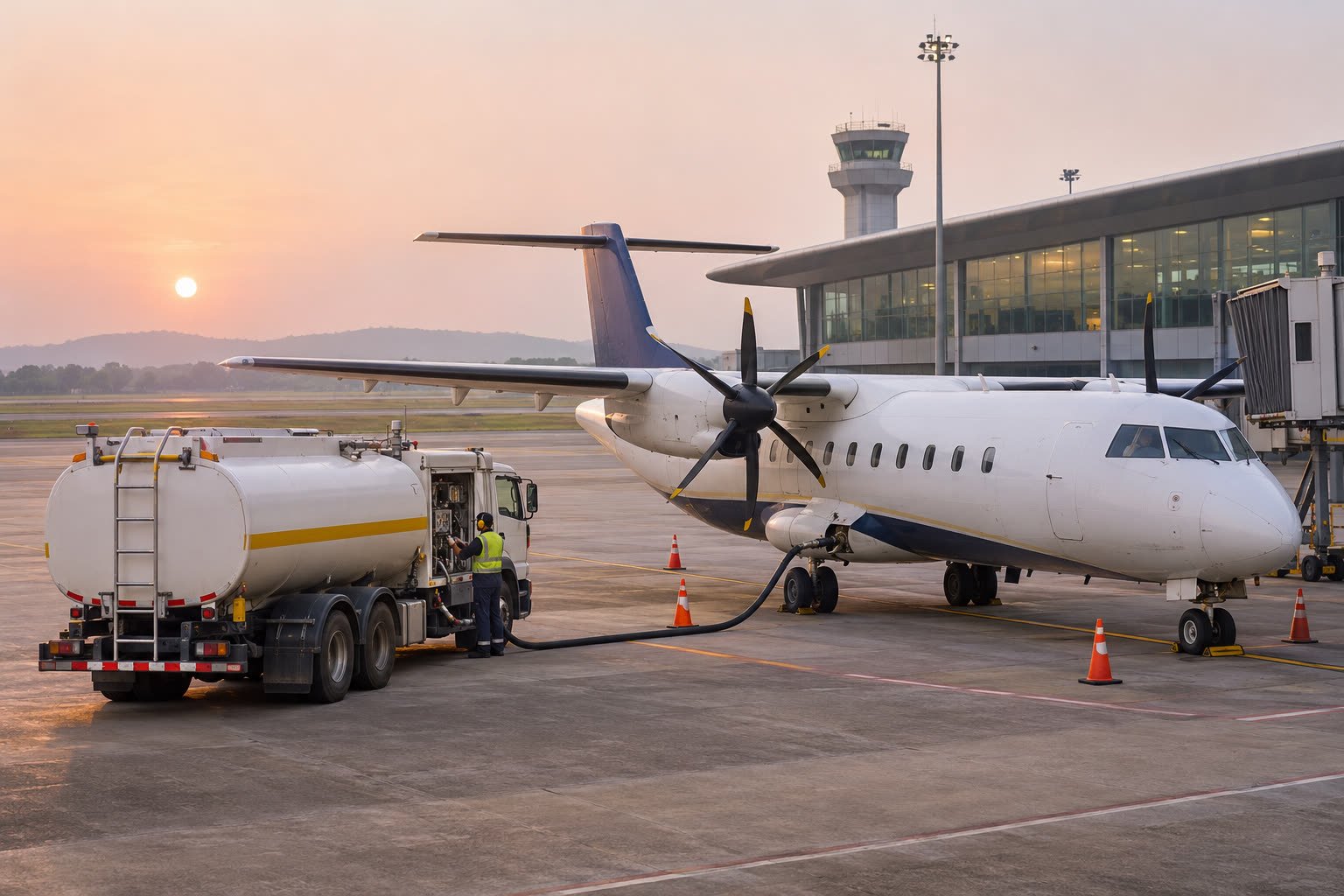
Star Air has reportedly cut 15–20% of its weekly flights, taking its winter schedule to 52 services, as aviation turbine fuel (ATF) costs squeeze regional operators. ETInfra/PTI and Business Today said a senior airline executive also called for a special fuel-pricing mechanism for regional carriers.
For passengers, this is a connectivity warning rather than a blanket fare announcement: a smaller schedule can affect frequency on Tier-II and Tier-III routes, but the reports do not announce a nationwide Star Air fare change or a particular route cancellation.
Key takeaways
- Star Air’s ongoing winter schedule has been reduced to 52 weekly flights, a reported 15–20% cut.
- The airline and other regional operators are seeking a special or revised ATF-pricing arrangement because higher fuel costs are difficult to pass through on smaller-city routes.
- The Centre’s June ATF support plan offered up to ₹10,000 crore through advances to oil marketing companies, but current reports say the original scheme did not attract participating airlines.
- No new nationwide airfare increase or universal Star Air route cancellation has been announced in the sources reviewed.
What changed in Star Air’s winter schedule
ETInfra, citing a senior Star Air executive, reported on 5 Nov 2026 that the airline had reduced its weekly winter operations by 15–20% to 52 flights. Business Today reported the same schedule count and linked the reduction mainly to rising ATF costs. Both reports described the change as an operating response, not as a new government rule.
India Today’s 4 Nov report also described Star Air’s winter schedule as smaller than its summer programme. That does not mean every route has been reduced by the same percentage. The airline’s official schedule lists regional city pairs with different effective dates, and its timetable can change because of regulatory approval and operational requirements. Passengers with a booking need to check the status and timing of their specific sector rather than infer a cancellation from the overall percentage.
Why ATF costs are pressuring regional airlines
ATF is one of the largest operating costs for an airline. The Ministry of Civil Aviation said in its 3 Jun 2026 Cabinet release that ATF normally accounts for nearly 40% of airline operating costs and can rise to as much as 60% during extreme fuel-price volatility. A regional carrier has fewer seats and often operates routes where fares and demand cannot be adjusted as quickly as fuel costs.
The same PIB Cabinet release approved one-time budgetary support of up to ₹10,000 crore for oil marketing companies. The proposed mechanism was designed to give willing scheduled Indian airlines more predictable ATF prices for domestic and international operations while the government’s advance to the OMCs was recovered when international prices eased.
| Part of the June plan | What the government announced |
|---|---|
| Support ceiling | Up to ₹10,000 crore as one-time budgetary support |
| Pricing approach | A fixed or predetermined price arrangement for participating airlines |
| Duration | A time-bound arrangement subject to annual review or recovery of the advance |
| Coverage | Willing scheduled carriers operating domestic and international flights |
The design required participating airlines to sign an agreement with the government and OMCs and procure ATF through the participating OMC arrangement. ETInfra/PTI and Business Today report that the scheme has since lapsed or failed to attract takers, while India Today reported that operators found some of its conditions difficult. The government has not announced a revised version in the reports used for this article.
Why the cut matters beyond one airline
Regional aviation links smaller cities to larger hubs, and a schedule reduction can affect business travel, medical trips, tourism and time-sensitive cargo even when the number of flights involved is small compared with the national airline network. The government’s own June release said predictable ATF pricing was intended to preserve services to remote, regional, Tier-II and Tier-III cities and support high-value cargo movement.
The current reports also point to wider operating pressure, including international fuel volatility and longer routes caused by airspace restrictions. Fuel is therefore an important part of the story, but a change in Star Air’s schedule should not be treated as proof that all regional airlines or all domestic routes face the same decision.
For a traveller considering a road alternative after a frequency change, the fuel cost calculator can estimate the driving expense using the vehicle’s mileage and current fuel price.
Once the cost is known, the road-trip planner can help compare route distance and travel time before treating a flight change as a simple substitution.
What to watch next
The immediate checkpoint is whether the Civil Aviation Ministry announces revised terms for a fuel-support mechanism, especially for routes operating under the Regional Connectivity Scheme. A workable design would need to balance predictable ATF costs for airlines with transparent recovery terms for OMCs; the June plan was structured as an advance and recovery arrangement rather than a permanent fuel subsidy.
Passengers should watch route-specific booking notices, schedule changes and airport departure information. For operators, the more important signals are the next ATF revision, the government’s position on a new support mechanism and whether other regional carriers report similar frequency changes. None of those outcomes is confirmed by the current Star Air reports.
Frequently asked questions
Does the reported cut mean Star Air has cancelled every regional route?
No. The reported 15–20% reduction applies to the airline’s weekly winter schedule as a whole. The effect on a particular city pair depends on the published timetable and any later operational update.
Is the ₹10,000-crore ATF support plan active now?
The Cabinet approved the mechanism in June 2026. The current ETInfra/PTI and Business Today reports say the original scheme has lapsed or did not attract takers, and no replacement terms are confirmed in the sources reviewed.
Will this change petrol or diesel prices for road users?
Not directly. The report concerns ATF and airline operating costs; it does not announce a change to India’s retail petrol or diesel prices.
Sources
- ETInfra/PTI — “Star Air cuts weekly flights on high fuel costs, says airline official” — 5 Nov 2026
- Business Today — “Star Air cuts weekly flights by 15-20% amid rising fuel costs; check details” — 5 Nov 2026
- India Today — “ATF price stabilisation fund: Regional airlines seek revised terms amid fuel surge” — 4 Nov 2026
- Press Information Bureau, Ministry of Civil Aviation — “Cabinet approves Price Stabilization Fund for Scheduled Indian Airlines towards ATF pricing” — 3 Jun 2026
- Star Air — “Flight schedules” — accessed 5 Nov 2026