Tolls are a big part of the cost of any long drive in India — and the way they are collected is changing. Here is a plain-English guide to how tolling works today, what the new satellite system means, and how to pay less.
FASTag: how it works today
FASTag is a rechargeable sticker on your windscreen with an RFID chip. As you pass a toll plaza, an overhead reader deducts the fixed toll for that stretch from your linked wallet or bank account — no cash, no queue. It is mandatory on national highways, and paying by cash usually costs double.
The shift to GNSS (satellite) tolling
India is moving to a GNSS-based, barrier-free system that uses satellite positioning (GPS and India’s own NavIC) plus an On-Board Unit in the vehicle. Instead of a flat charge per plaza, you are billed for the exact distance you actually drive on the highway. Under the revised National Highways Fee Rules, GNSS-equipped vehicles also get zero toll for the first 20 km per direction, once a day.
The rollout is gradual: it starts with trucks and buses (which already carry tracking units), runs alongside FASTag during a transition, and uses number-plate (ANPR) cameras as a backup. For most private cars, FASTag remains the day-to-day method for now.
How to keep your toll costs down
- Keep your FASTag recharged — a blacklisted or low-balance tag can mean a penalty.
- Know the toll before you leave. Our toll & trip cost calculator shows the exact toll, per-plaza breakdown and fuel for your route.
- Compare route options — the shortest route is not always the cheapest once tolls are added.
Planning a specific trip? Check the full cost of popular routes like Delhi to Jaipur or Mumbai to Pune before you drive.
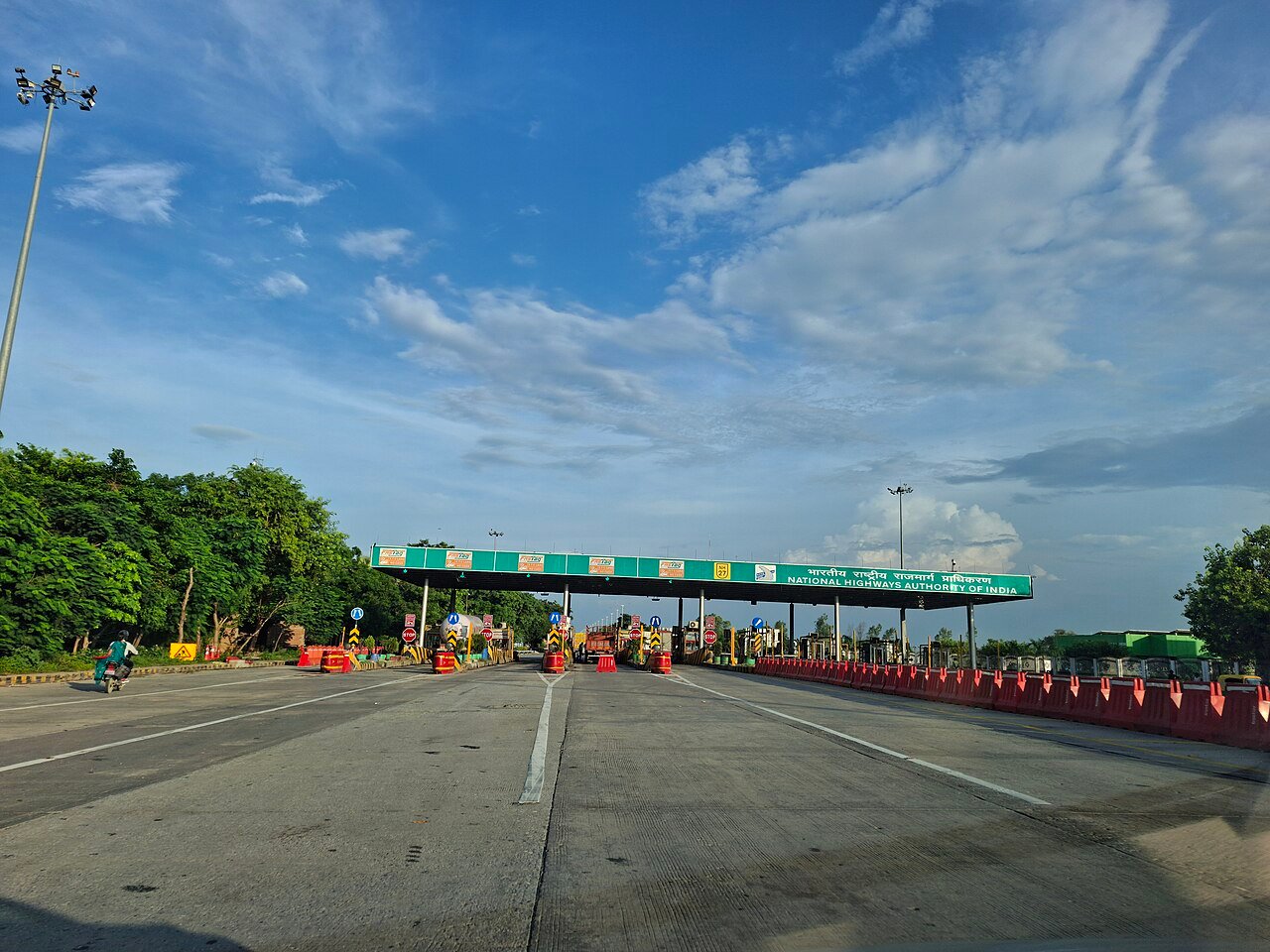
Image: Saddam Hussain Ansari via Wikimedia Commons (CC BY 4.0)