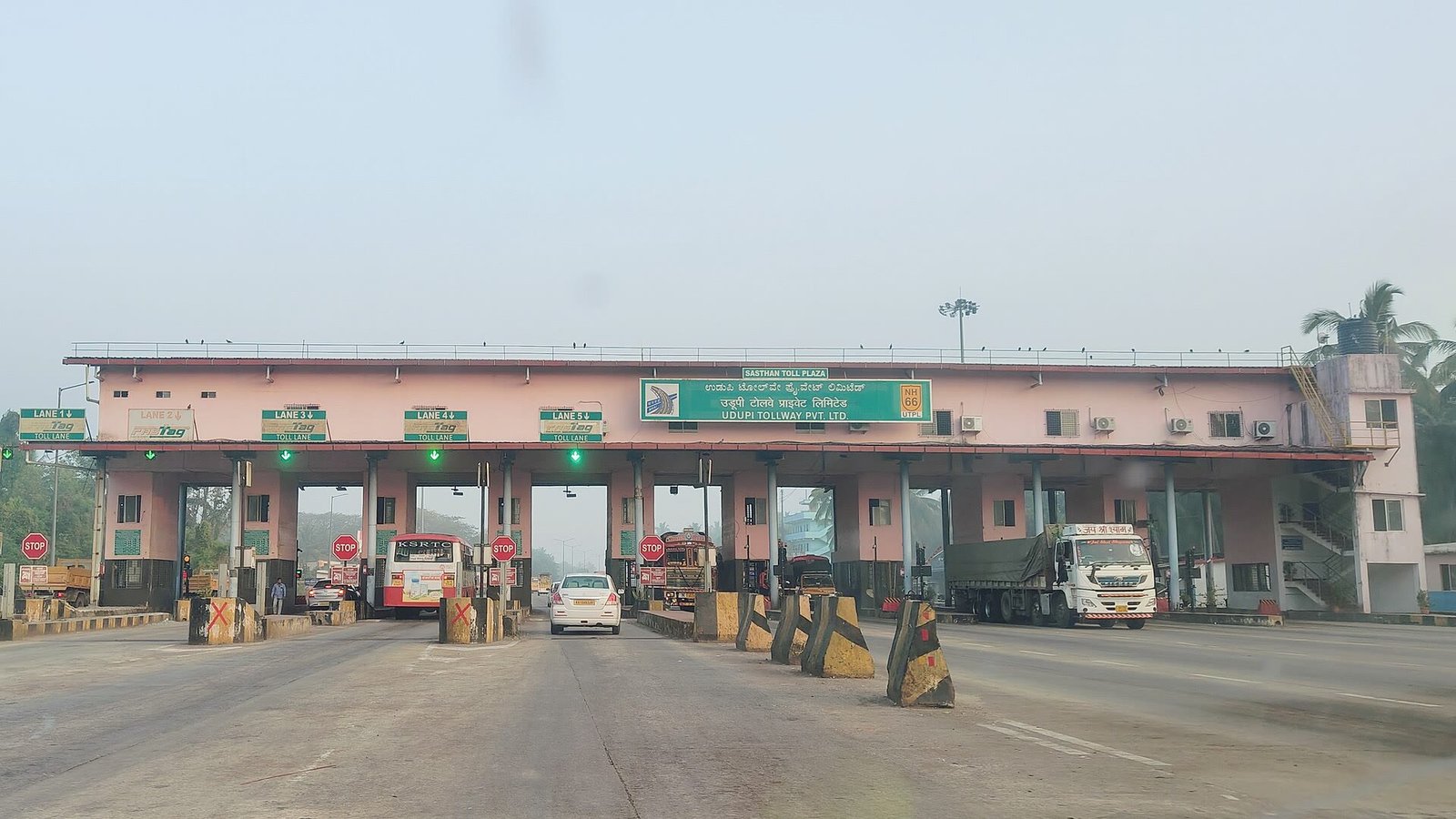
The FASTag Annual Pass is a prepaid toll facility for eligible private cars, jeeps and vans using designated National Highway and National Expressway fee plazas. For financial year 2026–27, the fee is ₹3,075, effective from 01 Apr 2026, and the benefit lasts for one year or 200 fee-plaza crossings, whichever comes first. This guide shows how to compare that fixed fee with regular toll debits, check whether your route is covered and avoid treating every toll as part of the pass.
Key takeaways
- The current Annual Pass price is ₹3,075 for FY 2026–27, not ₹3,000; NHAI announced the revision from 01 Apr 2026.
- Eligibility is limited to private, non-commercial cars, jeeps and vans with an eligible, functioning FASTag linked to the vehicle.
- Coverage is for designated National Highway and National Expressway fee plazas. State-government or local-body roads, some expressways, parking and other facilities can still debit the regular FASTag wallet.
- At a point-based plaza, one crossing counts as one trip and a return journey normally counts as two. In a closed tolling system, one entry-and-exit pair counts as one trip.
- Break-even depends on your average eligible toll. At an illustrative ₹100 per covered crossing, 31 crossings in the validity period would exceed the ₹3,075 pass fee.
- Keep checking the exact route and maintain wallet balance for non-covered tolls, especially as barrier-free tolling expands.
Why the Annual Pass matters in 2026
NHAI announced on 15 Mar 2026 that the FASTag Annual Pass fee would rise from ₹3,000 to ₹3,075 for FY 2026–27, with the revised amount applying from 01 Apr 2026. The authority's release says the pass is intended for eligible non-commercial vehicles at about 1,150 fee plazas on National Highways and National Expressways, and that activation normally happens on the existing FASTag within two hours after payment through Rajmargyatra or the NHAI website.
The change is small in rupee terms, but it changes the calculation for frequent highway users. A driver who remembers the older ₹3,000 figure can understate the break-even point, while a driver who assumes that every toll road is covered can overstate the benefit. Use the FASTag basics guide for tag, KYC and balance concepts, then do the route-specific comparison below.
The timing also matters because toll collection is moving toward more barrier-free systems. The New Indian Express reported that Paranur on Tamil Nadu's GST Road moved to Multi-Lane Free Flow collection on 02 Oct 2026, using Automatic Number Plate Recognition with FASTag. A vehicle may pass without stopping at a booth, but that does not make every road free or remove the need to monitor the correct FASTag balance. The current Paranur development is a useful reminder to understand the payment rule before a regular toll is deducted automatically.
Annual Pass vs regular FASTag
The two options solve different problems. The Annual Pass replaces eligible per-crossing charges with a fixed payment up to its limit; a regular FASTag continues to deduct the applicable fee at each toll location from the linked wallet.
| Point of comparison | FASTag Annual Pass | Regular FASTag |
|---|---|---|
| Price reference | ₹3,075 for FY 2026–27, effective 01 Apr 2026 | No pass fee; applicable toll is debited per transaction |
| Validity | One year from activation or 200 fee-plaza crossings, whichever is earlier | Continues as a normal wallet-based FASTag while the account and tag remain valid |
| Eligible vehicle | Private, non-commercial car, jeep or van with an eligible FASTag | Normal FASTag rules and the applicable vehicle category at each facility |
| Where it applies | Designated National Highway and National Expressway fee plazas; NHAI cited about 1,150 plazas in its 15 Mar 2026 release | Any participating toll, road or parking facility that accepts the tag, subject to its own fee |
| How to activate or pay | Eligibility check and payment through Rajmargyatra or the NHAI website; NHAI says activation normally takes two hours | Recharge and transaction management through the FASTag issuer or linked payment channel |
The table is a decision framework, not a promise that one option is cheaper for every driver. The Annual Pass is not mandatory. If a vehicle uses mainly state roads, local-body facilities or occasional toll roads outside the covered network, regular FASTag debits may remain the relevant comparison.
How to calculate the break-even point
Start with the current pass fee, then divide it by the average toll for one eligible crossing:
Break-even crossings = ₹3,075 ÷ average eligible toll per crossing.
Because you cannot make a fraction of a crossing, round the result up. The following examples use clearly labelled illustrative toll amounts. They are arithmetic examples, not a national toll schedule; check your actual plaza or journey before using them.
| Illustrative eligible toll per crossing | Math | Crossings to recover ₹3,075 | Regular toll at that count |
|---|---|---|---|
| ₹50 | ₹3,075 ÷ ₹50 = 61.5 | 62 | ₹3,100 |
| ₹100 | ₹3,075 ÷ ₹100 = 30.75 | 31 | ₹3,100 |
| ₹150 | ₹3,075 ÷ ₹150 = 20.5 | 21 | ₹3,150 |
| ₹200 | ₹3,075 ÷ ₹200 = 15.375 | 16 | ₹3,200 |
These examples show why “200 trips” is a ceiling, not the number every user needs. At a low ₹50 crossing, the arithmetic break-even point arrives only after 62 eligible crossings. At a ₹200 crossing, it arrives after 16. The pass also expires after one year, so a user who reaches only 10 eligible crossings before expiry cannot use the unused crossing capacity to recover the difference.
Worked rupee example for a frequent route
Assume a private car makes eight covered fee-plaza crossings every month and each crossing would otherwise cost ₹100. This could represent four return journeys, but the important input is the number of eligible crossings, not the number of journeys.
- Annual eligible crossings: 8 × 12 months = 96 crossings.
- Regular FASTag cost for those crossings: 96 × ₹100 = ₹9,600.
- Annual Pass fee: ₹3,075 for FY 2026–27.
- Difference in this illustration: ₹9,600 − ₹3,075 = ₹6,525 before considering any non-covered tolls.
The result only applies if all 96 crossings are at covered fee plazas and the vehicle remains eligible. If two of the monthly crossings are on a state-government expressway where the pass does not apply, those transactions must be added separately to the regular wallet cost. The same check is needed for parking, local toll facilities and any route segment outside the National Highway or National Expressway fee-plaza network.
For a real route, use FuelPrice's toll charge calculator to identify the current fee inputs, then count only the crossings that fall within the pass rules. If the trip includes multiple toll roads, keep a separate line for each facility instead of adding one guessed average.
What the pass covers—and what it does not
Covered fee plazas
- The official rule is tied to designated National Highway and National Expressway fee plazas, not to distance driven or to all roads that happen to have a toll.
- At an eligible plaza, the pass applies up to one year or 200 crossings, whichever comes first. NHAI's FAQ says a point-based plaza counts each crossing separately.
- The pass is linked to the existing FASTag and vehicle record. NHAI's FAQ says a new tag is not required when the existing tag is properly affixed and linked to the eligible vehicle registration number.
Charges that can still apply
- State highways, state-government or local-body facilities and other roads outside the designated NH/NE fee plazas can continue to use the regular FASTag wallet.
- Parking and other services using FASTag are not transformed into free passages by the Annual Pass.
- A return drive is not automatically one trip. At point-based tolling, the outbound and inbound crossings are counted separately.
- Barrier-free tolling changes how the vehicle is detected and charged, not the underlying requirement to check whether the facility is covered.
NHAI's Rajmargyatra service is designed to show the exact user fee for a particular plaza or for a journey between selected stations. For longer drives, the FuelPrice road-trip planner can help organise the route and stops before you compare toll payment options.
How to check and activate the Annual Pass
- Confirm the vehicle category. Check that the registration is for a private, non-commercial car, jeep or van. Commercial use is not the same eligibility category.
- Check the FASTag record. Confirm that the tag is fixed to the windshield, linked to the correct vehicle registration number and not blacklisted or inactive.
- Estimate covered crossings. Review your regular route history and separate NH/NE fee plazas from state roads, local facilities and parking.
- Check the latest fee. For FY 2026–27, use ₹3,075 as the NHAI-announced pass price effective from 01 Apr 2026. A later revision can change the calculation for a future year.
- Use the official activation channel. NHAI says the Annual Pass is activated through the Rajmargyatra mobile application or the NHAI website after eligibility verification and payment.
- Save the confirmation. The pass normally activates within two hours according to NHAI's March 2026 release. Check its status before travelling instead of assuming that a payment attempt has completed.
- Keep ordinary balance available. Leave enough wallet balance for non-covered tolls, parking and other FASTag transactions. This is especially important on barrier-free stretches where there may be no booth stopping the vehicle.
- Track the earlier limit. Note the activation date and crossing count. Once either one year or 200 crossings is reached, the tag reverts to regular FASTag operation unless the pass is reactivated.
For the fuel side of the same journey, use the fuel cost calculator with the vehicle's measured mileage and a dated local fuel price. That keeps the toll comparison separate from fuel assumptions and produces a more useful total trip budget.
Common mistakes to avoid
- Using the old ₹3,000 figure: that was the base-year price. NHAI's FY 2026–27 price is ₹3,075 from 01 Apr 2026.
- Calling every journey one trip: count the fee-plaza crossings according to the tolling design. A point-based return journey is normally two crossings.
- Assuming “expressway” always means covered: coverage depends on the authority and fee plaza, so a state-managed expressway can still charge the wallet.
- Comparing against a guessed toll: use the actual route and vehicle category. Rates can differ by plaza and by single, return or other journey type.
- Letting the wallet run empty: a pass does not remove every possible FASTag debit and does not replace checks for a valid tag, vehicle record or non-covered charge.
FASTag Annual Pass FAQ
Is the FASTag Annual Pass compulsory?
No. The Indian Express reported that the existing FASTag system continues for users who do not opt for the Annual Pass. They can keep paying applicable tolls from the regular wallet.
Does the Annual Pass cover state highways and every expressway?
No. It is tied to designated National Highway and National Expressway fee plazas. The NHAI FAQ and PIB clarification say that facilities managed by state governments or local bodies, as well as parking, can continue to charge the regular FASTag balance.
How many trips does a return journey use?
At a point-based fee plaza, each crossing counts as one trip, so an outbound and inbound crossing count as two. NHAI's FAQ separately describes a closed tolling arrangement, where one entry-and-exit pair counts as one trip.
Do I need a new FASTag for the Annual Pass?
No, provided the existing tag meets the eligibility checks and is linked to the correct vehicle registration number. The pass is activated on that tag; it is not a generic ₹3,075 recharge that can be moved between vehicles.
Sources
- NHAI, “NHAI to Revise FASTag Annual Pass Fee from 1st April 2026 for FY 2026–27”, 15 Mar 2026.
- NHAI, “FAQs on Rajmargyatra”, accessed 03 Oct 2026.
- Press Information Bureau, “FASTAG Based Toll Collection and Digital Tolling System”, 22 Jul 2026.
- The Indian Express, “FASTag Annual Pass Price Revised to Rs 3,075 from April 1: Check Details”, 15 Mar 2026.
- The New Indian Express, “No more tailbacks at Paranur, TN’s 1st barrier-free toll plaza goes live”, 02 Oct 2026.
- Rajmargyatra, “About the National Highways Authority of India citizen service”, accessed 03 Oct 2026.
- Wikimedia Commons, “Sasthan Toll Plaza on National Highway 66”, photograph by Adityamadhav83, CC BY 4.0.