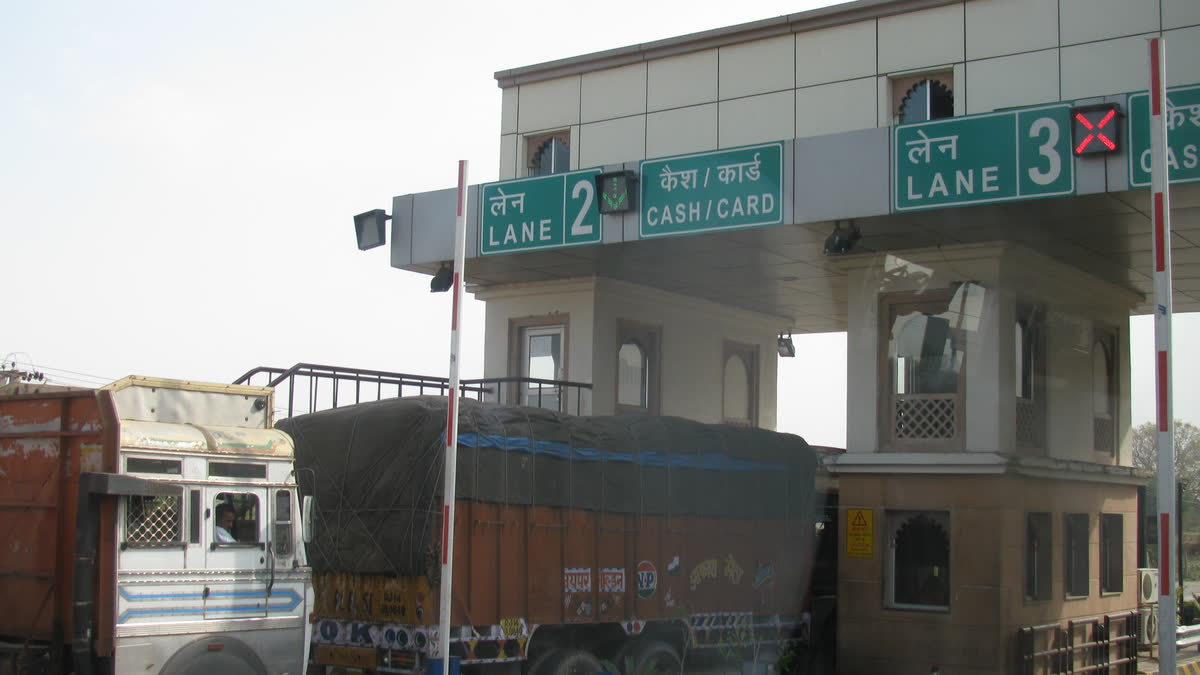
India's National Highway toll is not one flat charge: it is built from the tolled section, the vehicle category and the current fee schedule, then affected by the way you pay or by an eligible pass. This guide explains the calculation and shows how to check the exact amount before a road trip.
As of November 2026, barrier-free Multi-Lane Free Flow (MLFF) tolling is also expanding. A vehicle can pass under cameras and readers without stopping, but the need for a valid FASTag, sufficient balance and a route-specific toll check remains.
Key takeaways
- The core National Highway formula starts with the length of the tolled section multiplied by the applicable vehicle-category rate.
- Expressways use 1.25 times the four-or-more-lane National Highway rate; some upgraded two-lane stretches use 60% of that rate.
- From 15 November 2025, a missing or invalid FASTag can make a ₹100 base toll ₹125 by UPI or ₹200 in cash.
- The FASTag Annual Pass costs ₹3,075 for FY 2026–27 and lasts one year or 200 fee-plaza crossings, whichever comes first, for eligible private vehicles.
- A local annual pass from 1 November 2026 is limited to eligible residents within 20 km of a particular plaza and costs ₹1,500 or ₹3,000 depending on location.
- Use a route-specific toll calculator, then add fuel and other trip costs instead of budgeting from a national average.
Why toll calculation matters as booths disappear
NHAI operationalised MLFF at Chennasamudram on the Karaipettai–Walajahpet section of NH-48 in Tamil Nadu at 00:00 on 21 November 2026. The system uses overhead Automatic Number Plate Recognition cameras and FASTag/RFID readers to identify vehicles and collect the applicable user fee without a conventional boom barrier. The Ministry said 9,81,450 vehicles crossed that plaza in October 2026, averaging about 31,660 vehicles a day.
The change is about collection technology, not a universal new toll rate. Your charge still depends on the fee schedule and vehicle class. In March 2026, amended rules defined an unpaid user fee as a recorded passage for which the applicable fee was not received; electronic notices can include the vehicle details, date, location and amount payable.
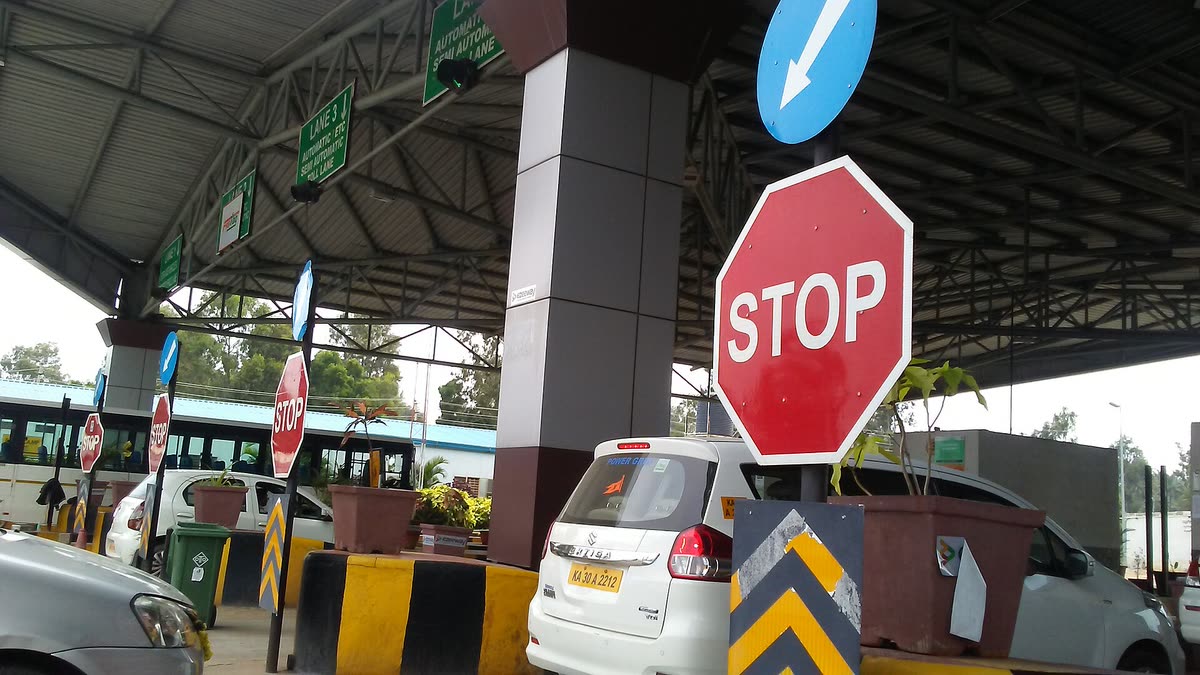
See our Chennasamudram MLFF tolling update for the current rollout. A booth-free plaza still checks your vehicle and payment.
What decides a National Highway toll?
1. The vehicle category
The National Highways Fee Rules group vehicles into categories such as car, jeep or van; light commercial vehicle or mini bus; two-axle bus or truck; three-axle commercial vehicle; four-to-six-axle heavy or multi-axle vehicles; and oversized vehicles. The same road section therefore does not have one universal price.
- Check the category shown in the plaza's fee schedule, not merely the vehicle's size or brand.
- A private car, a taxi and a goods vehicle can be charged differently even when they use the same road.
- Select the matching vehicle type in any route tool.
2. The length and type of road
MoRTH's published formula says the fee for a four-or-more-lane National Highway section begins with the section length multiplied by the base rate for the vehicle category. These rates are revised every year with effect from 1 April under the fee rules. An expressway fee is 1.25 times the rate for a four-or-more-lane National Highway section.
An upgraded two-lane National Highway with paved shoulders can use 60% of the four-or-more-lane National Highway fee where substantial improvement has widened the carriageway by three metres or more. A qualifying bypass can have a separate multiplier. These adjustments are why a distance-only estimate can differ from a plaza's current charge.
3. Bridges, tunnels and other long structures
The 2025 amendment changed how a section containing a bridge, tunnel or similar structure is converted into an equivalent length. For a structure longer than 60 metres, the effective length is the ordinary road length plus ten times the structure length, or five times the total section length, whichever is lower. A structure of 60 metres or less is treated as part of the normal section length.
Worked length example: assume a 10 km section contains a 1 km qualifying bridge. The first method gives 9 km of ordinary road plus 10 km of equivalent structure length, or 19 km. The alternative cap is 5 × 10 km, or 50 km. The lower figure is therefore 19 km for the length component. It is not the final rupee toll: vehicle rate, road type, annual revision and the plaza schedule still apply.
For a complete route budget, use the FuelPrice toll charge calculator.
FASTag, UPI and cash: how payment changes the bill
The Third Amendment to the National Highways Fee Rules, announced by MoRTH in October 2025, took effect on 15 November 2025. If a vehicle enters a fee plaza without a valid, functional FASTag, the official rule sets the charge at twice the applicable user fee for cash payment or 1.25 times the applicable user fee for UPI payment. NDTV independently reported the same ₹100 example.
| Situation at the plaza | Rule or date | Example when the valid-FASTag fee is ₹100 |
|---|---|---|
| Valid, functional FASTag | Normal applicable user fee | ₹100 |
| No valid FASTag, payment by UPI | 1.25 times the fee from 15 Nov 2025 | ₹125 |
| No valid FASTag, payment in cash | Twice the fee from 15 Nov 2025 | ₹200 |
Worked rupee example: on a return journey crossing the same plaza twice, a valid FASTag would total ₹200 when the applicable fee is ₹100 each way. If one crossing is made without a valid tag and settled by UPI, the total becomes ₹100 + ₹125 = ₹225. If paid in cash, it becomes ₹100 + ₹200 = ₹300. The ₹100 starting fee is the official illustration; actual plaza rates vary by road, vehicle category and current schedule.
A low wallet balance or an inactive, damaged or wrongly linked tag can therefore matter even when the driver has money available through another payment method. At MLFF sites, there may be no booth attendant to explain the deduction as the vehicle passes.
Annual pass, local pass or regular toll?
These pass concepts solve different travel patterns. An annual pass for a private car is a network-level product with a crossing cap. A local pass is tied to one fee plaza and to a residence and vehicle-eligibility test. Neither is a universal waiver for every road or toll.
| Option | Verified position as of Nov 2026 | What to check |
|---|---|---|
| Regular FASTag payment | Pay the current plaza fee for the vehicle category and route | What does the route-specific schedule show today? |
| FASTag Annual Pass | ₹3,075 for FY 2026–27; one year or 200 fee-plaza crossings, whichever comes first; about 1,150 National Highway and National Expressway plazas | Will this eligible private vehicle use covered plazas before the cap? |
| Concessional Local Pass | ₹1,500 per year outside municipal or local town limits, or ₹3,000 within those limits; effective 1 Nov 2026 | Does the owner live within 20 km and is this exact plaza eligible? |
NHAI's March 2026 release confirmed the ₹3,075 Annual Pass price for FY 2026–27, and The Indian Express reported the same revision. The pass is for eligible non-commercial cars, jeeps and vans with a valid FASTag, and ends after one year or 200 crossings, whichever comes first. At a ₹100 starting fee, ₹3,075 is reached after the 31st crossing; that arithmetic is not a promise of savings because coverage and counting rules remain decisive.
The local annual pass is narrower. The October 2026 government announcement says the applicant must have a valid, functional FASTag, live within 20 km of the fee plaza and use an eligible non-commercial vehicle. It is valid only for that plaza, is not transferable, and is not issued where a service road or alternative road is available or where a closed user-fee system applies. NDTV Auto independently reported the same eligibility and price limits. It is available at eligible plazas from 1 November 2026 and through the RajmargYatra app from 1 December 2026.
How to check your exact toll before leaving
- Enter the origin, destination and vehicle category in the FuelPrice road-trip planner or toll charge calculator.
- Compare the result with official fee-plaza or route information, especially when an expressway, bypass, bridge or tunnel is involved.
- Check whether the route includes National Highway, National Expressway, state-highway or privately operated tolls. A National Highway annual pass is not automatically a pass for every road.
- Decide whether the trip is one crossing, a return crossing or several separate plaza crossings. The annual pass counts fee-plaza crossings, not kilometres.
- Add fuel with the FuelPrice fuel-cost calculator, using realistic mileage and the latest city fuel price.
- Record the estimate date because schedules can change with annual revisions, route openings, revised sections or concession arrangements.
Checklist before a FASTag or MLFF journey
- Confirm the tag is affixed to the correct windscreen and linked to the correct registration number.
- Check tag status and wallet balance before entering a National Highway or expressway.
- Keep transaction alerts enabled and retain the deduction message or receipt.
- If a pass is active, confirm the vehicle category, covered plazas and remaining validity or crossings.
- For a local pass, verify residence distance, plaza eligibility and the alternative-road exclusion.
- After an unexpected deduction or notice, compare the vehicle number, passage date, plaza location and amount with the trip record before raising a complaint.
- Do not assume a barrier-free lane means a free lane; the electronic record still has to match a received payment.
FAQ
Is Indian toll tax calculated only by distance?
No. Section length is a major input, but vehicle category, road type, annual schedule, structures, bypass rules and payment method can alter the amount. A route-specific quote is more reliable than a personal distance estimate.
Does FASTag reduce the basic toll rate?
A valid, functional FASTag normally lets the applicable user fee be collected without the non-FASTag multipliers. It does not make the underlying road fee zero; from 15 November 2025, an invalid or missing tag can make payment cost more.
Does the FASTag Annual Pass cover every toll in India?
No. The 2026–27 pass is for eligible private non-commercial vehicles and the designated National Highway and National Expressway fee-plaza network for one year or 200 crossings. Do not assume state or private toll roads are included.
What happens at a barrier-free MLFF plaza?
Overhead cameras and FASTag/RFID readers identify the vehicle while it moves through the tolling zone. If the applicable fee is not received, the rules provide for an e-notice stating passage details and the amount payable.
Who can use the local annual pass?
Qualifying non-commercial vehicle owners must live within 20 km of an eligible fee plaza and have a valid, functional FASTag. The pass is tied to that one plaza, and the government exclusions still apply.
Sources
- PIB — NHAI Implements Multi-Lane Free Flow Tolling System at Chennasamudram Toll Plaza — 21 Nov 2026
- PIB / MoRTH — Formula for Toll Collection — 6 Dec 2023
- PIB / MoRTH — New User Fee Collection Rule for Non-FASTag Users — 4 Oct 2025
- NHAI — FASTag Annual Pass Fee for FY 2026–27 — 15 Mar 2026
- PIB / MoRTH — Concessional Local Pass for Users Living Near Fee Plazas — 27 Oct 2026
- PIB / MoRTH — National Highways Fee Rules 2026 Amended for Digital Enforcement — 18 Mar 2026
- NDTV — No FASTag While Driving on National Highway? Pay Double in Cash or 1.25 Times via UPI — 15 Oct 2025
- The Indian Express — FASTag Annual Pass Price Revised to ₹3,075 for 2026–27 — 15 Mar 2026
- NDTV Auto — FASTag Annual Local Pass: Eligibility, Price and Limits — 28 Oct 2026
- Wikimedia Commons — India Toll Station, photograph by Zenit, 15 Apr 2009, CC BY-SA 3.0
This article is for general information only and is not financial, insurance or legal advice.