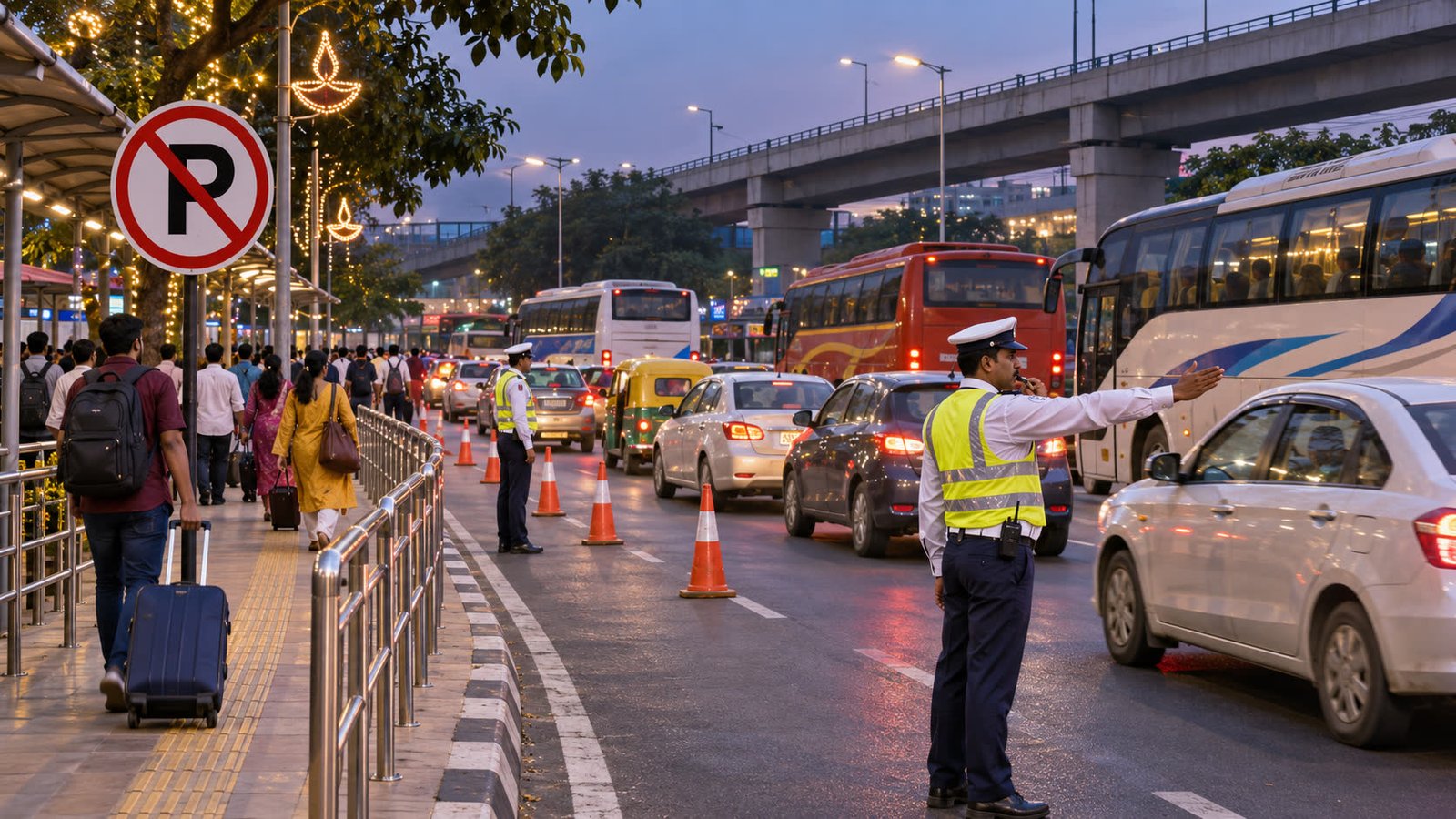
Delhi Traffic Police has announced special traffic arrangements around Anand Vihar Inter-State Bus Terminal (ISBT) and adjoining transport hubs from 5 November to 15 November 2026 for the Dhanteras, Diwali, Bhai Dooj and Chhath Puja travel rush. For drivers, the practical effect is more diversion management and stricter parking checks around the terminal, with congestion likely on the approach roads.
The advisory is a traffic-management measure, not a change to tolls or fuel prices. Road users heading to the terminal, nearby railway and bus facilities, or east Delhi and Ghaziabad corridors need to follow on-ground signs and allow time for traffic controls.
Key takeaways
- Special arrangements run from 5 November to 15 November 2026, according to Delhi Traffic Police.
- Chaudhary Charan Singh Marg and Swami Dayanand Marg, along with approaches near Ghazipur, Ramprastha and Vivek Vihar, are expected to see restrictions or diversions.
- Unauthorised parking and informal pick-up or drop-off near Anand Vihar ISBT will be checked.
- Police have asked commuters to use alternative routes, follow diversion signs and consider public transport during peak movement.
What the Anand Vihar advisory changes
Delhi Traffic Police issued the alert on 6 November after anticipating heavy passenger movement around Anand Vihar ISBT and nearby transport hubs during the festive travel period. The official notice asks motorists to plan journeys in advance, obey traffic directions and cooperate with personnel deployed in the area.
The police advisory covers the terminal area and adjoining roads rather than announcing a blanket closure of all routes around Anand Vihar. That distinction matters for private-car users: access may remain possible, but the approach, stopping and exit arrangements can change as passenger volumes build. The police also warned that unauthorised parking and illegal passenger pick-up or drop-off would be checked.
Roads and parking points to watch
Hindustan Times reported that traffic movement would be affected on Chaudhary Charan Singh Marg and Swami Dayanand Marg, with restrictions and diversions around the Ghazipur and Ramprastha roundabouts and in Vivek Vihar. These links connect busy eastern Delhi approaches with the terminal and the wider Delhi-NCR road network.
Business Today’s report on the police plan said parking would be prohibited on both sides of Road No. 56, particularly near the ISBT entry and exit gates and adjoining approach roads. It listed designated parking options on Kaushambi Road, near Maharaj Showroom and near Anand Vihar. Those details are reported locations; drivers should follow the signs and instructions in force when they arrive rather than stopping on a carriageway.
For people travelling towards NH-24, Business Today reported that the advisory points to alternative routes including the Delhi–Karol Bagh–Barapullah corridor and the Delhi–Dehradun Expressway via GT Road. The same report said travellers heading towards Ghaziabad and Dilshad Garden were directed towards the Delhi–Dehradun Expressway near Akshardham via GT Road. Route suitability will depend on the origin, destination and live traffic conditions.
Who is likely to feel the impact
Bus passengers will see the most direct effect because the terminal is the source of the seasonal surge. Private cars, taxis and two-wheelers making short drop-offs can also slow the approach roads if drivers stop outside marked areas. Goods and transport vehicles are especially exposed to delays where lane space is being managed around the terminal, although the advisory does not announce a general ban on every vehicle category.
The wider effect is already visible across Delhi-NCR. Hindustan Times reported sluggish movement on 7 November around Laxmi Nagar, the Akshardham flyover and Ghazipur, with heavy festive traffic also affecting arterial roads and transport hubs. That context means a delay near Anand Vihar can spread to connecting roads even when the terminal itself is moving.
What it means for fuel and trip cost
The advisory does not change the price of petrol, diesel or CNG and does not create a new toll. Its cost effect is indirect: stop-and-go traffic can increase fuel use, while a diversion can add distance and time. For a car or taxi trip, compare the original and alternative route in the road-trip planner before leaving.
If the diversion adds distance or waiting time, the fuel cost calculator can show the impact using the vehicle’s mileage and the fuel price you enter. For a current reference before a longer Delhi-NCR drive, check the live fuel prices; the advisory itself does not publish any new rate.
Checklist before driving to Anand Vihar
- Confirm the bus departure point and terminal gate before starting; a last-minute stop on the approach road can add to congestion.
- Use only designated parking and keep pick-up or drop-off within the marked area or as directed by traffic personnel.
- Check the latest Delhi Traffic Police updates before leaving, because diversions can be adjusted as the festive rush changes.
- Keep the diversion route open in your navigation app and follow road signs over an older saved route.
- If the journey continues beyond Delhi, compare the revised time, fuel use and tolls with the toll-charge calculator.
What to watch next
Delhi Traffic Police has stated that the special arrangements will remain in force through 15 November 2026. The advisory can be supplemented by fresh controls if traffic volumes, parking pressure or bus movements require them, so the official traffic channels remain the reference point for same-day changes.
For drivers, the main takeaway is practical: treat Anand Vihar as a managed transport hub during the festive window, not as a normal curbside pick-up point. Leave the private car outside the most crowded approach where possible, follow the signed diversion and recalculate the trip if the route changes.
Sources
- Delhi Traffic Police, “Special Traffic Arrangements Around Anand Vihar ISBT for Festive Rush (05.11.2026 to 15.11.2026)”, 06 Nov 2026.
- NDTV, “Delhi Traffic Police Issues Special Traffic Advisory For Anand Vihar ISBT From November 5 To 15”, 06 Nov 2026.
- Hindustan Times, “Sluggish traffic movement across Delhi-NCR as Diwali rush chokes major city roads”, 07 Nov 2026.
- Business Today, “Delhi traffic advisory for Diwali rush out: check all diversions”, 05 Nov 2026.