Petrol pumps operated by state-run oil companies have stepped up water-ingress checks to protect E20 fuel quality, according to a 7 Nov 2026 report; the exact frequency varies across the reported company instructions. For drivers, the development is a quality-control measure at retail outlets; the reports do not announce a new petrol price or a switch away from E20.
Key takeaways
- Business Standard reported that state-run oil marketing companies are requiring more frequent checks of underground tanks and dispensing nozzles at petrol pumps.
- IndianOil's official quality release described water-ingress and density tests 8–12 times daily, while the newer report described different company and outlet schedules; the intervals should not be treated as one universal rule.
- The petroleum ministry said 893 E20 samples tested across 27 states and Union Territories were within the prescribed 19–21% ethanol range.
- The latest updates do not announce a fuel-price change. Drivers should keep the outlet receipt and details if they suspect a quality problem and use the prescribed complaint and testing process.
What changed at petrol pumps
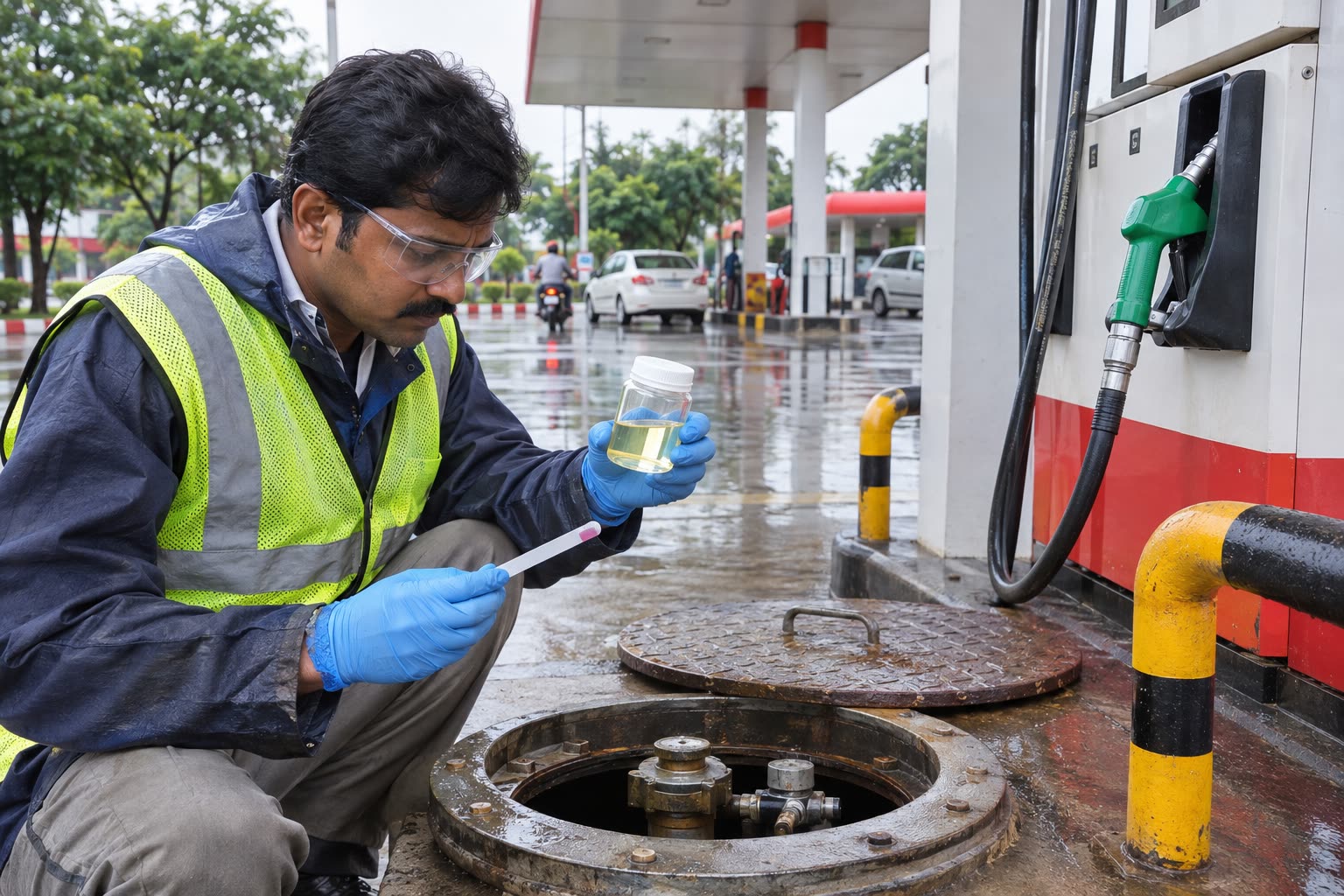
Business Standard reported on 7 Nov 2026 that state-run oil marketing companies (OMCs) had directed petrol pumps to check underground storage tanks and dispensing nozzles for water contamination every two to eight hours, depending on shifts and weather conditions. The report said the measures cover the retail networks of Indian Oil Corporation, Bharat Petroleum Corporation and Hindustan Petroleum.
The report also said BPCL had sent dealers a revised standard operating procedure in an October letter. Business Standard attributed the broader retail-outlet details to a Hindustan Times report and presented the instructions as company-level operating procedures, not as a new nationwide law.
The exact interval needs care. An IndianOil quality release dated 7 Aug 2026 and last updated on 29 Oct 2026 said OMCs had strengthened surveillance with water-ingress and density tests 8–12 times daily at every retail outlet. Autocar India reported the same OMC testing position in August. The two descriptions indicate intensified monitoring, but they do not establish one identical schedule for every company, outlet or weather condition.
Why water checks matter for E20
E20 is petrol blended with ethanol, and ethanol readily absorbs moisture. The Business Standard report said that when water enters an E20 storage system, ethanol can separate from the petrol and form a water-ethanol layer, a process commonly described as phase separation. That is why the reported instructions focus on underground tanks, nozzle points and water-finding paste rather than only on laboratory testing at a refinery.
This does not mean every E20 outlet has contaminated fuel, and it does not establish that an individual vehicle problem was caused by the blend. It means water ingress is a retail-outlet quality risk that dealers and OMCs are expected to monitor. The reported procedures put responsibility on both sides: oil companies control supply quality and blending, while dealers must help ensure the fuel dispensed is not contaminated.
What the latest official testing says
The Ministry of Petroleum and Natural Gas published a clarification on 7 Nov 2026 after Karnataka authorities reported unusually high ethanol readings at some outlets. In its official release, the ministry said 893 E20 samples from OMC depots and retail outlets across 27 states and Union Territories were tested under IS 17021 and all fell within the prescribed 19–21% range. The Economic Times reported the same ministry findings.
The ministry also said 56 samples tested in Karnataka, covering all three public-sector OMCs, recorded ethanol content between 19% and 20%. The government and OMCs questioned the sampling records and test methodology behind the higher figures reported by Karnataka, while asking for joint sampling and independent testing under the prescribed process. That is a contested testing issue, not a confirmed finding that the national E20 supply is outside specification.
This development is separate from FuelPrice's earlier report on the Karnataka E20 testing dispute. The new retail-monitoring story concerns water-ingress checks and operating procedures at petrol pumps; it does not settle the dispute over the state's reported ethanol results.
What drivers should do with the information
There is no announcement in these updates of a new petrol price or a switch away from E20 at ordinary OMC outlets. Drivers can check the latest listed rates on the live fuel-prices page, but the amount displayed at a pump and the quality-control process are separate questions.
- Keep the bill or digital payment record if you refuel and later suspect a fuel-quality issue.
- Note the outlet, pump or nozzle, date and approximate time before raising a complaint with the dealer or oil company.
- Do not treat a vehicle symptom alone as proof of contaminated fuel; ask for the outlet's complaint and sampling process to be recorded.
- If comparing monthly petrol spending with another vehicle or fuel type, use the fuel-cost calculator separately from any quality complaint.
What to watch next
The useful follow-up will be whether OMCs publish clearer outlet-level procedures, how water-ingress test results are recorded, and whether the Karnataka government and OMCs complete joint sampling under the prescribed method. More frequent checks can reduce the risk of water entering storage tanks, but they cannot replace transparent testing, traceable samples and a complaint route that drivers can use.
For now, the accurate takeaway is limited but useful: OMCs are tightening or documenting retail fuel-quality surveillance, while official testing cited by the ministry supports compliance of the samples tested. Drivers should distinguish a reported operating measure from a confirmed contamination event and keep records if they need an outlet-level investigation.
Sources
- Business Standard — Oil firms tighten water checks at petrol pumps to protect E20 quality — 7 Nov 2026
- Press Information Bureau, Ministry of Petroleum and Natural Gas — E20 Petrol Supplied by PSU Oil Marketing Companies Meets Prescribed Quality Standards; 893 Samples Across 27 States and UTs Found Compliant — 7 Nov 2026
- The Economic Times — E20 petrol supplied by PSU oil firms meets prescribed quality standards: Oil Min — 7 Nov 2026
- IndianOil — Oil Marketing Companies test for Moisture & Chloride presence in E20 Petrol — 7 Aug 2026, updated 29 Oct 2026
- Autocar India — OMCs reject E20 fuel contamination claims after nationwide testing — 10 Aug 2026