Audi India is considering local assembly of a battery-electric vehicle, with a decision expected in the next few months, according to Audi India Brand Director Balbir Singh Dhillon in an interview with PTI reported on 11 Oct 2026. The update is a reported plan, not a launch announcement: no model, price, booking date or production start has been confirmed, so it is a future-market signal rather than a change to what buyers can order today.
Key takeaways
- Audi India is weighing local assembly of a battery-electric vehicle; the decision is expected in the coming months.
- The company has not named the EV, announced a price or confirmed a launch and production timeline.
- Audi says local manufacturing will remain central to its India strategy, while imports may add more models to the range.
- The brand plans to expand its dealer presence in tier-II and tier-III cities, according to the latest report.
- The proposed India–European Union free-trade agreement is a possible future factor, not a deal buyers can rely on today.
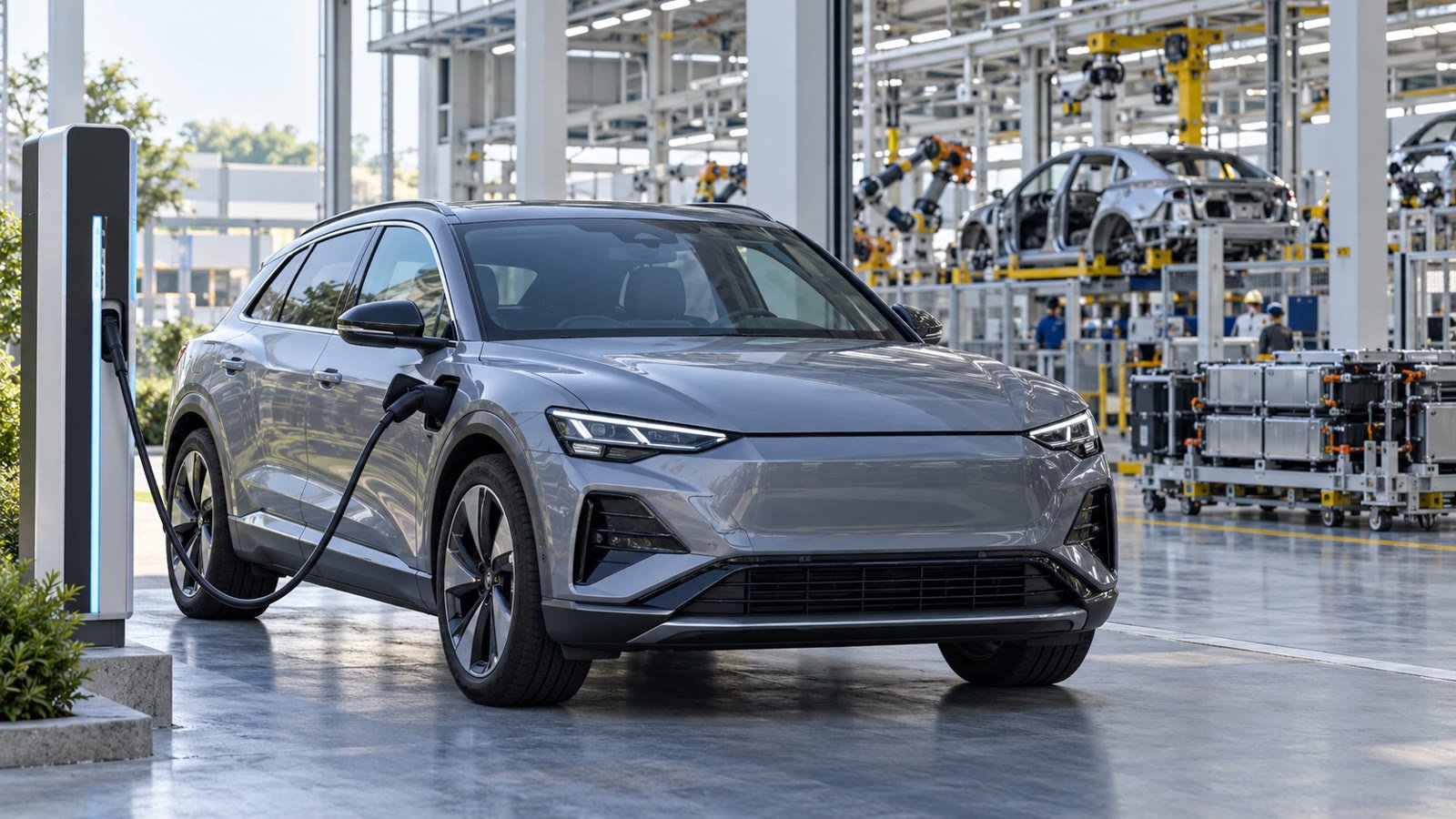
Illustration: a representative EV charging beside an automotive assembly line. It is not a photograph of Audi’s proposed model or an official Audi facility.
What Audi India has reported
Dhillon told PTI that Audi is contemplating a locally made BEV and expects a decision in the next few months. The wording matters: this is an internal business direction reported through an executive interview, not a product reveal or a regulatory approval. Audi has not said which vehicle would be assembled, where the programme would sit in the production schedule, or when customer deliveries could begin.
The latest update also places the EV discussion inside a wider India plan built around new products, customer experience and network expansion. Audi said it wants to add outlets and reach more tier-II and tier-III cities over the next year. For buyers outside the largest metros, a wider retail and service footprint could make access easier over time, but the company has not tied any particular city or outlet to a future EV.
Why local assembly matters to premium-EV buyers
Audi’s earlier India strategy has relied on a mix of locally assembled models and imported vehicles. In an August interview, Autocar Professional reported that Audi had decided to assemble an electric vehicle in India, while the model and timing were still being worked out. The October report is therefore a status update on an existing direction: the next decision point is the vehicle and the business case, not a confirmed showroom launch.
Local assembly can change how a premium EV is positioned, because a vehicle assembled in India may have a different duty and supply-chain structure from a fully imported car. That does not automatically mean a lower price. Imported battery and component content, currency movement, volume, localisation depth and the company’s pricing policy would still influence the final amount. The safe takeaway is that localisation could expand Audi’s options in India; it is not evidence of a future discount.
Audi India’s own sustainability page describes electric mobility as part of its long-term direction and discusses production and supply-chain emissions. That supports the broader technology context, but it does not confirm the Indian model, factory or timeline mentioned in the reported update.
What the proposed EU trade agreement changes
Dhillon also pointed to the proposed India–EU free-trade agreement as a way to bring more models to India and test demand before deciding on local manufacturing. “Proposed” is important here: the agreement is not a current purchase rule, and the report does not establish any final duty, quota or price benefit for Audi customers.
If the policy takes shape, Audi could have more flexibility to balance imported niche products with locally assembled volume models. For readers, that could mean more choice across powertrains and body styles, but the effect will depend on the final agreement, the models Audi selects and the volumes each model can support. Until those details are published, today’s prices and availability remain the relevant reference point.
Charging and ownership checks remain separate
Local production would address supply and positioning; it would not by itself solve the practical questions that decide whether an EV fits a driver’s routine. Buyers still need to consider where the vehicle can be charged, how long a regular top-up takes, and whether service support is available along their usual routes. FuelPrice’s state-wise EV charging directory can help readers check the public-charging context without treating a future Audi plan as a current network guarantee.
Running-cost comparisons also need the driver’s real distance, charging pattern and electricity arrangement rather than a headline claim. A petrol or diesel benchmark can be mapped with the fuel-cost calculator, while the road-trip planner helps frame the longer-route questions that a city-only test may miss. These tools do not predict the price or range of an unannounced model; they help separate a product decision from a broader market signal.
What to watch next
- Model selection: Audi needs to identify the EV that can support Indian volumes and local operating conditions.
- Production plan: The company would need to confirm the assembly location, start date and expected local content.
- Customer pricing: An ex-showroom price, booking window and variant list will be needed before buyers can compare it with current premium EVs.
- Support network: Dealer expansion matters only when charging guidance, servicing and parts support are available in the places where owners drive.
- Policy status: Any India–EU trade agreement or EV-policy change should be treated as proposed until the relevant authority publishes final terms.
Reader takeaway
Audi India’s latest statement points to a possible locally assembled EV, but it does not change the market today. There is no confirmed model, price, launch date or booking window. For a premium-EV buyer, the useful development is the direction of travel: Audi is weighing local production while expanding its India network. The meaningful next update will be an official decision that identifies the vehicle and explains when, where and how it will be made.