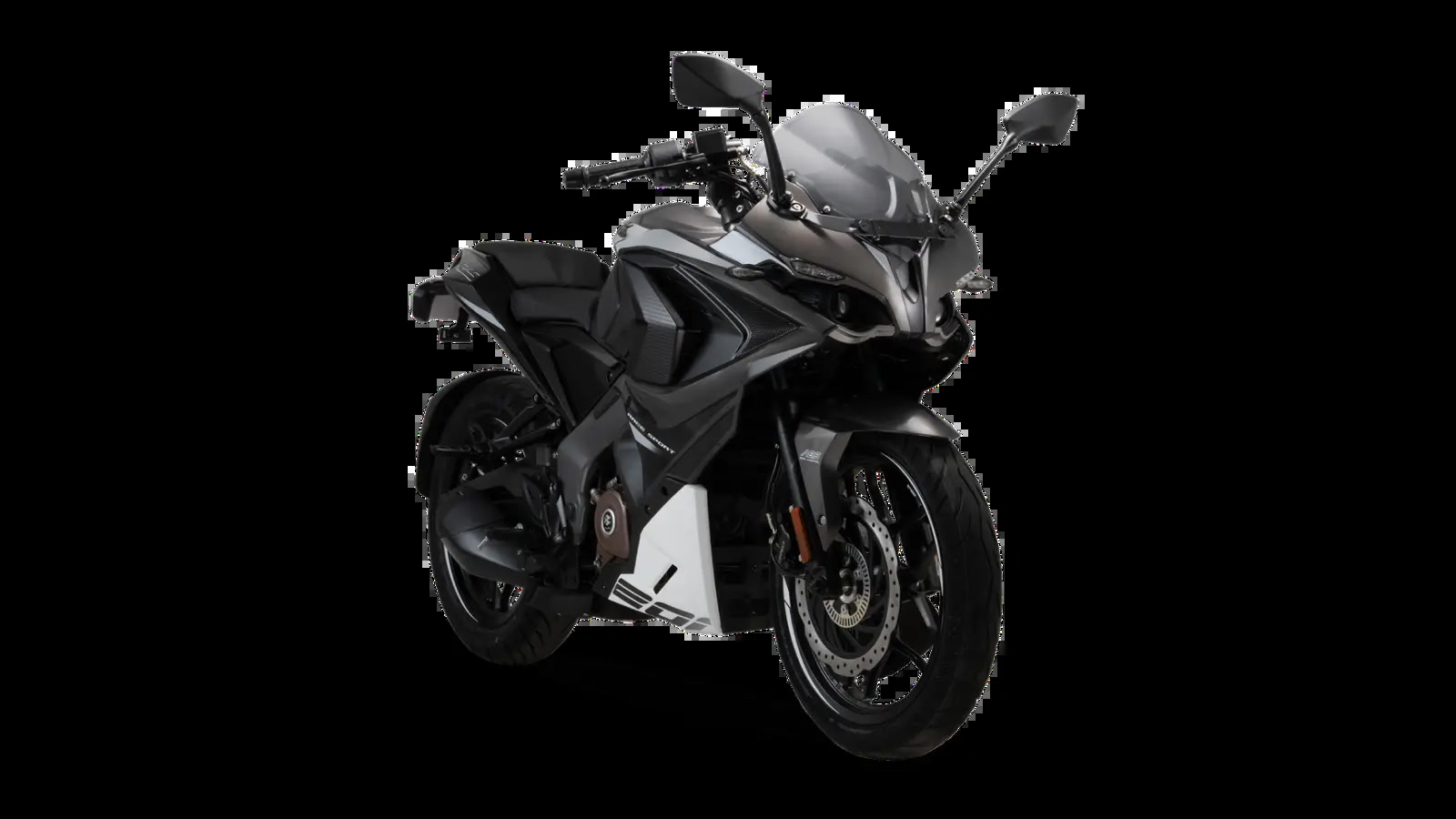
Bajaj Auto has launched the updated Pulsar RS200 in India at ₹1,98,441 ex-showroom Delhi, adding new engine, electronics and suspension hardware to its fully faired motorcycle. For buyers, the central change is a higher upfront price in exchange for ride modes, traction control, a TFT console and an upside-down front fork.
Hero image: Official Bajaj Auto product image of the updated Pulsar RS200.
Key takeaways
- The updated Bajaj Pulsar RS200 is priced at ₹1,98,441 ex-showroom Delhi, according to ETAuto's 20 Nov 2026 launch report.
- Its 199.5cc engine is reported at 25.5 PS, with an electronic throttle body, multiple ride modes and traction control.
- The motorcycle adds a 5-inch TFT display with Google Maps mirroring, a Sports Shifter and new rider-convenience features.
- A 37mm upside-down front fork and a 140/70-R17 radial rear tyre are the main hardware changes.
- Autocar India says the price is roughly ₹17,000 higher than before; final on-road cost will vary by state and buyer.
What Bajaj has changed
ETAuto reported on 20 Nov 2026 that Bajaj Auto had upgraded the Pulsar RS200 with an electronic throttle body (ETB), multiple riding modes, traction control and a new TFT display. The same report put the updated motorcycle's output at 25.5 PS, up from 24.5 PS in the existing model, and listed the price at ₹1,98,441 ex-showroom Delhi.
Bajaj's live product page lists the RS200's displacement as 199.5cc, maximum power as 25.5 PS at 10,000rpm, maximum torque as 18.74Nm at 8,000rpm and the engine type as 4V, ETB. There is an inconsistency on that page: an older FAQ block still displays the previous 24.5 PS figure. The updated 25.5 PS figure is used here because it appears in the current specification block and is independently reported by ETAuto and Autocar India.
The ETB is the enabler for the electronic changes. It lets the engine-management system offer selectable riding modes, while traction control is intended to help manage wheel slip. Those features add control options, but their practical value depends on road surface, tyres, riding conditions and how consistently the rider uses them. They are not a substitute for safe riding or a guarantee of a particular performance outcome.
New display and equipment
The old instrument arrangement has been replaced by a 5-inch TFT console that supports Google Maps mirroring. ETAuto and CarAndBike also list a Sports Shifter, adjustable levers, Panic Brake Alert, a USB Type-C port and a hazard switch. These additions make the update more than a colour or graphic refresh, even though the motorcycle's overall fully faired design remains broadly familiar.
For a rider who spends time commuting, the useful distinction is between features that change interaction with the bike and features that change the underlying hardware. The TFT and phone mirroring affect information access; ride modes and traction control affect electronic control; the quickshifter and adjustable levers affect the riding interface. A test ride should establish whether those changes are useful in the rider's normal traffic and road conditions.
Suspension and tyre hardware
The front suspension now uses a 37mm upside-down (USD) fork instead of the conventional telescopic unit, while the rear tyre moves to a 140/70-R17 radial specification. The update therefore changes the motorcycle's hardware as well as its electronics. That can influence steering feel and cornering behaviour, but a specification sheet alone cannot establish ride comfort, braking feel or long-distance fatigue.
The engine remains a 199.5cc liquid-cooled single-cylinder unit, so this is an extensive upgrade to the existing RS200 rather than a new displacement class. CarAndBike reported that the motorcycle retains its fully faired design and lists the same broad colour range, including Brooklyn Black, Pearl Metallic White, Caribbean Blue and Racing Red.
What the ₹1,98,441 price means
The launch price is ex-showroom Delhi, not the amount a buyer will pay on the road. Registration charges, road tax, insurance, dealer charges and accessories vary by state and transaction, so the final figure must be checked locally. Autocar India reported the new price as roughly ₹17,000 higher than before and said its reference prices were ex-showroom Delhi.
Autocar placed the updated RS200 above the Hero Karizma XMR at ₹1.86 lakh and below the KTM RC 200 at ₹2.33 lakh, with both comparison prices also stated as ex-showroom Delhi on 20 Nov 2026. These are reference points rather than a like-for-like verdict: engine character, equipment, insurance, servicing and local on-road costs can differ between motorcycles.
Because the RS200 remains a petrol motorcycle, ownership budgeting should include the rider's distance, actual fuel economy and the petrol price in the city where the bike is used. A route-level estimate can be built with FuelPrice's fuel cost calculator, rather than treating the ex-showroom price as the complete cost of ownership.
What buyers should check now
- Ask the dealer for a written on-road quote for the exact variant, state and registration location.
- Confirm that the quoted motorcycle includes the TFT console, ride modes, traction control, Sports Shifter and updated suspension hardware.
- Use a test ride to assess the riding position, clutch and shifter feel, screen visibility and the usefulness of the electronic modes in everyday traffic.
- Check expected delivery timing, service support and the cost of consumables before comparing the higher purchase price with another sports bike.
Riders comparing monthly fuel use can check petrol prices across Indian cities before entering their own distance and efficiency assumptions. For longer rides, FuelPrice's road-trip planner can help separate route distance from the motorcycle's purchase price and other trip costs.
What to watch next
The next useful confirmation will be variant-level availability and state-specific on-road pricing as the updated RS200 reaches dealers. Bajaj's retail page currently shows the new specification data while its price field loads dynamically, so local dealer quotes will matter for a buyer's final budget.
The reader takeaway is straightforward: the Pulsar RS200 is a technology and hardware refresh at a higher ex-showroom price, not a clean-sheet redesign. Its value will depend on whether the rider actually wants the added electronics and suspension changes, and whether those benefits justify the roughly ₹17,000 premium after the complete on-road cost is known.