India’s Ministry of Road Transport and Highways (MoRTH) has published a draft Bharat Stage-VII (BS-VII) framework for passenger cars. If finalised, the first phase would apply to M1 cars and SUVs manufactured on or after 1 Apr 2029, while later phases would add battery durability, brake and tyre pollution and wider in-service monitoring. For buyers and existing owners, the immediate point is that this is a proposal open to objections, not a rule requiring current cars to be replaced now.
The draft matters because it moves the compliance discussion beyond tailpipe emissions. It would make real-world testing, vehicle data, battery health and non-exhaust particles part of the regulatory picture that manufacturers must meet over a vehicle’s life.
Key takeaways
- MoRTH notification G.S.R. 880(E), dated 12 Oct 2026, was published in the Gazette on 14 Oct and invites objections for 30 days.
- Phase I is proposed for M1 passenger cars manufactured from 1 Apr 2029.
- Phase II from 1 Apr 2031 would add brake-particle and tyre-wear requirements; Phase III from 1 Apr 2035 would move to a common brake-particle limit.
- Pure EVs and plug-in hybrids would have proposed battery-performance thresholds, while existing vehicles are not covered by a replacement order in this draft.
What MoRTH has proposed
The notification is a draft amendment to the Central Motor Vehicles Rules, 1989. The Gazette notification says the government will consider objections or suggestions received within 30 days of publication. That makes the wording and timetable provisional: the proposal can still be amended before a final rule is issued.
The first group covered is category M1, broadly passenger vehicles with up to eight seats in addition to the driver. The proposed first phase, from 1 Apr 2029, combines laboratory testing with fuel-consumption and electric-range checks, road testing for gaseous pollutants and particle numbers, onboard diagnostics and an Environmental Vehicle Passport. The draft then adds requirements in a second phase from 1 Apr 2031 and a third phase from 1 Apr 2035.
Business Standard reported on 14 Oct that automakers were concerned the proposed timetable could require more engineering, software, testing and compliance work, potentially affecting development schedules. That is an industry response to a draft, not evidence that car prices will rise by a fixed amount. The final cost impact will depend on the standards that survive consultation and how manufacturers implement them.
How the proposal could change future cars
Real-world emissions and onboard monitoring
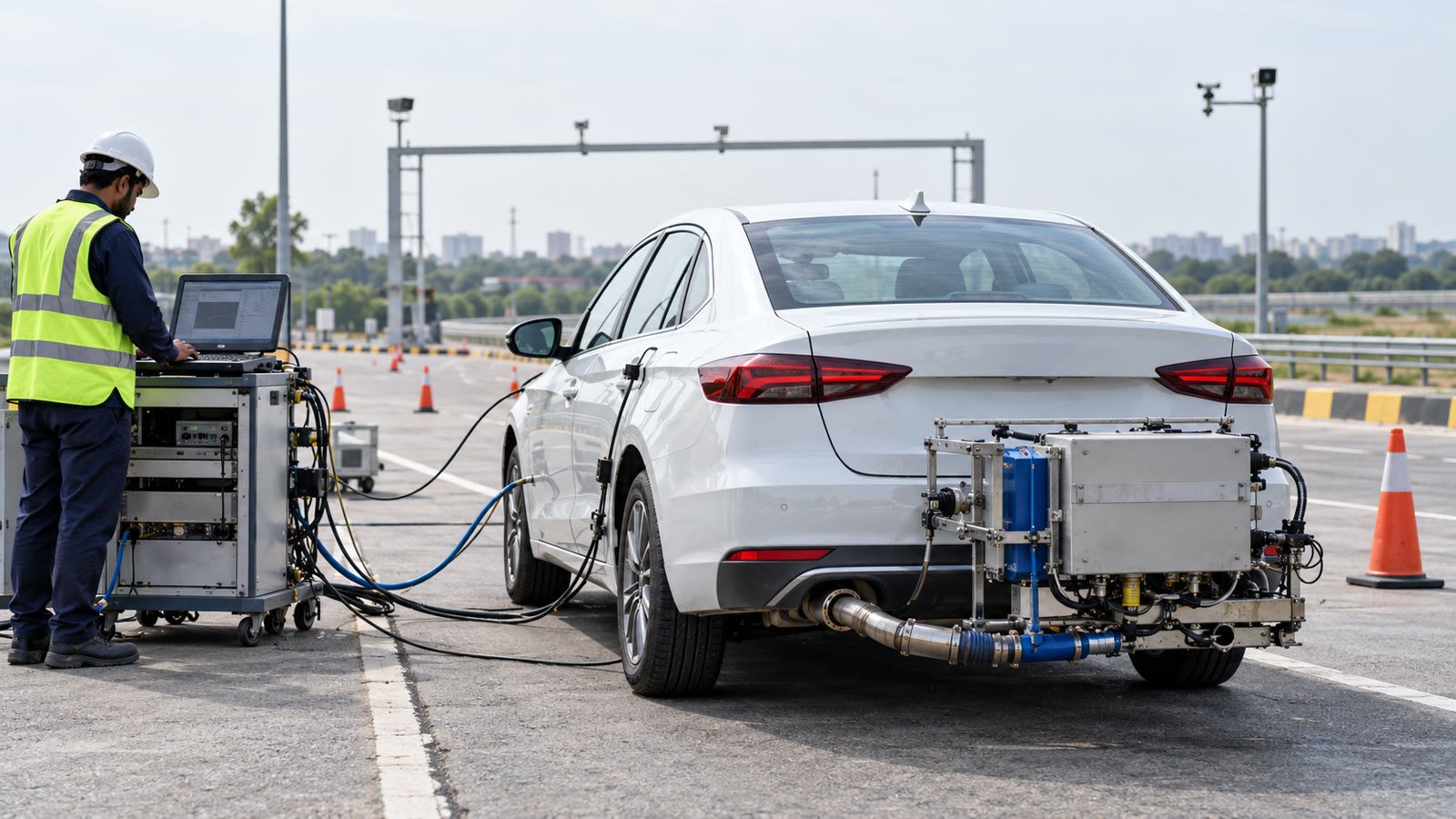
The draft would tighten the link between laboratory approval and emissions on the road. For type approval from 1 Apr 2030, the proposed conformity factor for nitrogen oxides and particle numbers in real-driving tests is 1.0. In plain terms, the vehicle would not get an additional margin over the applicable laboratory limit in that test.
It also proposes onboard monitoring that can detect emissions reaching at least 2.5 times the applicable limit. From 1 Apr 2032, the relevant monitoring data would have to be accessible through the vehicle’s OBD port. The proposed Environmental Vehicle Passport would bring together information such as fuel consumption, battery health and pollutant emissions. That could give future owners more comparable information, although the draft does not by itself create a consumer-facing price or repair guarantee.
Battery health becomes part of compliance
For pure electric and externally chargeable hybrid passenger cars manufactured under the proposed framework, the battery would need to retain at least 75% of its original energy capacity for the first five years or 1,00,000 km, whichever comes first. The proposed threshold would then be 67% up to eight years or 1,60,000 km, whichever comes first.
These are minimum performance requirements in the draft’s approval framework. They should not be read as a blanket promise that every EV owner will receive a free battery replacement or that a particular model’s warranty will use identical terms. Buyers comparing EVs would still need to read the manufacturer’s warranty, battery-cover exclusions and service conditions.
Brake and tyre particles are included
The draft recognises that vehicles create particles without using an exhaust pipe. From 1 Apr 2031, the proposed brake-particle limit for pure EVs is 3 milligrams per kilometre, compared with 7 milligrams per kilometre for specified other powertrains including petrol, diesel and hybrid vehicles. From 1 Apr 2035, a common 3 milligrams-per-kilometre brake-particle limit is proposed for M1 vehicles. Tyre-abrasion requirements are also proposed from 1 Apr 2031, but the notification says their detailed numerical limits and testing procedures will be notified separately.
That is relevant to EV owners because lower tailpipe pollution does not remove brake and tyre wear from the compliance picture. Regenerative braking may reduce reliance on friction brakes in some driving conditions, but the vehicle would still have to meet the applicable standard if the draft becomes final.
What it means for Indian drivers and buyers
Existing owners
The proposed dates are tied to vehicles manufactured on or after the relevant applicability dates. On that reading, the draft is not an immediate replacement notice for cars already on the road. It also does not announce a new petrol, diesel or CNG price, a new toll fee or a new insurance premium. Existing owners should distinguish this consultation from any separate notification that changes present-day registration, testing or pollution-certificate requirements.
People comparing a new car
The practical effect is a longer compliance horizon. A future vehicle may carry more sensors, software and documented emissions or battery data than an equivalent model sold today. That could make comparisons more useful, but it may also add engineering and service complexity. No final retail-price conclusion can be drawn until the consultation ends and manufacturers publish compliant models.
For a running-cost comparison, a buyer can pair the vehicle’s official fuel-consumption or range figures with FuelPrice’s fuel cost calculator. Current petrol, diesel and CNG rates can be checked through the live fuel prices page; the draft does not change those rates.
EV users planning longer trips
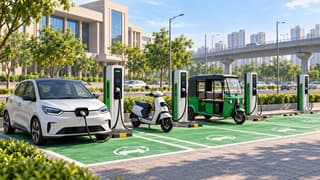
The proposed battery-health information would sit alongside the basic questions of charging access, range and warranty coverage. Drivers planning an electric trip can use the state-wise EV charging directory to check available infrastructure, while treating any future battery metric as a regulatory minimum rather than a guarantee of real-world range on every journey.
What happens next
The next decision is whether MoRTH changes the draft after the 30-day objection window and then issues final rules. The points worth watching are the final dates for each vehicle category, the separate treatment of two-wheelers and commercial vehicles, the detailed tyre-wear test, and how the Environmental Vehicle Passport data will be shown to owners.
Until then, the useful takeaway is simple: BS-VII is a proposed future compliance framework, not an immediate change to the obligations of today’s car owners. New-car buyers can treat the consultation as a signal that emissions, battery durability and non-exhaust pollution will become more visible parts of vehicle comparison, while waiting for final rules and confirmed manufacturer specifications.
Sources
- Gazette of India, Ministry of Road Transport and Highways: G.S.R. 880(E), draft Central Motor Vehicles Rules amendment for BS-VII (12 Oct 2026; published 14 Oct 2026)
- Business Standard: BS-VII clock starts ticking as Centre sets 2029 target for emission norms (14 Oct 2026)
- Moneycontrol: Govt proposes BS VII norms from April 2029: What car buyers should know (14 Oct 2026)