ChargeIndia has launched an EV charging aggregation platform linking more than 40 charge-point operators across over 1,200 Indian cities. The launch matters to EV owners because it brings charger discovery, live availability, route planning, session start and UPI payment into one access layer instead of requiring a separate workflow for every network.
MobilityPlaza reported the launch on 22 Sep 2026, while ChargeIndia's own platform describes the service as an interoperability layer for drivers, fleets, automakers and charging operators. The company is not adding a new physical charger at every location; its stated aim is to make existing public charging networks easier to find and use.
Key takeaways
- What changed: ChargeIndia says its platform connects more than 40 charging networks across over 1,200 cities.
- What drivers can do: Search for a charger, see reported availability, check compatibility, navigate to it and start a session from one app.
- How payment works: The platform says drivers can pay directly through UPI without maintaining separate prepaid balances for different networks.
- What remains important: Connector type, charging speed, actual station status and the operator's tariff still need to be checked before a long trip.
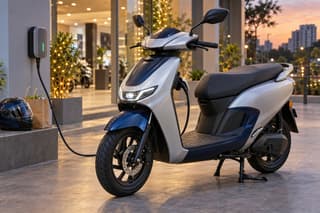
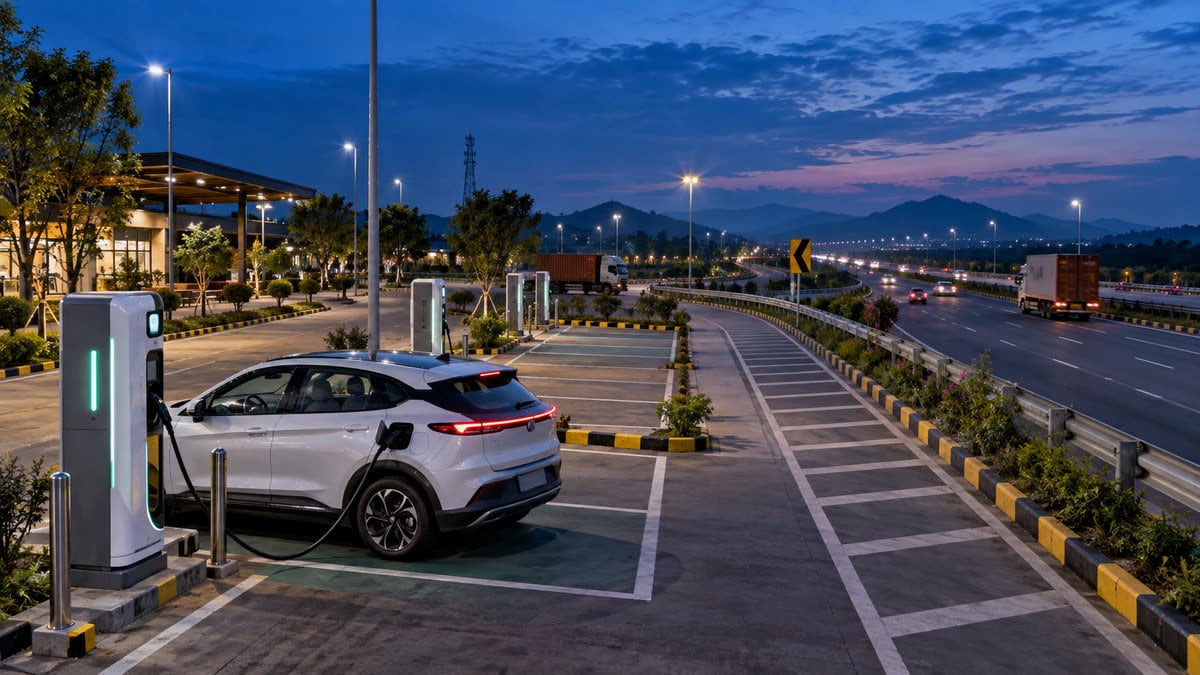
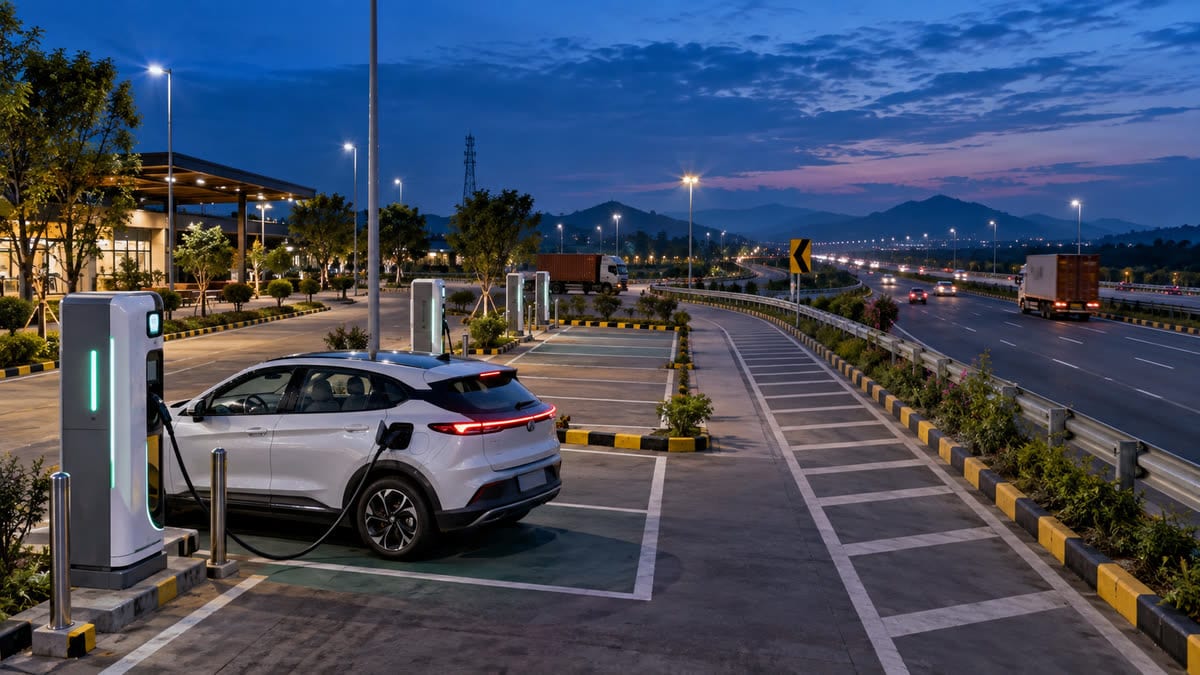 Illustration: FuelPrice (AI-generated editorial scene; not an official ChargeIndia product image).
What ChargeIndia has launched
ChargeIndia is presenting the service as a charging aggregation and interoperability platform. In practical terms, the app is designed to show chargers from multiple charge-point operators in one place, rather than making an EV driver open each operator's app separately.
The launch report identified networks including Statiq, ChargeMOD and ChargeZone among the participating providers. The platform's own service description says it can surface location, live status, connector compatibility and charging speed, then help the driver navigate to a suitable point and pay through UPI.
That distinction is useful. A charging aggregator is an access and software layer; it is not the same thing as owning, operating or maintaining every charger shown on the map. Availability and service quality can still depend on the individual operator and host site.
Why one access layer matters for EV road trips
Public charging in India is growing, but the ownership experience can still be fragmented. A driver may otherwise need different logins, payment methods or wallet balances for different networks. That friction is most visible on inter-city trips, when a missed charger or an unusable connector can turn a simple stop into a range and time problem.
ChargeIndia's reported launch addresses the discovery problem first. A driver can search a route, compare the listed options and see whether a charger is reported as available before leaving. That does not remove the need for a range buffer, but it can make the decision about where to stop easier. EV owners can also use FuelPrice's state-wise EV charging station directory to compare charging locations while planning a journey.
Simpler payment, but not a uniform tariff
The platform says its UPI flow avoids separate prepaid top-ups across participating networks. This may reduce the amount of unused money sitting in different charging wallets and make an occasional public-charging stop easier for a private owner or fleet driver.
It does not mean charging prices become uniform. The operator, charger type, host location and applicable service charges can still determine the final bill. Users should treat the price shown for a station as a station-specific detail and check it before starting the session. The same caution applies to idle fees, parking charges and any minimum session rules shown by the operator.
What changes for a long-distance EV trip
For a road trip, the useful change is the combination of charger discovery and route planning. A single map can reduce app switching and help a driver identify a backup stop if the first location is busy or unavailable. FuelPrice's road-trip planner can be used alongside that process to organise the route, breaks and expected driving distance.
Drivers should still make four checks before relying on a charging stop:
- Compatibility: confirm that the connector and charging standard match the vehicle.
- Power and time: check the charger rating and allow for charging time rather than planning only from distance.
- Live status: treat availability as time-sensitive and recheck it near departure.
- Backup: identify another compatible charger within a sensible range, especially on a highway corridor.
These checks matter because a large coverage claim describes the platform's footprint, not a guarantee that every listed charger will be free, working or suitable for every EV at the moment a driver arrives.
India's charging network is becoming larger and more connected
The ChargeIndia launch comes against a rapidly expanding national charging base. The Ministry of Heavy Industries said 67,657 EV chargers were installed across states and Union Territories as of 7 Aug 2026, including 1,139 chargers at battery-swapping stations. Moneycontrol separately reported the same ministry figure after it was given to the Lok Sabha.
Those figures count chargers, while ChargeIndia's launch footprint counts networks and cities. They should not be added together or read as the same measure. The point is that the next usability challenge is not only building more hardware; it is giving drivers reliable information about where compatible chargers are, whether they are available and how to pay for them.
The Ministry of Power's Guidelines for Installation and Operation of Electric Vehicle Charging Infrastructure-2024, issued on 17 Sep 2024, set out a national framework aimed at safe, reliable and accessible charging infrastructure and a connected network. ChargeIndia's software layer is a commercial response to that access and interoperability problem, but it does not replace the underlying standards, electricity supply, site maintenance or operator support.
What EV owners should watch next
The immediate test will be consistency: whether the map status, connector information, tariffs and session controls remain accurate across different operators and cities. Fleet managers will also be watching whether a single integration can simplify reimbursement, charging records and driver support without creating a new dependency on one platform.
For individual owners, the practical takeaway is narrower and more useful. A unified app can make public charging easier to locate and pay for, but it cannot change the vehicle's range, charging curve or connector. Before a trip, compare the expected charging stops with your vehicle's requirements and use the fuel cost calculator if you want a like-for-like running-cost reference against a petrol or diesel route.
The reader takeaway
ChargeIndia's launch is a meaningful convenience change for Indian EV drivers because it brings multiple charging networks into one discovery and payment journey. Its success will depend less on the size of the map than on live data quality, compatible hardware, transparent station pricing and dependable support when a charger is unavailable. For now, EV owners should see the platform as a planning aid that can reduce friction, while continuing to verify the details that determine whether a charging stop will actually work.
Sources
- ChargeIndia — All Your EV Charging, Simplified and Connected — accessed 23 Sep 2026.
- MobilityPlaza — ChargeIndia launches EV charging aggregation platform — 22 Sep 2026.
- Ministry of Heavy Industries via PIB — FAME India Scheme Phase-II: Progress in Electric Vehicle Adoption and Charging Infrastructure — 12 Aug 2026.
- Moneycontrol — India has over 67,600 EV chargers, Centre tells Lok Sabha — 12 Aug 2026.
- Ministry of Power — Guidelines for Installation and Operation of Electric Vehicle Charging Infrastructure-2024 — 17 Sep 2024.