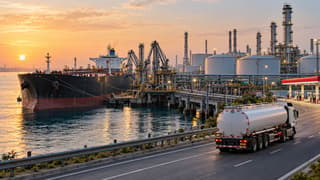
Global crude shipping costs have climbed above $20 per barrel from about $3 a year earlier, according to a 20 Oct 2026 Goldman Sachs research note reported independently by The Economic Times and Oil & Gas 360. For Indian drivers, that is an upstream cost warning—not a confirmed petrol or diesel price hike—because refiners can absorb freight in margins, change suppliers or pass some of the pressure through later.
The development matters because India buys crude on an international market but motorists pay a domestic retail price shaped by crude, freight, refining margins, taxes, currency and oil-marketing decisions. The headline “sevenfold” rise is a freight-market figure, not a sevenfold rise in the price at a fuel station.
Key takeaways
- Goldman Sachs’ 20 Oct research note put the global average crude freight rate above $20 per barrel, compared with about $3 per barrel a year earlier; the figure was reported on 21–22 Oct 2026 by Oil & Gas 360, The Economic Times and Investing.com.
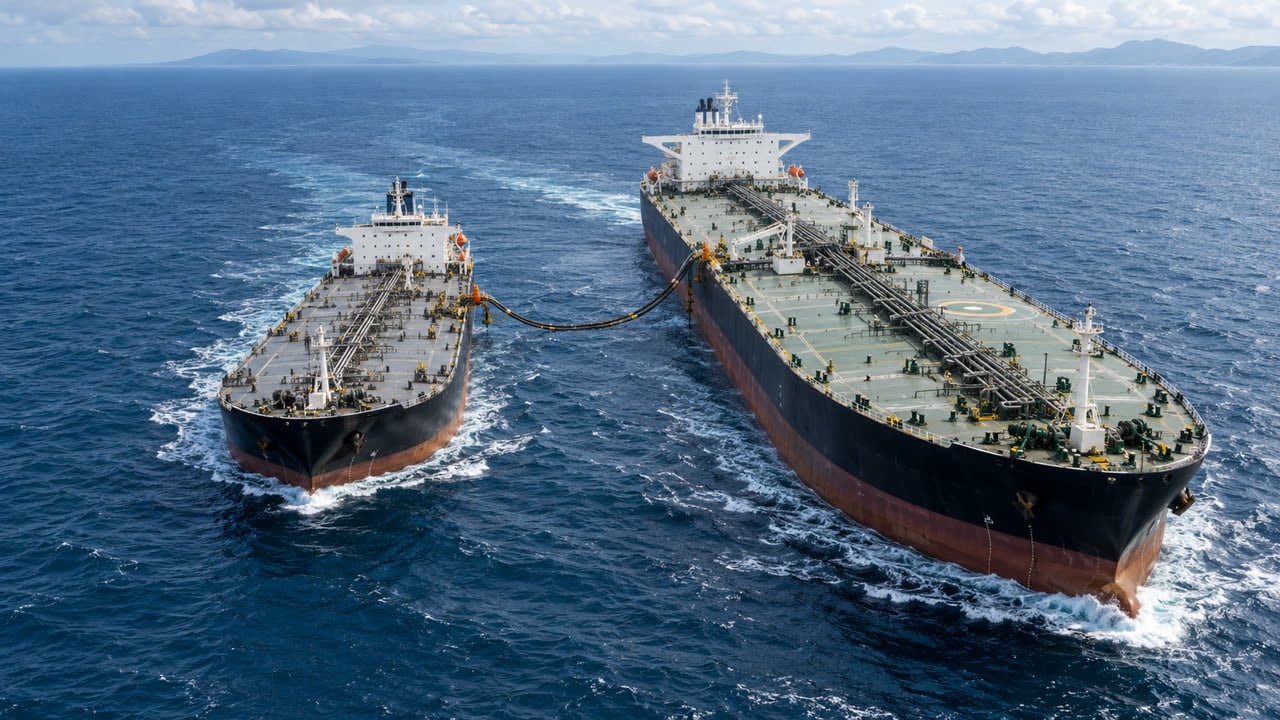
- Goldman attributed the additional freight burden to a $7-per-barrel Hormuz war-risk premium, $4 from ship-to-ship transfers, $4 from higher maritime fuel, $3 from vessel misallocation and diversions, and $2 linked to restrictions affecting Iran’s tanker fleet.
- Financial Express reported on 19 Oct 2026 that higher Gulf freight was already raising delivered crude costs and squeezing Indian refinery margins; that is a supply-chain pressure, not an announced domestic pump-price revision.
- Drivers and fleet operators should watch actual retail petrol and diesel rates, not convert a global freight quote directly into a rupee-per-litre increase.
What changed in the crude trade
In its 22 Oct 2026 report, The Economic Times said the Goldman note put average global crude freight above $20 per barrel from roughly $3 a year earlier. Oil & Gas 360 published its own account on 21 Oct 2026, describing the same jump as a sevenfold increase and noting that some Middle East routes were above $35 per barrel. Investing.com also reported the 20 Oct note on 21 Oct 2026.
These are transportation costs for moving crude, not the benchmark price of crude itself. A benchmark can be quoted before the cost of getting a cargo to a refinery is added. That distinction is important for readers: a higher freight rate can widen the delivered cost of crude without creating an identical change in the price of every barrel or every litre sold at a pump.
Why ship-to-ship transfers are expensive
The Goldman breakdown points to a chain reaction rather than one isolated fee. War-risk cover raises the price of a voyage through the Strait of Hormuz. Ship-to-ship transfers outside the Persian Gulf add handling time and tie up more vessels. Higher marine fuel raises the cost of each voyage, while rerouting and inefficient tanker allocation mean fewer ships are available for normal routes. Restrictions affecting the Iranian tanker fleet add another layer of vessel scarcity.
For the crude market, the result is longer voyages, more insurance and a greater premium for certainty. A producer nearer to a buyer can become relatively more competitive, while a distant producer may need to discount crude to offset the freight. Refiners then have to choose between changing suppliers, accepting thinner margins or trying to recover some cost in refined products.
What it means for India
India is exposed at the refinery gate because the country is a large crude importer and West Asian routes are a major part of the regional supply chain. Financial Express reported on 19 Oct 2026 that freight and shipping disruption were lifting the landed cost of West Asian crude for Indian refiners and reducing the margin implied by crude benchmarks. ThePrint had also reported in September that higher tanker rates were affecting India-bound cargoes even when refiners looked for alternative routes.
The first impact is therefore likely to be on refinery economics and sourcing decisions, not an automatic change on a petrol-pump display. If freight stays elevated, refiners may rebalance cargo origins, accept lower net margins or pass some additional cost into petrol, diesel or other products. If maritime risk eases, the freight component can fall without requiring a new domestic policy announcement.
That is why the sevenfold headline needs careful reading. The $20-per-barrel global average is a market indicator. It does not mean petrol is about to become seven times more expensive, nor does it prove that a specific Indian city will see a price change on a specific day. The domestic number still depends on the crude mix, rupee exchange rate, taxes, refining costs, inland freight and the pricing decisions of oil marketing companies.
Motorists can check live petrol and diesel prices before budgeting a refill or a long drive. The useful comparison is the actual retail price on the day of travel against the price used in the household or fleet budget.
What drivers and fleets should watch
- Freight normalisation: watch whether tanker availability improves and whether ship-to-ship transfers and diversions reduce.
- Delivered crude, not only Brent: a lower benchmark will not automatically mean lower refinery input costs if insurance and freight remain high.
- Domestic pump updates: do not treat a market forecast or a media headline as a confirmed retail revision.
- Diesel-intensive operations: transporters should track actual invoice prices and litres consumed, because the relevant budget change is the local pump-price movement, not the international freight quote alone.
For a trip, the cleanest way to measure exposure is to use the fuel cost calculator with the current local price and the vehicle’s real-world mileage. A route plan can also be checked in the road-trip planner when freight or fuel-price uncertainty makes the travel budget more sensitive.
What happens next
The next signals are straightforward: whether the Hormuz risk premium persists, whether crude routes through the Red Sea and other diversions stay disrupted, whether refiners keep paying up for alternative cargoes and whether domestic pump prices are revised. A recovery in production alone may not be enough to restore delivered costs if ships, insurance and voyage lengths remain constrained.
For Indian fuel users, the practical takeaway is measured rather than dramatic. Crude freight has become a larger part of the oil-price story, and that raises the risk of pressure on refinery margins and future fuel costs. It is not a confirmed petrol or diesel hike today. Check the rate at the pump, use the local figure in a trip calculation and watch for a sustained change in freight and crude-delivery conditions.
Sources
- The Economic Times — “Hormuz war risk pushes crude shipping costs sevenfold, squeezes refiners’ margins: Goldman Sachs” (22 Oct 2026)
- Oil & Gas 360 — “Tanker costs add new pressure to global oil markets” (21 Oct 2026)
- Investing.com — “Goldman Sachs sees crude freight rates surge to $20 per barrel” (21 Oct 2026)
- Financial Express — “Freight shock pushes West Asia crude landed cost for India to $120/barrel” (19 Oct 2026)
- ThePrint — “Iran war-risk pushes tanker freight higher for India. Even alternative crude routes not immune” (18 Sep 2026)