The Ministry of Heavy Industries' PM E-DRIVE dashboard recorded 11,47,889 registered and temporary electric vehicles under financial year 2026-27 as on 21 Oct 2026. The number is a current Vahan-linked scheme snapshot, while a separate ministry backgrounder says ₹851 crore has been approved for 8,147 chargers across three oil marketing companies and 10 states as of 28 Sep 2026—useful context for EV buyers, but not a guarantee that every charger or subsidy is already available.
Key takeaways
- The dashboard total combines 10,41,183 registered vehicles and 1,06,706 temporary registrations as on 21 Oct 2026.
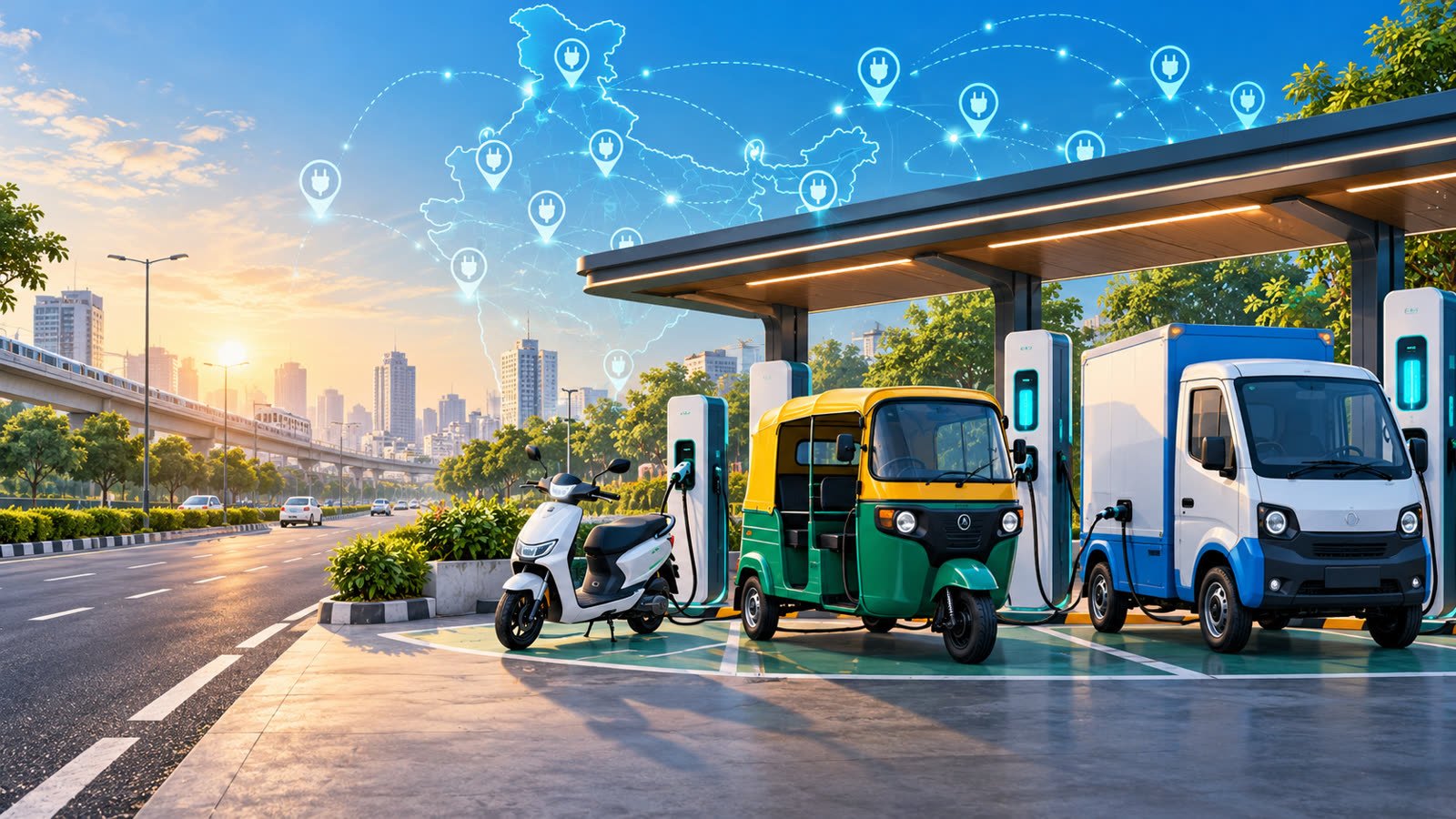
- Electric two-wheelers account for 11,41,303 of the displayed total; e-rickshaws and e-carts account for 6,283, while e-trucks account for 303.
- The government says ₹851 crore was approved for 8,147 public chargers as of 28 Sep 2026. Approved does not mean operational at every location.
- For eligible registered e-2Ws, the current incentive is ₹2,500 per kWh, capped at ₹5,000 per vehicle, subject to scheme conditions and the ex-factory price limit.
What the 21 October dashboard records
The PM E-DRIVE sales dashboard separates registered vehicles from temporary registrations. Its 21 Oct 2026 table shows 10,35,616 registered and 1,05,687 temporary e-2Ws, for a combined 11,41,303. The same table lists 5,299 registered and 984 temporary e-rickshaws and e-carts, plus 268 registered and 35 temporary e-trucks. Those category totals add up to 11,47,889.
This distinction matters when reading the number. It is not a claim that 11.47 lakh new EVs of every type were sold across India, and it is not a cumulative total for every EV registered since the scheme began. The dashboard describes the figures as Vahan data for financial year 2026-27 and notes that some RTO data from Lakshadweep is not included in the centralised Vahan 4 records.
The table is also concentrated in electric two-wheelers. Buyers comparing scooters should therefore read the update mainly as a signal of the scale of the supported e-2W market, rather than as evidence that a subsidy is available for every electric car or every EV model. The scheme's listed categories include e-2Ws, e-3Ws, e-ambulances, e-trucks, e-buses, charging infrastructure and testing-agency upgrades.
What the 8,147-charger figure means
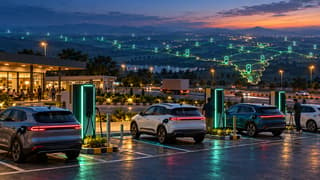
The PIB's 1 Oct 2026 PM E-DRIVE backgrounder says ₹851 crore had been approved for deployment of 8,147 chargers to three oil marketing companies and 10 states as of 28 Sep 2026. It also says ₹2,000 crore is earmarked for nationwide public EV charging stations. These are approvals and allocations, not a published count of chargers that are live, compatible with every vehicle, or evenly distributed across roads and cities.
For an EV owner, the practical question is therefore not only how many chargers have been approved, but where they are, what connector and charging speed they support, and whether the site is open when the trip is planned. The EV charging station directory can help identify charging locations by state. For a longer journey, the road-trip planner can be used to map stops while leaving room for traffic, weather and charger downtime.
What buyers should check before counting the incentive
Eligibility is category-specific
The PIB backgrounder says registered e-2Ws receive ₹2,500 per kWh, capped at ₹5,000 per vehicle, and that the incentive applies to vehicles priced up to ₹1.5 lakh ex-factory. The same document says the scheme targets more than 45.79 lakh registered e-2Ws and runs until 31 Mar 2028 after the 10 Aug 2026 amendment. Autocar India independently reported the extension and the same incentive cap in August.
That does not mean a buyer can subtract ₹5,000 from any electric two-wheeler's advertised price. The model must satisfy the scheme's approval and manufacturing requirements, the vehicle must fall within the applicable category and price condition, and the benefit is processed through the PM E-DRIVE e-voucher mechanism. A buyer can ask for the eligible model details, the incentive shown on the invoice and the e-voucher process before comparing an on-road price.
Compare running cost, not only the sticker price
The dashboard's fuel-saving figure is a scheme-level indicator, not a guaranteed monthly saving for an individual owner. Actual cost depends on kilometres travelled, home or public charging tariff, charging losses, battery warranty, insurance, service and financing. For an ICE baseline, the fuel cost calculator can show the petrol or diesel cost of a regular route; electricity cost should then be added using the tariff and charging pattern that applies to the vehicle.
What to watch next
The next useful data point will be the gap between approved chargers and chargers that are commissioned and usable. State-wise rollout, connector compatibility and uptime will matter more to a highway traveller than the national approval total. The dashboard's future Vahan updates will also show whether the strong e-2W contribution continues and how e-rickshaw, e-truck and other supported categories develop.
For now, the PM E-DRIVE update points to two different realities: EV adoption under the supported categories is already large enough to register in lakh-level monthly snapshots, while charging access still has to be checked at the route and location level. Buyers and fleet operators can use the data as context, but should verify model eligibility, the actual invoice benefit and the planned charging stops before calculating the full cost of ownership.
Sources
- Ministry of Heavy Industries — PM E-DRIVE Sales Dashboard, as on 21 Oct 2026
- Press Information Bureau — PM E-DRIVE Scheme: A Step Towards a Sustainable Future, 1 Oct 2026
- Ministry of Heavy Industries — PM E-DRIVE scheme details and e-voucher information, accessed 22 Oct 2026
- Autocar India — PM E-DRIVE subsidy for electric two-wheelers extended to March 2028, 12 Aug 2026