Delhi Transco Limited (DTL) has invited bids for a planned network of 540 public electric-vehicle chargers at 180 sites across the national capital. The tender could give EV drivers, delivery fleets and electric three-wheelers more charging options, but it does not mean the stations are available today: operators still have to be selected, sites handed over and facilities made operational.
That distinction matters for anyone planning a Delhi trip or deciding whether a vehicle can depend on public charging. The project sets out the proposed equipment and service model; it does not yet publish a live date, a site-by-site availability list or user tariffs.
Key takeaways
- DTL’s tender covers 180 planned locations with 540 chargers, or three chargers per site.
- Each location is reported to have a 12 kW charger for light EVs and 60 kW and 120 kW units aimed at faster charging for cars.
- Private operators would build, finance, operate and maintain the sites for 10 years, with commercial operation required within 150 days of site handover.
- Apps and web pages are expected to show station location, charger availability and tariffs; access cannot be restricted to one vehicle brand or operator subscription.
- The official tender listing shows the bid process is still open, with bids scheduled to close and open on 11 Dec 2026.
What Delhi’s tender actually covers
The Delhi government’s procurement listing is for appointing a charge-point operator to design, build, finance, operate, maintain and transfer public EV charging stations. It is an operator-led tender rather than a simple purchase in which the government buys equipment and installs it itself. The listing shows bids closing and opening on 11 Dec 2026, so the 150-day operating timeline should not be read as a promise that all 180 sites will be ready by a particular calendar date.
Reports by The Times of India and The Tribune describe two packages of 90 sites each. Under the proposed design-build-finance-operate-maintain-transfer arrangement, selected private agencies would run the facilities for 10 years. The outlets also report that the stations would have to become commercially operational within 150 days after the relevant sites are handed over.
The project is being positioned alongside the Centre’s PM E-DRIVE charging-infrastructure support. The official procurement process, however, remains the important near-term step for readers: a tender is not an award, and a planned site is not a working charger.
What chargers are planned
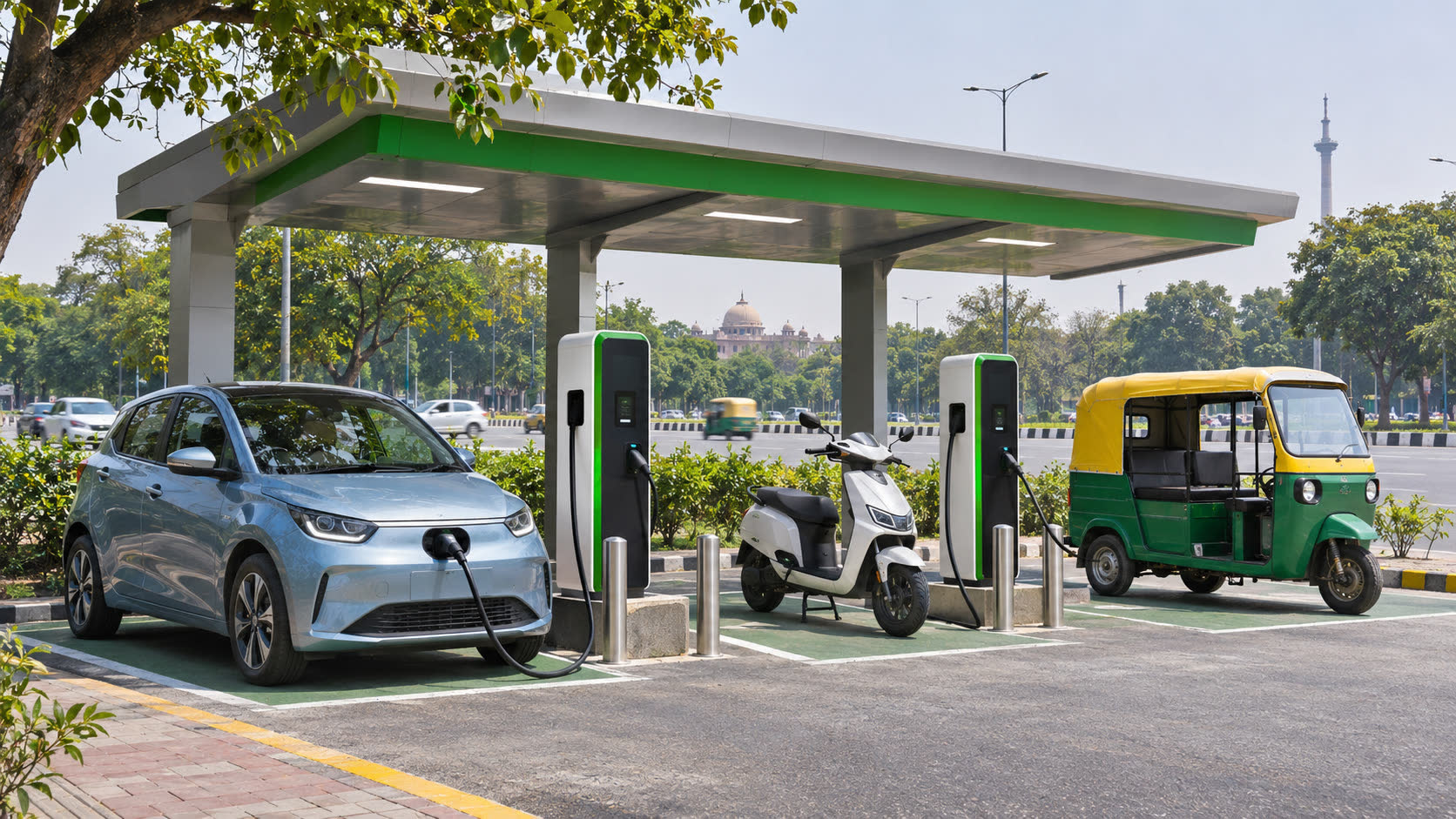
The reported configuration gives each site three charging units. A 12 kW unit is intended for light electric vehicles, including electric two-wheelers and three-wheelers. The other two units are rated at 60 kW and 120 kW and are aimed at electric cars. The planned network has a combined capacity of about 34.6 MW, according to the reports.
Those ratings describe the equipment, not the exact charging speed every vehicle will receive. A car that accepts less power will not charge at the full rating of a 120 kW unit. Actual session time will also depend on the battery’s state of charge, sharing between vehicles, site power availability and the operator’s tariff structure. That is why a future app listing showing a 120 kW charger should still be read together with the vehicle’s own charging specification.
What it means for EV drivers and fleets
For electric-car owners
The extra sites could make urban top-ups and short inter-city starts easier if the final locations are spread across areas that currently have fewer usable chargers. The practical benefit will depend on three details that are not settled in the current announcement: the final site list, whether a site’s faster units are functioning, and the price shown at the time of charging.
Until those details are published, drivers can check the EV charging station directory for currently listed options instead of treating the tender as live capacity. For a longer journey, the road-trip planner can help map the route while the operator network is still being built.
For two-wheelers, three-wheelers and commercial users
The dedicated 12 kW light-EV unit is relevant to electric scooters, electric three-wheelers and other light vehicles, while the faster units are more relevant to cars and high-use operators. More points can reduce the need to detour for a charge, but the number of vehicles each site serves and the hours of operation will matter as much as the headline count of 540 chargers.
For delivery, passenger and small commercial fleets, the operator model also makes reliability important. The tender reports require digital information on availability and tariffs, giving fleet managers a way to compare a site’s status before dispatching a vehicle. Until that data is online, a backup charging option remains part of normal route planning.
For petrol and diesel users
The tender does not change petrol or diesel prices, tolls or existing vehicle rules. Drivers comparing the running cost of an electric vehicle with an internal-combustion vehicle can use the fuel cost calculator for the fuel part of a comparable trip, while keeping charging fees and charging time as separate variables.
What is not confirmed yet
There is no confirmed public go-live date for the 180 sites, no final operator announcement and no published tariff that can be treated as the price a driver will pay. The current reporting also does not replace the need to verify each site’s connector, access hours and payment options once the operator publishes them.
The 150-day requirement begins after a site is handed over under the selected contract. It therefore cannot be used to calculate a citywide completion date from the tender’s bid deadline. The next meaningful updates will be the award decision, the site-wise list, electricity-connection progress and the apps or web pages that show real-time availability.
Reader takeaway
Delhi’s plan is a significant proposed addition to public EV infrastructure, but the useful number for a journey today is still the charger that is live, compatible and available on the route. Treat the 540 chargers as planned capacity, check current listings before leaving, and wait for the operator’s tariff and availability data before estimating the project’s effect on trip cost.