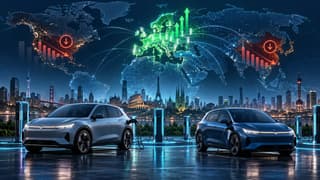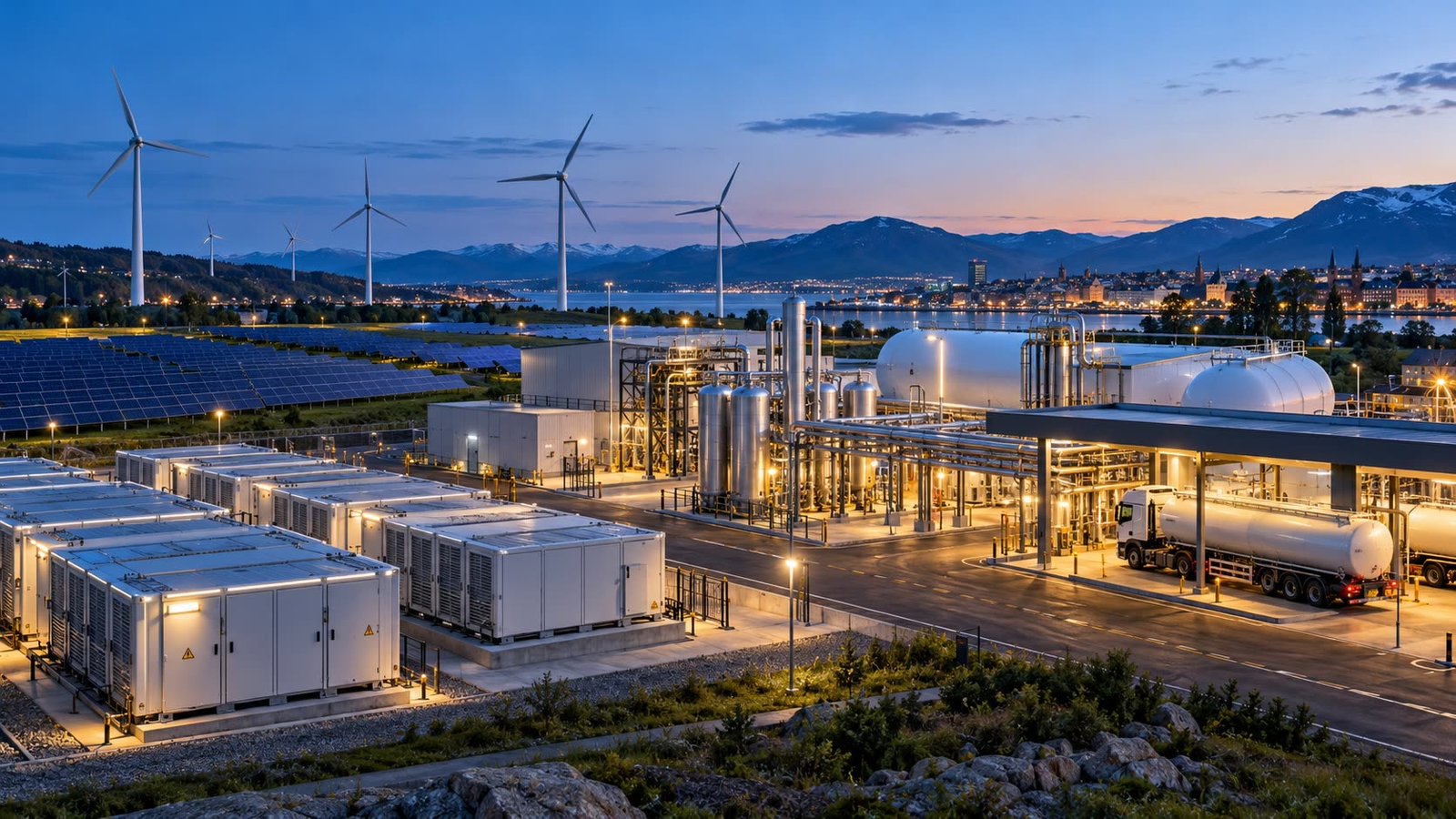
The European Commission has selected 77 net-zero technology projects across 23 European Economic Area countries for €3.4 billion in Innovation Fund support, according to its 19 October 2026 announcement. The decision matters beyond Europe’s climate targets: it directs public-backed capital toward energy storage, advanced alternative fuels, clean mobility and critical-materials capacity that can influence the cost and availability of fuel and vehicles over time.
Key takeaways
- The €3.4 billion award supports 77 projects in 23 EEA countries; it is a project-funding decision, not an immediate cut in petrol, diesel or electricity prices.
- The selected portfolio spans renewable energy, energy storage, clean-technology manufacturing, net-zero transport, critical-materials processing and recycling, advanced alternative fuels and industrial carbon management.
- The Commission estimates the projects could avoid around 290 million tonnes of carbon-dioxide-equivalent emissions during their first 10 years of operation.
- Promoters still have to prepare grant agreements that confirm budgets, timetables, technical deliverables and financial responsibilities.
What Brussels announced
The Innovation Fund selection was published on 19 October after a call launched in December 2025. The programme is financed from revenues linked to the European Union Emissions Trading System and is designed to help commercialise lower-carbon technologies that can be difficult to fund at scale.
Independent reporting by Czech energy publication oEnergetice, citing the Czech News Agency, also put the award at 77 projects and €3.4 billion across 23 EEA countries. That cross-check is important because the announcement is a funding selection, not evidence that every project is already built or producing fuel, electricity or vehicle components.
Where the money meets fuel and vehicles
The portfolio reaches the parts of the mobility system that drivers usually see only after they become infrastructure or supply-chain changes. The Commission lists renewable power, innovative storage, clean-technology manufacturing, net-zero-emission transport, critical-raw-material processing and recycling, advanced alternative fuels and industrial carbon management among the covered areas.
For fuel users, advanced alternative-fuel projects could eventually add production capacity or improve the economics of lower-carbon fuels. That does not mean a new fuel blend is being introduced at every pump. It means the EU is trying to move more technologies from demonstration into industrial deployment, while the final effect will depend on construction, permits, feedstock, electricity prices, distribution networks and national rules.
For the auto sector, the relevant link is the combination of clean-tech manufacturing and critical-materials work. Battery cells, magnets, metals and recycling capacity are part of the wider supply chain behind electric vehicles and charging equipment. Carbon Pulse separately reported that the round includes the EU’s first direct-air carbon-capture and storage project, reinforcing the breadth of the programme beyond vehicle manufacturing.
What it means for drivers and fleets
There is no immediate consumer rebate in this announcement and no automatic change to the price of petrol, diesel or public charging. Pump prices still reflect crude or wholesale energy costs, refining and electricity costs, freight, taxes, exchange rates and local pricing decisions. Readers can check the latest fuel prices that apply in their market rather than treating a European grant headline as a price notification.
The near-term value for a driver or fleet operator is therefore information about the direction of infrastructure, not a promised saving. If projects reach operation, they could add storage, clean-fuel supply, charging-related manufacturing and recycling capacity. Those additions may improve resilience or lower costs in parts of the system, but the announcement does not quantify a future price reduction and should not be read as one.
For a trip or fleet budget, the useful comparison remains local and vehicle-specific: fuel or electricity consumed, distance, current price and operating conditions. FuelPrice’s fuel-cost calculator can help estimate that running cost. EV owners and buyers can also use the EV charging directory to check charging availability, while keeping any investment or purchase decision separate from a policy announcement that is still moving toward contract stage.
What happens next
The selection is not the final operating milestone. Project promoters have been invited to begin grant-agreement preparation with the European Climate, Infrastructure and Environment Executive Agency. The contracts will set out the confirmed budget, timetable, technical and financial deliverables, and legal responsibilities. The Commission said results from that preparation are expected in the first quarter of 2027.
That timetable gives readers a practical way to judge the announcement. The next evidence will be signed agreements, construction or procurement milestones, and whether projects secure the remaining private and public capital needed to operate. A large headline allocation can support a technology, but it does not guarantee that every selected facility will reach commercial scale or that its output will be available to motorists in every country.
The international angle
Although the fund is European, the supply chains are not. Battery materials, energy equipment, shipping, vehicle manufacturing and alternative-fuel inputs cross borders, so a larger European project pipeline can affect suppliers and competitors elsewhere. It may also shape where manufacturers place factories and where charging, storage and fuel infrastructure is built.
For international readers, the signal is best understood as an industrial-policy bet: Europe is using carbon-market revenue to reduce technology and supply-chain bottlenecks while energy security remains a concern. The outcome will be measured in operating projects and delivered capacity, not only in the size of the grant announcement. Follow further developments in the worldwide fuel news archive as the selected projects move from approval preparation to implementation.
Bottom line: the EU’s €3.4 billion selection is a meaningful multi-country push into clean fuels, storage, mobility and critical materials, but it is a medium-term infrastructure story. It does not change today’s pump price or guarantee cheaper charging; those effects, if they arrive, will depend on projects being contracted, built and connected to real markets.
Sources
- European Commission: “Commission invests €3.4 billion in net-zero technology projects” — 19 Oct 2026
- oEnergetice / Czech News Agency: “EU to support 77 projects from Innovation Fund, including Czech floating platform” — 19 Oct 2026
- Carbon Pulse: “EU picks first direct air carbon capture project for Innovation Fund support” — 19 Oct 2026
This article is for general information only and is not financial, insurance or legal advice.