The European Commission opened a four-week call for evidence and targeted consultation on 26 October 2026 to shape a renewed European Union hydrogen strategy. This is a policy-development step, not a new fuel mandate or subsidy, but it could influence how Europe builds hydrogen supply, handles imports and supports transport uses in the years ahead.
Key takeaways
- The consultation is open from 26 October to 23 November 2026, with submissions due by 23:59 CET on the closing date.
- The Commission says renewable and low-carbon hydrogen production and use are developing more slowly than initially expected.
- The future strategy is intended to support a more resilient and competitive hydrogen value chain, alongside the EU’s renewable-energy planning.
- Hydrogen users in industry, aviation and maritime transport are explicitly within the consultation’s scope.
- No immediate change to petrol, diesel, EV charging access or vehicle rules follows from this announcement.
What the European Commission announced
The Commission’s Directorate-General for Energy has invited public authorities, companies, researchers, investors, civil-society organisations and members of the public to comment on the scope and content of the forthcoming strategy. It has opened both a call for evidence and a targeted stakeholder consultation, giving the process a broad public track and a more technical track for people working across the hydrogen value chain.
The official consultation is open until 23 November 2026 at 23:59 CET. The Commission says the responses will feed into preparations for the new strategy. That wording matters: the announcement records a consultation and future policy work, not a final regulation, confirmed funding package or binding requirement for vehicle owners and operators.
The Commission also says the hydrogen strategy will be developed alongside the EU’s renewable-energy framework. Its stated goals include building a resilient and competitive European hydrogen value chain, giving investors more predictability and reducing exposure to imported fossil fuels as geopolitical risks continue to affect energy planning.
Why Brussels is reopening the strategy
The EU’s original hydrogen strategy was published in 2020. Since then, the bloc has added a regulatory framework, funding mechanisms and renewable-fuel obligations, but the Commission’s consultation material says renewable and low-carbon hydrogen production and use remain slower to develop than originally expected. It points to limited operational capacity and difficulty moving projects from development into mature, investable assets.
Independent hydrogen-sector publication HydroNews reported on 26 October that the Commission’s documents describe a gap between the policy ambition and the project pipeline needed to support future consumption. HydroNews also identifies familiar barriers: regulatory uncertainty, the cost of producing and moving hydrogen, missing infrastructure and weak end-user demand.
That combination explains why this is more than a routine consultation. A strategy can set the direction for public support, infrastructure planning, certification, imports and the sectors where hydrogen is expected to add the most value. It cannot by itself make hydrogen cheaper at the pump, build a refuelling network or guarantee that a proposed project will reach operation.
What the review could mean for transport
Road fleets
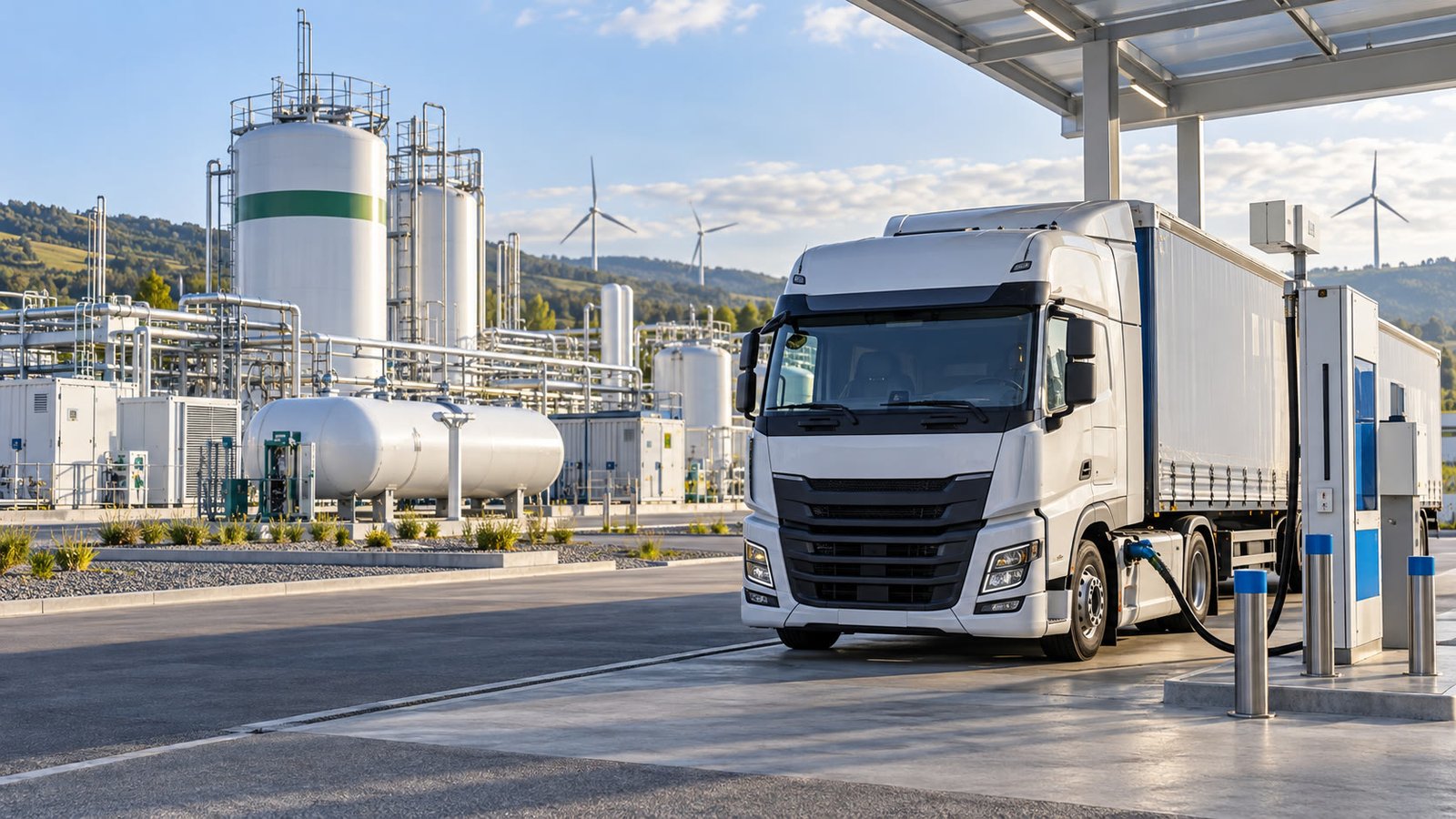
The Commission’s consultation specifically includes hydrogen producers and users, infrastructure operators and technology providers. It also covers hydrogen and hydrogen derivatives used in aviation and maritime transport. Heavy road fleets are not being given a new obligation by this announcement, but future policy choices could affect where hydrogen corridors, storage and refuelling infrastructure receive support.
For fleet operators, the practical questions are likely to be availability, delivered energy cost, vehicle utilisation and route coverage. Those questions will remain local even if the strategy is European: a lower production cost does not automatically mean a nearby station or a reliable supply contract. A future strategy may help align infrastructure and standards, but those outcomes are not confirmed yet.
Shipping and aviation
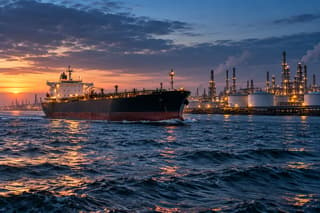
Hydrogen derivatives such as e-fuels and other low-carbon fuels are relevant to transport modes where direct battery electrification can be difficult. The Commission’s consultation page cites a European Court of Auditors recommendation to update the strategy so that complementary decarbonisation options remain available for industrial processes where direct electrification is not feasible or cost-effective.
That does not mean the EU has selected hydrogen as the solution for every truck, ship or aircraft. It means the next strategy is expected to examine where hydrogen can provide more value than competing technologies and what market conditions would be needed for those uses to scale.
What it means for drivers and fuel budgets now
There is no immediate change to retail petrol or diesel prices, EV charging tariffs, vehicle registration rules or hydrogen-station obligations from a consultation launch. Drivers comparing different powertrains should treat this as an early policy signal rather than a promise of cheaper fuel or a confirmed change to ownership costs.
For a conventional trip, a fuel cost calculator can still provide a baseline using the current fuel price and vehicle efficiency. The same discipline applies to alternative-fuel comparisons: separate the energy price from vehicle cost, taxes, infrastructure access and the route actually available.
Battery-electric drivers can check the EV charging directory when planning a route, while the road-trip planner can help compare distance and travel requirements before a longer journey. Hydrogen availability is not created by this consultation, so a future strategy would need to be followed by concrete projects, operating stations and published user information before it changes trip planning.
What to watch next
The immediate milestone is the 23 November 2026 consultation deadline. After that, the Commission is expected to use the evidence to prepare the renewed strategy. Readers should look for the eventual document’s treatment of domestic production, imported hydrogen, infrastructure, trade, funding, skills and the priority applications where hydrogen is expected to deliver the greatest value.
Any later targets, incentives, technical standards or transport requirements should be treated according to their legal status. A proposal is not an effective rule, and a strategy document is not the same as a funded project or a guaranteed supply network. The dates and scope confirmed today establish a direction for discussion; they do not settle the cost or availability of hydrogen for drivers and transport companies.
Reader takeaway
Europe is reassessing its hydrogen plan because rollout has been slower and more difficult than early policy expectations. For global fuel and mobility markets, the important signal is that the EU is moving toward a more practical discussion of supply, imports and priority transport uses. For drivers and fleet managers, nothing changes at the next refuelling stop yet; the useful action is to watch for later, legally effective measures and real infrastructure commitments.
Sources
- European Commission — Hydrogen Strategy – Commission launches consultation (26 October 2026)
- European Commission — Targeted consultation on a renewed hydrogen strategy (26 October 2026)
- HydroNews — Brussels launches consultations to bring the European hydrogen strategy into line with actual market conditions and global developments (26 October 2026)
This article is for general information only and is not financial, insurance or legal advice.