Reports published on 28 Oct 2026 say Euler Motors has integrated Jio-bp pulse's public charging network into the Euler app, allowing commercial-EV drivers to find stations, see live availability and tariffs, book a slot, and start or stop a session without switching apps. The 28 Oct 2026 update matters most to electric light-commercial-vehicle fleets because fewer app and payment steps can reduce planning friction, but it does not guarantee a charger on every route, a fixed tariff or a lower total operating cost.
Key takeaways
- The reported integration brings Jio-bp pulse charging discovery and session controls into the Euler platform for commercial-EV users.
- The companies described a network of more than 7,000 charge points at 1,100 active locations across more than 300 cities.
- Reported charger output ranges from 60 kW to 480 kW, but the usable speed depends on the vehicle, connector, battery state and site conditions.
- Fleet operators can see availability and applicable tariffs in the workflow; no universal fleet discount or route-level uptime guarantee has been announced.
What changed in the Euler app
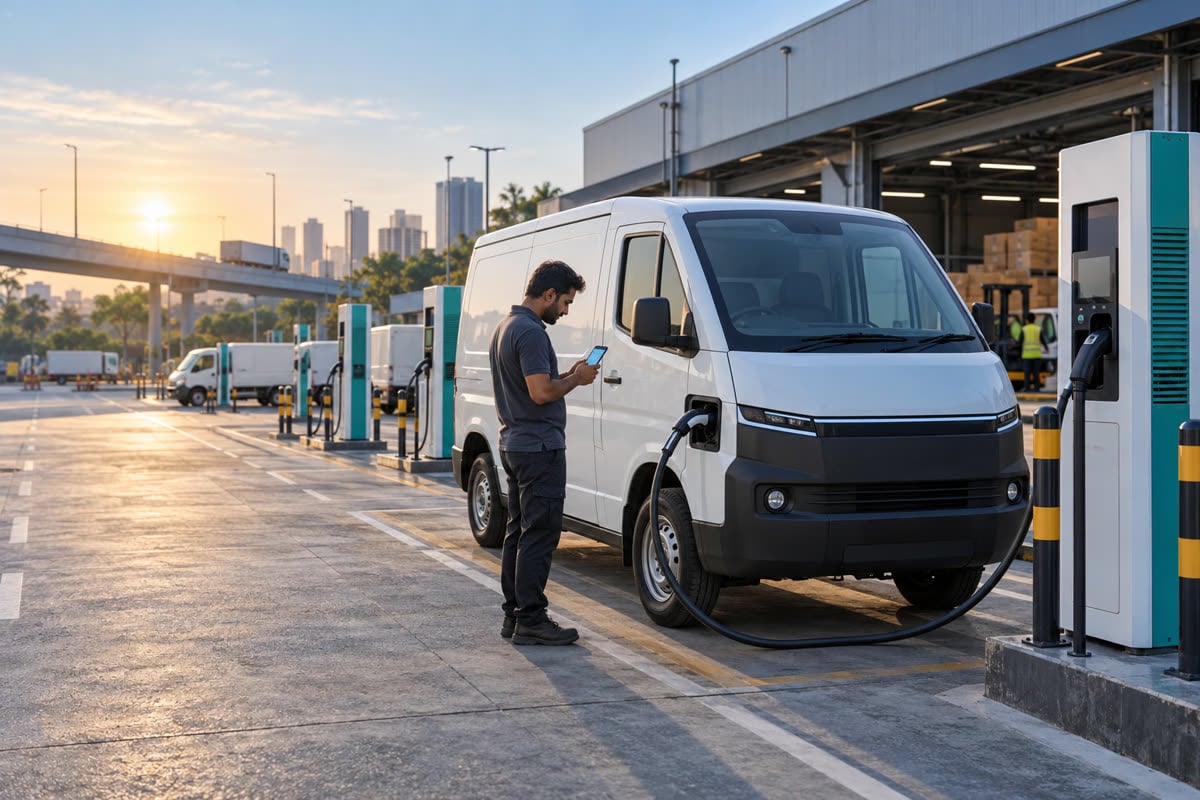
AutoEV Times and Motorindia reported on 28 Oct 2026 that Euler Motors and Jio-bp had connected the Jio-bp pulse charging network to the Euler platform. The user-facing change is a single workflow: an Euler fleet operator can look for a Jio-bp station, check its reported availability and tariff, book a slot, and start or stop charging from the Euler application.
The integration also includes Autocharge, which is reported to start a charging session when the DC charging gun is connected. That can remove a repeated login, scan or payment step for a driver who is already using the Euler platform. It does not remove the need to confirm that the vehicle is compatible with the connector, that the station is open to the vehicle class and that the charger can deliver the required power.
Why app integration matters for commercial vehicles
For a private car, an extra app may be an inconvenience. For a cargo vehicle working to a dispatch schedule, the same friction can become lost driver time or an unplanned stop. A fleet manager needs to know where the vehicle can charge, whether a connector is available, what the session is likely to cost and how long the vehicle may be unavailable.
Putting those steps in the vehicle platform can make charging easier to plan around a delivery run. It can also give operators one place to coordinate route decisions with the vehicle's operating data. The practical benefit is therefore workflow and visibility, not an automatic reduction in energy cost.
What the network numbers mean
The two reports carried the companies' description of Jio-bp's network as more than 7,000 charge points at 1,100 active locations in more than 300 cities. Many of those locations are described as being in cities and along national highways, which is relevant to electric light-commercial vehicles that may travel beyond a single delivery cluster.
Jio-bp's public charging page says its pulse network supports DC fast charging with capacities of up to 480 kW and is intended for electric cars, buses, light commercial vehicles and heavy trucks. The reports place the wider charger range at 60 kW to 480 kW. Those figures describe network capability, not the charging time of every Euler vehicle: the vehicle's maximum input, battery temperature, state of charge, connector and the site's live load will determine the actual result.
Drivers and operators can use FuelPrice's state-wise EV charging directory to build an initial list of stops, but the directory is not a guarantee of live availability, connector compatibility or access for a commercial fleet. The new integration may make those checks easier inside the Euler app, while the final decision still has to be made against the vehicle and the route.
What it changes for fleet operators
The strongest immediate benefit is reduced coordination time. A dispatcher can check charging options while planning a vehicle's workday, and a driver can use the same platform to find a stop and initiate the session. This may be especially useful for small operators who do not have a separate energy-management team.
It does not turn every public charger into a depot replacement. A fleet that needs predictable overnight charging may still need a dedicated site, electrical connection and charger sized for its duty cycle. A vehicle running two shifts may also need a route stop with higher power, longer opening hours and a backup option if the first charger is occupied.
Operators comparing an electric cargo vehicle with an existing diesel vehicle should separate four costs: energy, charging time, maintenance and financing. The energy line is not just a quoted per-kWh number; taxes, parking, demand charges, access fees or queueing can affect the delivered cost. FuelPrice's fuel-cost calculator can establish a diesel baseline for a known route, while the EV side should use the operator's actual tariff, consumption and charging pattern.
What has not been announced
- No new public charging stations have been announced solely because the two platforms are connected.
- No single rupee-per-kWh tariff or nationwide fleet discount has been disclosed in the 28 Oct reports.
- Real-time availability is a planning signal, not a promise that a connector will remain free until the vehicle arrives.
- The integration does not change a vehicle's battery capacity, charging limit, payload or range.
Checks before putting it into a route plan
- Connector and power: Confirm the vehicle's connector, maximum DC input and the expected charging curve at the selected station.
- Route and fallback: Use the road-trip planner to map the work route, then identify a second charging option where a missed stop could disrupt deliveries.
- Tariff and invoice: Check the tariff shown in the app, taxes and any booking or parking condition before comparing it with diesel.
- Downtime: Record the real charging window, queue time and driver hours rather than using the charger's headline power as the whole cost calculation.
- Operational support: Confirm how failed sessions, refunds, roadside assistance and service escalation are handled for a working fleet.
What to watch next
The next useful update will be evidence of how many Euler vehicles are active on the integrated workflow, which corridors gain the most coverage and whether fleet-specific tariffs or account controls are added. More cities and charging locations may be added, but the timing and commercial terms remain to be specified.
For Indian delivery operators, the development is a practical step in connecting the vehicle and the energy network. Its value will be measured in fewer failed charging stops and more predictable vehicle uptime, not by the size of the network headline alone.
Reader takeaway
Euler Motors' Jio-bp integration makes public charging easier to discover, book and pay for inside the Euler app. It may reduce administrative friction for commercial EV fleets, but operators still need route-specific checks on charger compatibility, live availability, tariff, charging time, payload and backup capacity before treating it as an operating-cost improvement.
Sources
- AutoEV Times — Euler Motors integrates Jio-bp charging network into its platform — 28 Oct 2026.
- Motorindia — Euler Motors adds Jio-bp pulse charging network to its app — 28 Oct 2026.
- Jio-bp — Jio-bp pulse EV charging stations and charging features — accessed 29 Oct 2026.