India's 42-day 2026 festive vehicle retail period ended with a record 55,25,490 units, up 2.21% from the comparable 2025 period, the Federation of Automobile Dealers Associations (FADA) said on 23 Nov 2026. EV retail grew 52.62% to 5,09,667 units, but passenger-vehicle retail fell 7.16%, giving buyers a split picture: stronger demand for electric two-wheelers and commercial vehicles, while cars faced a tougher comparison.
Key takeaways
- FADA counted 55,25,490 vehicle retails in the 42-day festive period from 11 Oct 2026 to 21 Nov 2026, a record for the comparable festive window.
- EV retail reached 5,09,667 units, up 52.62% year on year; electric two-wheelers and electric passenger vehicles were the main volume drivers.
- Passenger-vehicle retail declined 7.16% to 7,48,616 units, despite the full festive period recovering from a sharper Navratri deficit.
- Two-wheelers, commercial vehicles, three-wheelers, tractors and construction equipment all posted year-on-year growth.
- The data describes registrations and retail momentum; it does not itself change fuel prices, vehicle prices, tolls or EV subsidies.
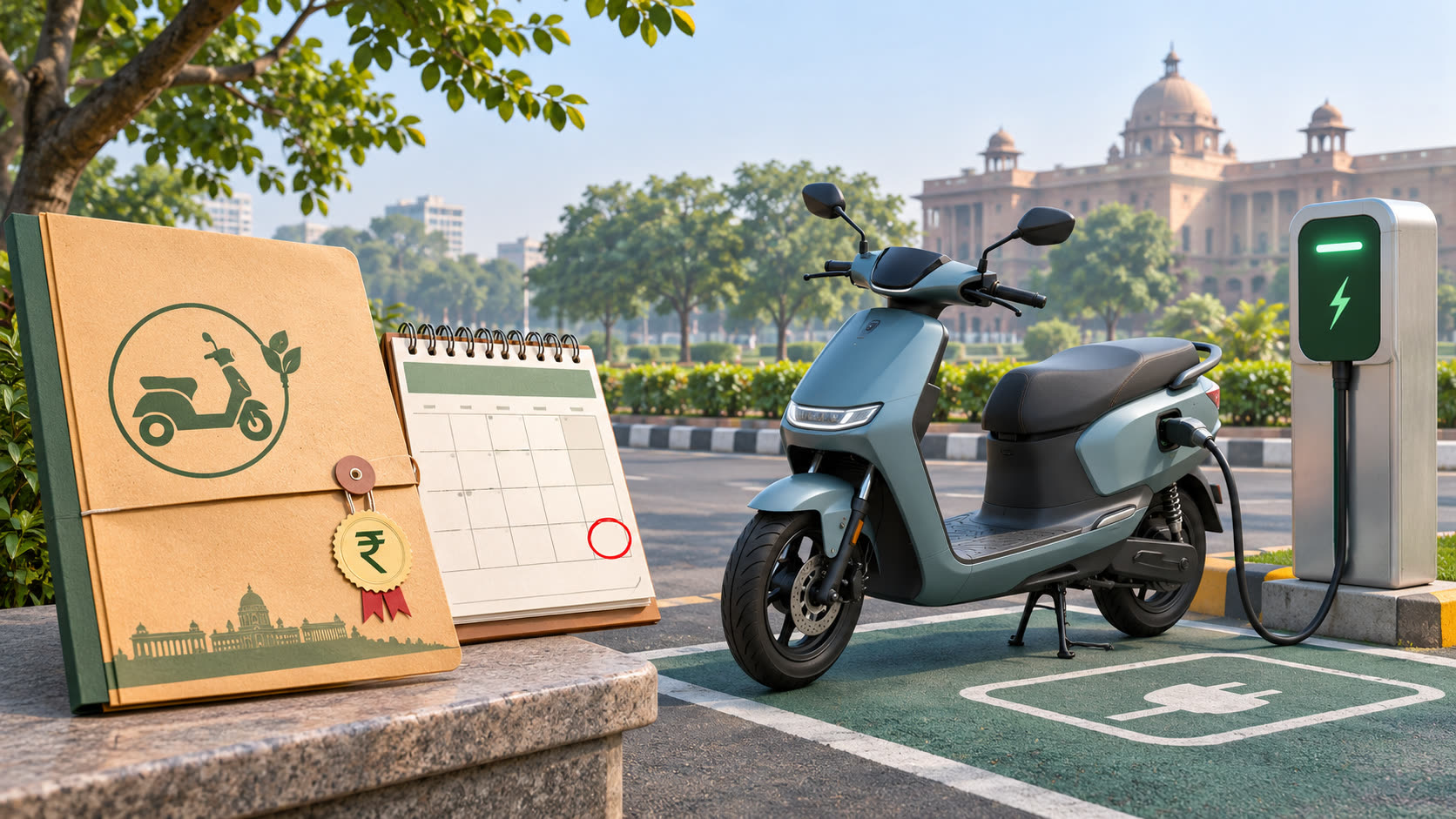
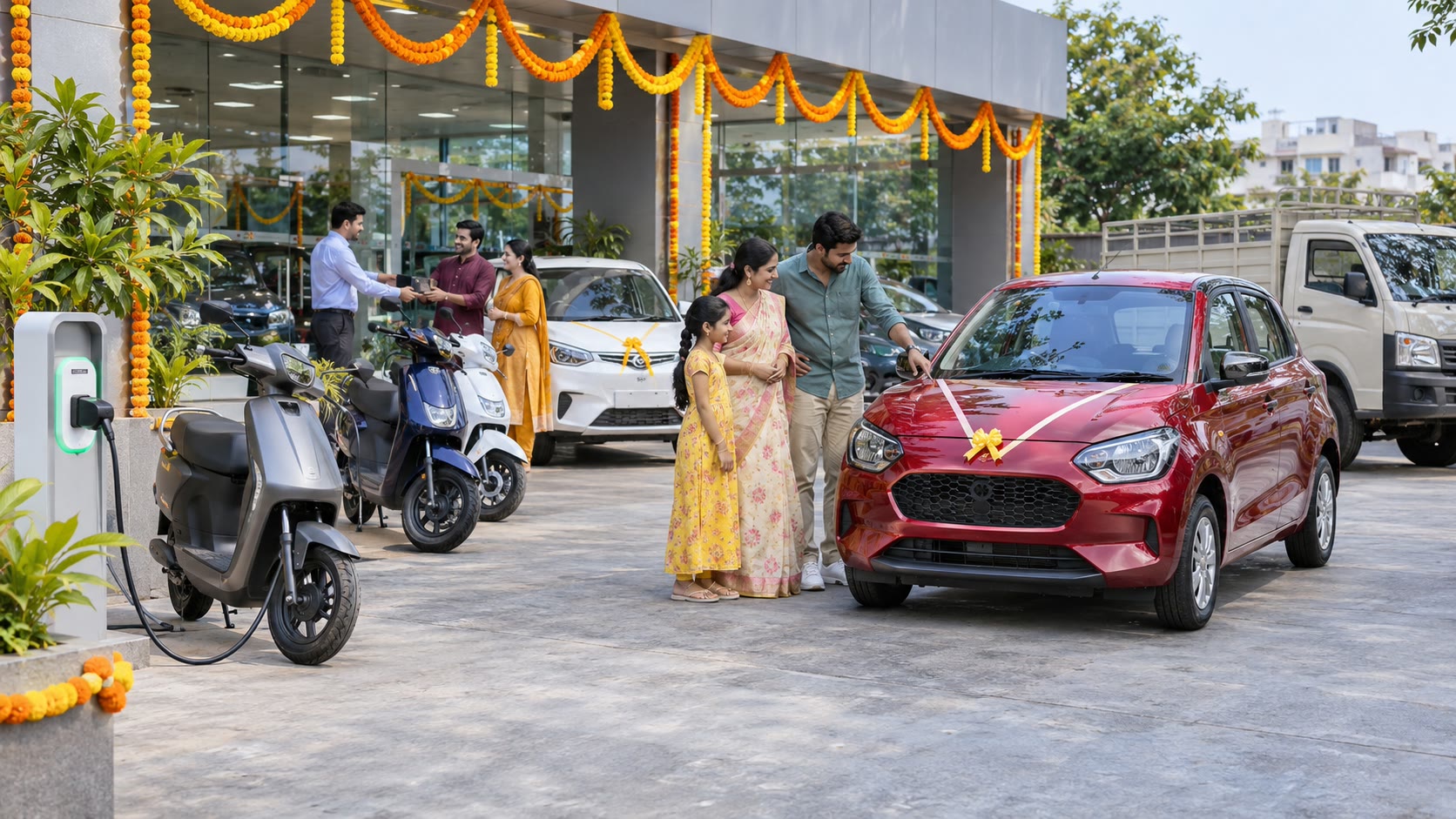
Illustrative image: an Indian festive dealership scene showing mixed vehicle demand and EV charging. Credit: FuelPrice editorial illustration.
What FADA measured
FADA's primary release dated 23 Nov 2026 says its festive window runs from the first day of Navratri to 15 days after Dhanteras, allowing time for registration data to come in. For 2026, that window was 11 Oct 2026 to 21 Nov 2026. The figures were collated as on 22 Nov 2026 with the Ministry of Road Transport and Highways and covered 1,468 of India's 1,469 regional transport offices.
That coverage makes the release a useful market snapshot, but it is still a registration-based measure rather than a count of every booking or delivery. FADA also notes that three-wheeler, commercial-vehicle and tractor data for Telangana were unavailable for this festive comparison. The limitation matters when readers compare categories or try to infer demand in a particular state.
Segment-wise result
The overall record was not driven by passenger cars alone. FADA reported growth across most categories, while passenger vehicles were measured against a particularly strong 2025 festive base.
| Category | Festive 2026 retail | Year-on-year change |
|---|---|---|
| Two-wheelers | 43,13,276 | +3.67% |
| Three-wheelers | 1,93,576 | +5.32% |
| Commercial vehicles | 1,55,761 | +7.13% |
| Passenger vehicles | 7,48,616 | -7.16% |
| Tractors | 1,03,809 | +2.24% |
| Wheeled construction equipment | 10,452 | +26.06% |
| Total | 55,25,490 | +2.21% |
Source for the table: FADA Research, data collated as on 22 Nov 2026 and released on 23 Nov 2026. FADA uses the term vehicle retail for the registration data.
Why the EV number matters
EVs were the clearest growth signal in the release. Total EV retail climbed from 3,33,935 units in the comparable 2025 festive period to 5,09,667 units in 2026, a 52.62% increase. Electric two-wheelers reached 3,30,846 units, up 61.10%, while electric passenger vehicles reached 52,104 units, up 72.91%. Electric commercial vehicles reached 6,387 units, an increase of 154.56%.
For a buyer, the figures show that the electric choice is expanding across scooters, cars and fleet vehicles, but they do not prove that every model or location offers the same value. A purchase decision still depends on the vehicle's upfront price, financing and insurance costs, usable range, charging time, battery warranty and local service support. Availability of public charging can also vary sharply between cities and highway corridors, so the EV charging station directory is a practical check before planning regular use.
What the numbers mean for buyers and operators
Passenger-car buyers
The 7.16% fall in passenger-vehicle retail should not be read as a collapse in car demand. FADA says passenger vehicles were down more than 18% at the Navratri stage and reduced that deficit by more than half by the end of the full festive period. The comparison is also affected by the unusually strong 2025 base. Buyers should therefore treat the market result as context, not as a signal that every car is available at a discount or that every dealer has the same inventory.
When comparing a petrol, hybrid or electric car, use a route-specific estimate rather than a national sales headline. The fuel-cost calculator can help frame the running-cost side of that comparison; the result still needs to be combined with the vehicle's purchase, maintenance, insurance and financing costs.
Two-wheeler users
Two-wheelers remained the largest retail category at 43,13,276 units and grew 3.67%. The electric two-wheeler result was much stronger than the category-wide number, which suggests that scooters and other low-running-cost vehicles are an important part of the festive EV increase. That does not remove practical checks: daily distance, home or workplace charging, battery replacement terms and after-sales coverage can change the ownership experience.
Fleet and commercial users
Commercial-vehicle retail grew 7.13% to 1,55,761 units, while electric commercial-vehicle retail rose 154.56% to 6,387 units. The electric commercial base is smaller, so a high percentage increase does not mean every fleet can switch immediately. Operators need to compare route length, payload, charging dwell time, financing, uptime and the cost of keeping a backup vehicle. The Telangana data gap also means the national category result is not a complete state-by-state picture.
What to check next
FADA's release points to continued momentum, but the next useful test will be whether November and December retail remain firm after the festive registration window closes. Buyers watching new launches or year-end offers should check the exact variant price, delivery date, insurance quote and on-road total rather than relying on a segment-level record.
For a planned long trip in a newly purchased vehicle, the road-trip planner can help map distance and stops. EV users should add charging time to the plan; petrol and diesel users should use current local rates and realistic mileage. The festive data is a broad market signal, not a substitute for that vehicle- and route-specific calculation.
The immediate takeaway is clear: India's vehicle market set a festive retail record, and EVs supplied a disproportionate share of the growth. The more cautious reading is equally important: passenger cars declined against a high comparison base, regional coverage is not perfectly complete, and a strong sales season does not by itself alter the price or operating cost of any individual vehicle.