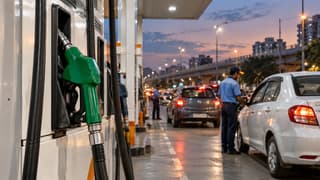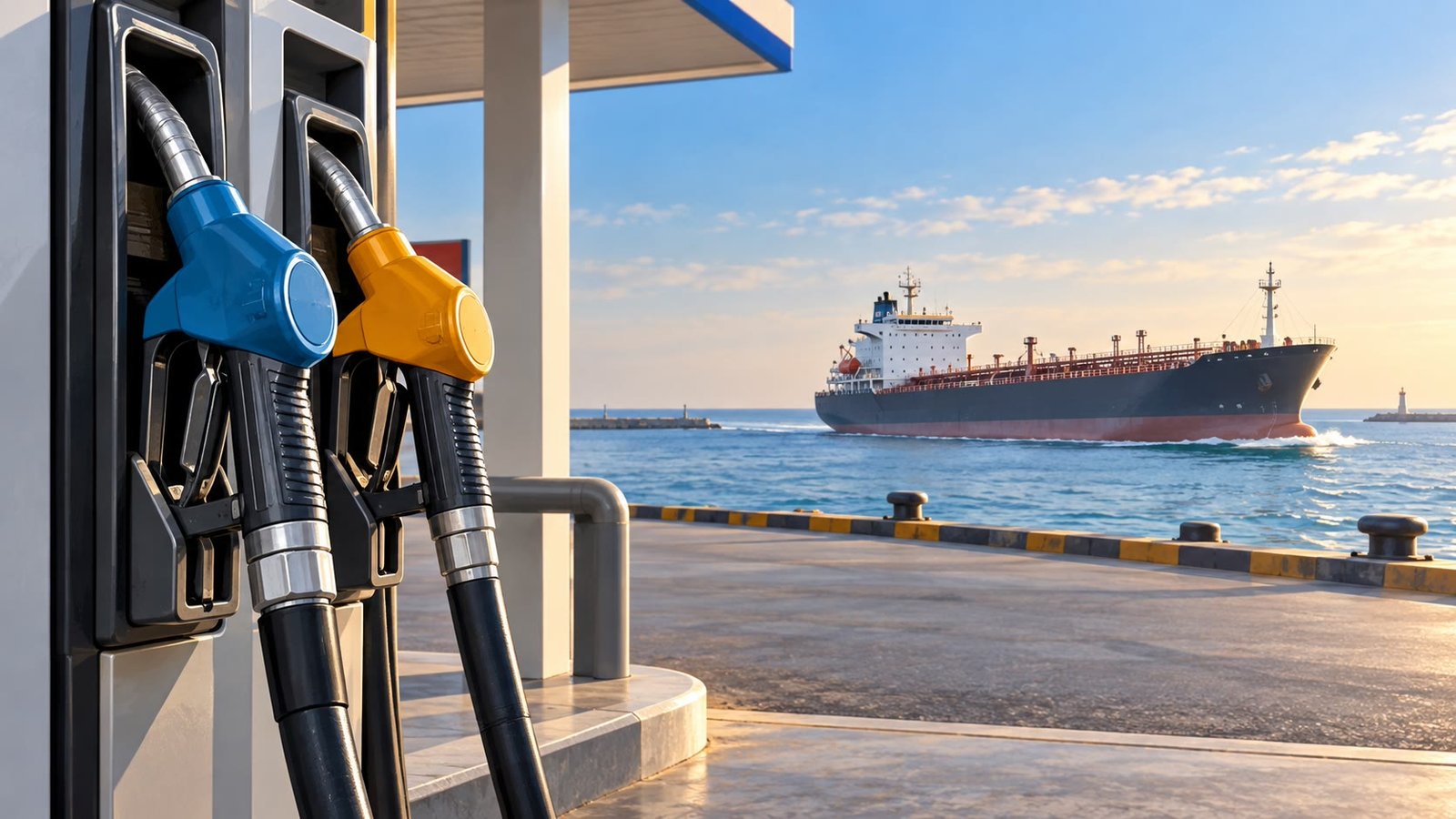
India has raised the levy on petrol exports to ₹2.50 per litre and reduced the levy on diesel exports to ₹8.50 per litre from 16 Oct 2026. The change applies to fuel shipped out of India, not to petrol or diesel sold to domestic motorists, so it does not by itself announce a new pump-price increase or cut.
For drivers, the practical message is simple: do not read the export-duty change as a ₹2-per-litre petrol hike or a ₹7.50-per-litre diesel reduction at the filling station. The rates used for domestic fuel, state taxes and oil-company pricing decisions remain separate.
Key takeaways
- Petrol export levy: ₹2.50 per litre from 16 Oct 2026, up from ₹0.50 per litre.
- Diesel export levy: ₹8.50 per litre from 16 Oct 2026, down from ₹16 per litre.
- The change is for exports; existing duties on petrol and diesel cleared for domestic use are unchanged.
- Reports said ATF export charges were unchanged in this revision.
- The export levies are reviewed roughly every fortnight against international crude and refined-product prices.
What changed from 16 October
Reuters reported that a government order raised the petrol export levy from ₹0.50 to ₹2.50 per litre and cut the diesel export levy from ₹16 to ₹8.50 per litre, with both revised rates effective 16 Oct 2026. NDTV Profit separately reported the same rates and effective date, citing the government notification. The Economic Times, carrying the Reuters report, said the ATF export charge was unchanged and that domestic duty rates were not changed. The revision therefore moves the two road fuels in opposite directions: the petrol charge is ₹2 per litre higher, while the diesel charge is ₹7.50 per litre lower than the previous rates.
| Export category | Rate before 16 Oct 2026 | Rate from 16 Oct 2026 | Change |
|---|---|---|---|
| Petrol | ₹0.50 per litre | ₹2.50 per litre | Up ₹2 per litre |
| Diesel | ₹16 per litre | ₹8.50 per litre | Down ₹7.50 per litre |
The rates in the table are export levies. They are not a new retail price list for Delhi, Mumbai, Bengaluru or any other Indian city.
Why the export levy is different from pump tax
India’s export levy system is administered through special additional excise duty and related export charges on petroleum products. The official Petroleum Planning and Analysis Cell (PPAC) table shows the rates being revised on dated review points and identifies the Central Board of Indirect Taxes and Customs as the source. Its 1 Oct 2026 row listed petrol exports at ₹0.50 per litre and diesel exports at ₹16 per litre, before the latest 16 Oct revision reported from the government order.
The distinction matters because petrol and diesel sold within India are cleared for domestic consumption under a separate duty structure. Reuters, NDTV Profit and The Economic Times all reported that the existing domestic duty rates were unchanged. A refinery or trading business sending a cargo overseas therefore faces a different tax calculation from a driver buying fuel at a retail outlet.
What this means for drivers and fleet operators
There is no automatic ₹2-per-litre petrol increase or ₹7.50-per-litre diesel saving for domestic users from this order. The levy change may alter the economics of exporting refined products and can feed into commercial decisions by refiners, but it does not set the price on a retail pump. Any future movement in what motorists pay would need to come through a separate change in domestic duties, state taxes, or the pricing decisions of fuel retailers.
That also means a diesel fleet should not treat the export-duty cut as a direct reduction in its fuel bill. A transport operator still needs the dated retail rate for the city where fuel is purchased, along with the vehicle’s mileage and route distance. The live fuel-price pages are the relevant check for the pump rate, while the fuel cost calculator can translate that rate into a trip estimate.
For export-oriented refiners, the arithmetic is more direct. On a notional 1,000-litre cargo, the reported petrol-rate change represents ₹2,000 more levy than before, while the diesel-rate change represents ₹7,500 less levy. Those are exporter-side calculations based on the published rate differences; they are not savings or extra costs that can be applied to a household tank refill.
What to watch next
The government has been adjusting the export levies at roughly fortnightly intervals, using international crude and petroleum-product prices as an input. The PPAC table records successive dated revisions during 2026, and the latest reports say the same review mechanism continues. That makes the next scheduled review more important for refiners and fuel traders than for a driver looking for an immediate change at the pump.
For a road trip or a monthly commute, the useful checks remain the local petrol, diesel or CNG rate on the day of purchase, the planned distance and the vehicle’s real-world efficiency. Drivers planning a longer journey can also use the road-trip planner to compare route distance and expected fuel use. The export levy story is relevant background for fuel markets, but it should not replace a current city-rate check.
Reader takeaway
The 16 Oct 2026 decision changes the tax applied when petrol and diesel leave India. Petrol exports now carry ₹2.50 per litre and diesel exports ₹8.50 per litre, but the order does not itself change the duty on domestic fuel. Motorists should continue to check the current retail rate for their city rather than converting an export levy into a pump-price forecast.
Sources
- Reuters, “India raises windfall tax on petrol, cuts duty on diesel” — 15 Oct 2026
- NDTV Profit, “Government Raises Windfall Tax On Petrol Exports, Cuts Diesel Duty” — 16 Oct 2026
- The Economic Times, “Govt revises windfall gains tax for petrol and diesel exports” — 16 Oct 2026
- Petroleum Planning and Analysis Cell, “Excise duty on Export of Petrol, Diesel & ATF” — updated 15 Oct 2026