Two Singapore-registered container ships were struck by unknown projectiles while transiting the Strait of Hormuz on 13 and 14 October 2026, Singapore’s Maritime and Port Authority (MPA) said. GFS PRIDE sank after the first incident, while GFS GISELLE reached a safe anchorage after the second, adding fresh risk to a route that carries a large share of the world’s oil trade.
The immediate facts are confirmed by the MPA. The wider question is how long commercial operators can keep moving through a strategic energy corridor when attacks, freight charges and war-risk insurance are already pressuring delivered fuel costs.
Key takeaways
- GFS PRIDE sustained damage and a fire before sinking; the MPA said all 21 crew members were evacuated safely and no injuries were reported.
- GFS GISELLE suffered hull damage but reached a safe anchorage under its own propulsion; all 22 crew members were safe, with no injuries reported.
- The MPA described the projectiles as unknown. The Associated Press reported an Iranian claim that a cargo ship hit a mine, but said it was unclear whether that was the same vessel.
- The Strait is a major oil and gas chokepoint, so higher risk can affect freight, insurance, refinery costs and eventually retail fuel prices even when crude supply does not stop immediately.
What happened in the latest incidents
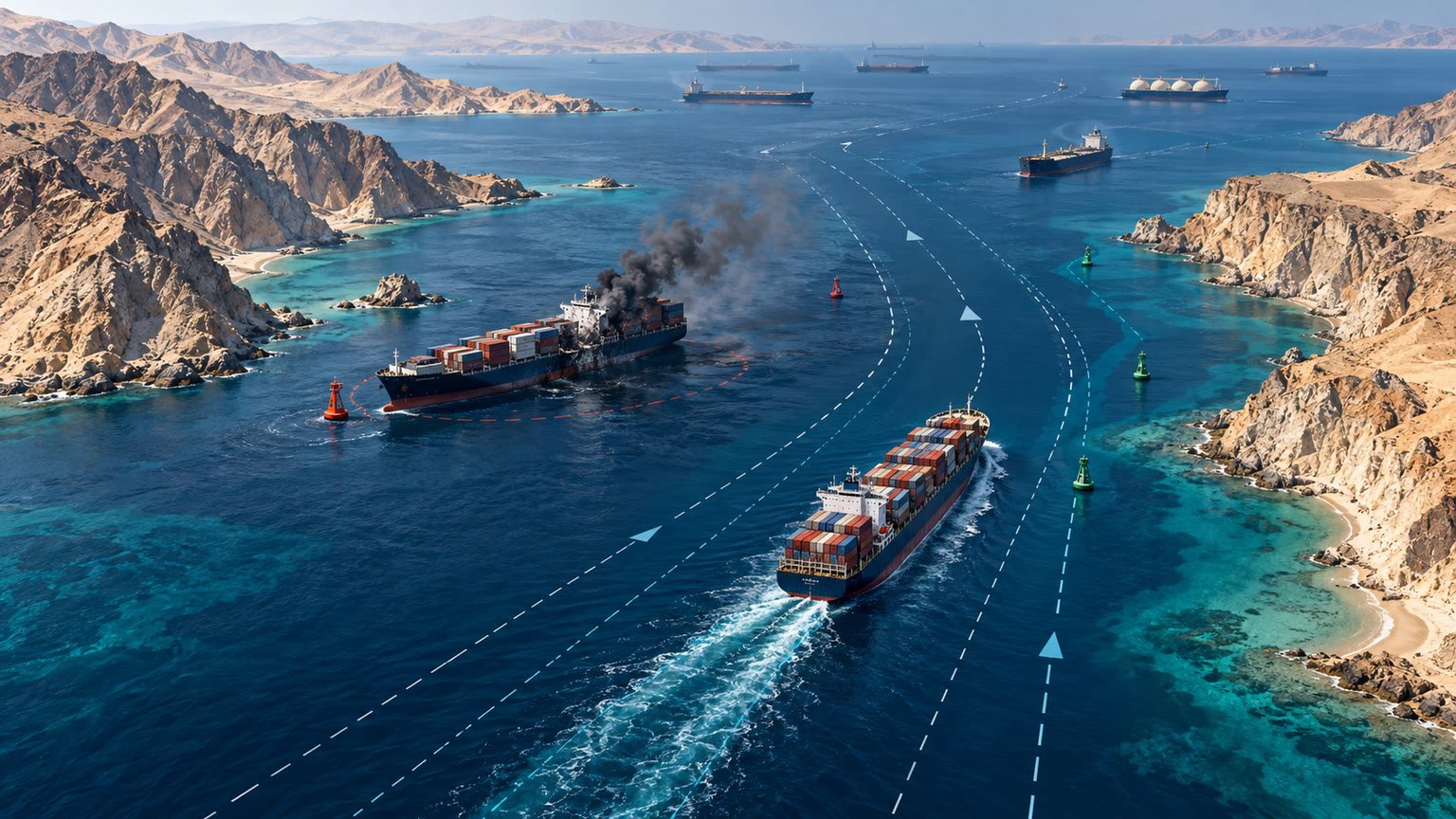
In a 14 October statement updated on 15 October, the MPA said it was informed that GFS PRIDE and GFS GISELLE were struck while transiting the Strait on 13 and 14 October Singapore time. Both vessels were Singapore-registered container ships.
The MPA said GFS PRIDE was damaged and caught fire before it sank. All 21 crew members were safely evacuated and no injuries had been reported. GFS GISELLE sustained hull damage, then reached a safe anchorage under its own propulsion. The authority said all 22 crew members were safe and no injuries had been reported. There were no Singaporeans on board either vessel, according to the same statement.
What is confirmed, and what is still reported
The MPA has confirmed the vessel damage, the sinking of GFS PRIDE, the safe evacuation of its crew and the safe arrival of GFS GISELLE. It has not identified who launched the projectiles.
The Associated Press separately reported that Iran’s Revolutionary Guard Corps navy said a cargo ship sank after striking a naval mine. AP said the available information did not establish whether that ship was the same vessel as GFS PRIDE and that it could not independently verify images shown by Iranian state television. That claim therefore remains reported, not confirmed, and the cause of the two MPA-listed incidents should not be presented as settled.
Reuters reported on 15 October that oil markets were weighing attacks on shipping through the Strait against efforts by the United States to reduce petroleum shipping costs. The report said the administration was considering whether to ease restrictions on some shadow-fleet vessels, a proposal that remains reported and is not an announced policy change.
Why the Strait matters to fuel markets
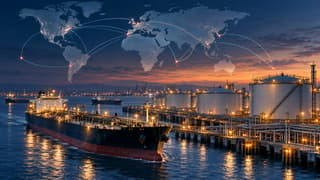
The Strait of Hormuz links the Persian Gulf with the Gulf of Oman and the Arabian Sea. The International Energy Agency’s February 2026 factsheet estimates that an average of 20 million barrels per day (mb/d) of crude and oil products crossed the Strait in 2025, equal to around 25% of global seaborne oil trade. The IEA also says almost 20% of global LNG exports transited the waterway in 2025.
The US Energy Information Administration’s November 2023 analysis of 2022 traffic estimated 21 million barrels per day, or about 21% of global petroleum-liquids consumption, and more than one-quarter of global seaborne traded oil. The reference years and methods are different, so these figures are not a single live flow estimate. They are consistent on the central point: even a limited disruption in Hormuz has an international market effect.
The IEA’s Oil Market Report published on 14 October said attacks on regional energy infrastructure and tanker traffic were threatening a fragile recovery in Middle East supply. It also said record tanker rates were raising crude delivery costs and eroding refinery margins. OPEC and non-OPEC ministers said on 12 October that shipping and insurance costs had risen to more than one-third of the commodity value in the affected energy trade; Reuters separately described freight costs as record high.
How a vessel attack can reach fuel users
The first transmission channel is not always the benchmark crude price. A shipper may face a higher war-risk premium, a longer route, a vessel shortage or a delay at the loading and discharge point. Those costs can be absorbed, passed into wholesale fuel, or offset by lower prices elsewhere in the chain. The outcome depends on the cargo, the destination, local inventories and whether the disruption persists.
Refined products can be particularly sensitive because a market may have enough crude on paper but not enough diesel, jet fuel or gasoline arriving at the right port. The IEA’s latest market report says Middle East product shipments have recovered more slowly than crude flows and that diesel markets remain under strain. That is why a shipping-security story matters to truck operators, airlines, manufacturers and motorists far beyond the Gulf.
The previous FuelPrice report on OPEC’s warning about shipping and insurance costs covered the cost shock already visible in energy logistics. The new vessel incidents are a fresh development: they test whether those costs can remain high without further reducing the number of commercial ships willing to transit.
What it means for drivers, fleets and EV owners
There is no automatic one-for-one link between a ship incident and the price on a fuel-pump sign. Retail prices also reflect refined-product benchmarks, taxes, exchange rates, inventory, local competition and the timing of a market’s pricing cycle. A short-lived security event may first appear in freight and insurance, while a longer disruption can widen into wholesale fuel and consumer prices.
Readers checking local pump movements can use FuelPrice’s live fuel prices page, while remembering that a local retail number is different from the global Brent benchmark. For a particular journey, the fuel cost calculator can show how a change in the input price would affect a trip budget; it does not forecast the market.
Fleet operators can separate three figures when reviewing exposure: the wholesale fuel price, the delivered-fuel or freight surcharge, and the final retail or contract rate. That separation helps show whether a cost increase is coming from the commodity itself or from the logistics of getting it to the customer.
EV owners are not insulated from all energy-market effects, because electricity prices and charging access have their own drivers. But readers comparing operating options can use the EV station directory to review charging availability in the markets covered by the site.
What to watch next
- Any further statement from the MPA, the vessel managers or maritime authorities on the incident sequence, damage and investigation.
- Whether commercial operators continue transiting the Strait, slow sailings or shift more cargo to alternative routes and ship-to-ship transfers.
- War-risk insurance, tanker and product-freight rates, and the difference between crude prices and delivered diesel or gasoline prices.
- Official IEA, OPEC and government updates on emergency reserves, sanctions, shipping rules and the security of energy corridors.
Reader takeaway
As of 15 October 2026, the confirmed development is a sharp deterioration in maritime safety: one Singapore-registered container ship sank and another was damaged, while the MPA reported no crew injuries in either incident. The fuel-market risk comes from the route’s scale and from the possibility that repeated attacks make shipping, insurance and delivery costs stay elevated even if oil continues to move through workarounds.
Sources
- Maritime and Port Authority of Singapore — Two Singapore-Registered Vessels Struck in Strait of Hormuz — 14 Oct 2026
- Associated Press — Iran says a ship sank after striking a mine in Strait of Hormuz, and other Middle East developments — 14 Oct 2026
- Reuters via MarketScreener — Oil prices retreat as investors weigh supply outlook, Middle East tensions — 15 Oct 2026
- International Energy Agency — Oil Market Report: October 2026 — 14 Oct 2026
- International Energy Agency — Strait of Hormuz factsheet — updated Feb 2026
- US Energy Information Administration — The Strait of Hormuz is the world’s most important oil transit chokepoint — 21 Nov 2023
- OPEC — Energy and Oil ministers of countries participating in the Declaration of Cooperation met in Riyadh — 12 Oct 2026
This article is for general information only and is not financial, insurance or legal advice.