ICICI Lombard reported a 15.5% year-on-year rise in second-quarter FY27 net profit to about ₹946 crore for the July–September 2026 quarter, with premium income also higher. For Indian car and bike owners, the result is a company-level signal of insurance demand—not a new renewal rule or an automatic change to an individual policy’s premium, cover or claim terms.
Key takeaways
- Reports put Q2 FY27 net profit at about ₹946 crore, compared with about ₹820 crore a year earlier.
- Business Standard and Reuters reported the year-on-year profit increase at 15.5%; NDTV Profit reported 15.4% after rounding, a small difference in presentation.
- Net premium earned rose 17.7% year on year to about ₹6,652 crore, according to Business Standard and NDTV Profit.
- The combined ratio rose to 107% from 105.1%, showing that claims and operating costs remain important alongside investment income.
What changed in the Q2 FY27 result
The result covers the quarter ended 30 September 2026 and was reported on 14 October. Business Standard reported net profit of ₹946.4 crore, compared with ₹819.54 crore in Q2 FY26. NDTV Profit rounded those figures to ₹946 crore and ₹820 crore, while Reuters also reported a 15.5% rise to ₹9.46 billion from ₹8.2 billion.
The reports were consistent on the direction of the result: premium and investment income supported the quarter. Business Standard said net premium income increased 17.7% year on year to ₹6,651.87 crore. NDTV Profit reported the same growth rate and rounded the current-period figure to ₹6,652 crore. This is growth in the insurer’s overall earned premium, not a promise that every policyholder will see a lower renewal quote.
Reuters also linked stronger retail motor and health policy sales to steady automobile demand after last year’s tax cuts. That is sector context reported with the earnings story; it is not an announcement of a new motor-insurance tax change or an IRDAI renewal rule on 14 October.
Why a higher insurer profit does not set your premium
An insurer’s quarterly result combines many products, customer segments and distribution channels. A private car or two-wheeler renewal quote is instead built around the vehicle and policy details, including the vehicle’s age and model, location, declared value, claim history, selected cover, deductible, add-ons and applicable taxes. The company’s profit percentage therefore cannot be used to predict the price of a particular policy.
The same distinction matters when a policyholder sees reports of stronger motor-insurance demand. More policies or higher premium income can reflect vehicle sales, policy mix, channel mix or changes in the value of vehicles being insured. It does not establish that a particular driver’s cover has become cheaper, more expensive or broader. Actual offers vary by vehicle, profile and insurer.
For a basic validity and fraud check before comparing a renewal, readers can use FuelPrice’s vehicle-insurance check guide. It covers the policy details that need to be verified independently of any company earnings announcement.
The underwriting caution behind the headline profit
The earnings picture was not uniformly positive. Business Standard and Reuters reported that ICICI Lombard’s combined ratio increased to 107% in Q2 FY27 from 105.1% a year earlier. In simple terms, a combined ratio above 100% indicates that claims and related underwriting expenses were higher than the premium earned from underwriting before investment income is considered.
That metric does not describe the validity of an individual claim or prove that a claim will be accepted or rejected. It does show why a higher reported profit should not be read as a blanket change in claims handling or customer terms. Investment income and premium growth can support the overall result while underwriting performance remains under pressure.
What vehicle owners can check now
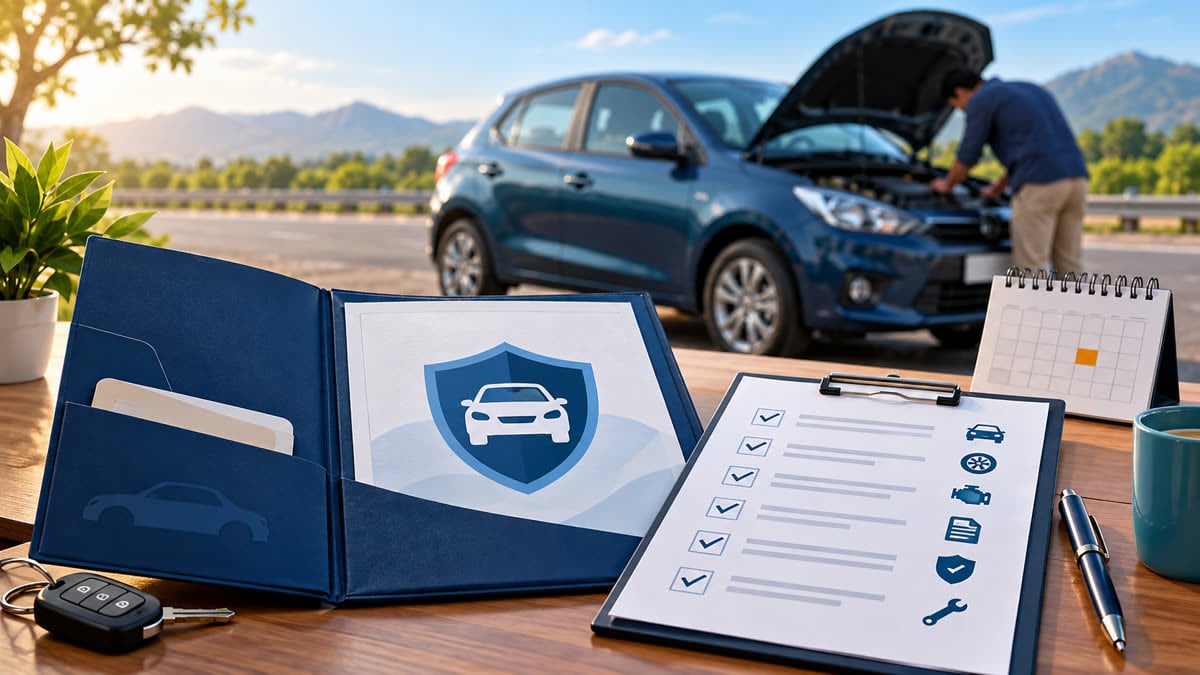
The practical takeaway is to keep the renewal decision separate from the insurer’s share-market or quarterly-profit story. The relevant comparison is the cover being offered for the vehicle, with the main details recorded clearly:
- Policy expiry date and whether third-party liability and own-damage cover are both present where required or selected.
- Insured declared value, deductibles, exclusions and each add-on, rather than comparing only the final premium.
- Vehicle use, registration details and claim history, because an incorrect detail can affect the quote or a later claim review.
- Whether two quotes provide the same duration and scope of cover. A lower headline price is not a like-for-like comparison if protections or deductibles differ.
Drivers separating insurance from running costs can also estimate a trip or monthly fuel budget with FuelPrice’s fuel cost calculator. For a longer journey, the road-trip planner can be used as a separate planning tool; neither tool changes the terms of an insurance policy.
What to watch next
The next useful signal will be whether motor-premium growth and the combined ratio hold up in the following quarter, alongside any broader industry or regulatory changes. Until an insurer or regulator announces a specific change, policyholders should treat each renewal document and its stated terms as the operative information for their vehicle.
In short, ICICI Lombard’s Q2 FY27 result shows stronger premium income and reported profit, but it is not a universal price signal for Indian motorists. The reader-level value is in checking expiry, coverage, IDV, exclusions and like-for-like terms before treating any renewal quote as comparable.
Sources
- Reuters — India’s ICICI Lombard posts higher profit as tax breaks lift motor, health insurance demand — 14 Oct 2026
- Business Standard — ICICI Lombard Q2FY27 net profit up 15.5% at ₹946 crore on income growth — 14 Oct 2026
- NDTV Profit — ICICI Lombard Q2 Results: Net Profit Up 15%; Dividend Of Rs 7/Share Declared — 14 Oct 2026
- ICICI Lombard — Investor Relations: Q2 & H1 FY2027 disclosures — 14 Oct 2026
This article is for general information only and is not financial, insurance or legal advice.