India's electric-vehicle (EV) retail sales reached an all-time high of about 3.55 lakh units in October 2026, up 44.88% from October 2025, according to the Federation of Automobile Dealers Associations (FADA) release dated 6 November 2026. But the latest dealer feedback points to a less visible bottleneck: margins and after-sales revenue are under pressure as showrooms spend on chargers, tools and trained technicians.
That matters to buyers because a growing EV market is useful only if the network that sells, repairs and supports those vehicles can keep pace. FADA's October data shows strong demand; a 9 November report by ETAuto says dealers are asking for economics that can support the infrastructure behind that demand.
Key takeaways
- FADA recorded about 3.55 lakh EV retail sales in October 2026, up 44.88% year on year.
- EVs made up roughly 11.5% of vehicle retail in October, versus about 6% a year earlier.
- Electric two-wheelers, three-wheelers, passenger vehicles and commercial vehicles each posted their best October on record, according to FADA.
- FADA President Sai Giridhar told ETAuto that low EV margins, higher operating expenses and specialised workshop investments are putting pressure on dealers.
- For a buyer, service coverage, technician capability, parts availability and delivery timing deserve as much attention as the advertised range.
What the October EV numbers show
FADA's release presents October as a broad-based EV month rather than a single-segment spike. The association put overall EV penetration at about 11.5%, compared with approximately 6% in October 2025. A PTI report published by Moneycontrol on 6 November gave the underlying EV count as 3,54,625 units, which is consistent with FADA's rounded figure of about 3.55 lakh.
| FADA measure | October 2026 | Comparison or context |
|---|---|---|
| EV retail sales | About 3.55 lakh units | 44.88% higher than October 2025 |
| EV share of all vehicle retail | About 11.5% | About 6% a year earlier |
| Electric share of three-wheelers | 62.63% | Shows how far electrification has moved in the segment |
| Electric share of passenger vehicles | 7.30% | 3.55% in October 2025 |
Source: FADA's All India Vehicle Retail Data for October 2026, released on 6 November 2026. FADA reports the overall EV total as approximately 3.55 lakh.
FADA linked the demand to several factors: petrol and diesel prices remained elevated, driving ranges improved, and EV prices moved closer to comparable internal-combustion models. It also said availability, rather than demand, had become the binding constraint in some segments. That is useful context for a buyer who sees a strong sales headline but still finds a preferred variant, colour or delivery slot unavailable.
Why dealer economics are under strain
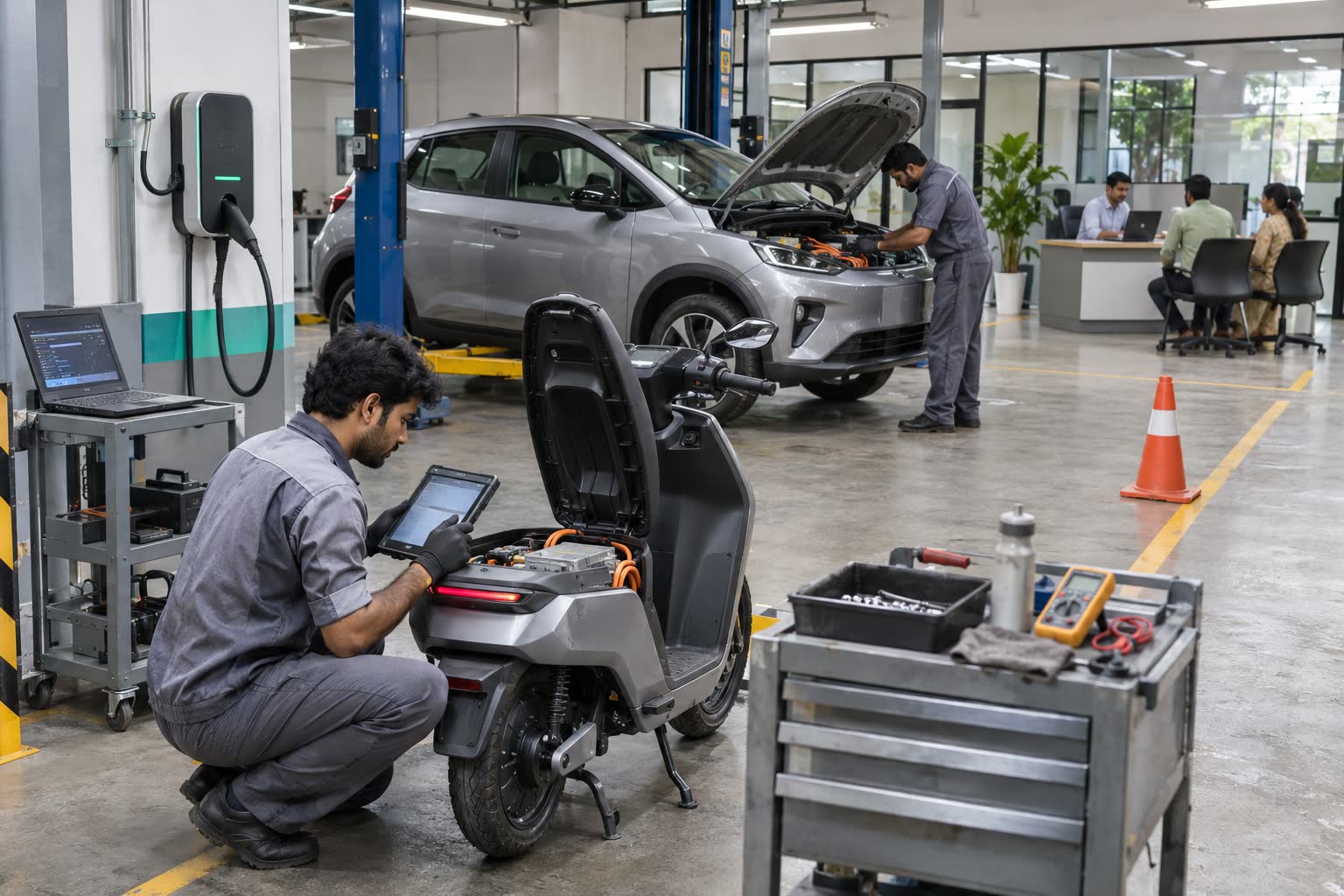
In its 9 November report, ETAuto said FADA is concerned about low EV margins, higher operating costs and the investment needed for specialised workshops, tools and trained technicians. Giridhar also said EV workshops generate less revenue than workshops servicing internal-combustion vehicles, while dealers cannot simply raise the vehicle price to recover every extra cost.
This is an after-sales issue as much as a showroom issue. EVs still need inspections, tyres, suspension work, software support, battery diagnostics and accident repairs, but the mix of routine maintenance and parts work can differ from an internal-combustion vehicle. If a dealership does not earn enough from sales and service, expansion into smaller cities may be slower or a dealer may prioritise volume over workshop capacity. That is a risk to monitor, not a claim that every EV outlet is unprofitable.
The problem is not entirely new. In a 1 September 2026 report, Business Standard quoted FADA's two-wheeler vertical as saying workshops averaged about ₹300 in revenue per two-wheeler against roughly ₹500 needed for profitability, and that around 70% of workshops would not be profitable if sales and service were assessed separately. Those figures cover two-wheeler workshops generally, not every EV outlet, but they show why EV-specific training and equipment can add pressure to a dealer model that was already being questioned.
What this means for EV buyers
A record registration month does not automatically guarantee a strong service experience for every model or city. Before booking, a buyer can ask the dealer for the nearest authorised workshop, the expected parts lead time, the availability of trained high-voltage technicians and the process for roadside assistance. It is also worth checking what the battery, charger and vehicle warranties cover, including exclusions for accident damage or non-approved repairs.
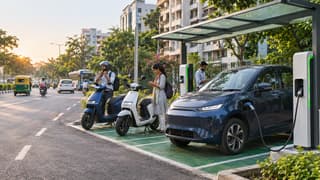
For buyers outside major metros, the practical question is often distance rather than the number of showrooms on a brand website. The state-wise EV charging directory can help with public-charging availability, but charging access and authorised servicing are different checks. A charger nearby does not replace a workshop that can diagnose a vehicle safely.
Delivery availability is another part of the same story. FADA said demand had moved ahead of supply in electric two-wheelers and passenger vehicles. Buyers comparing variants should therefore separate a reported demand trend from a confirmed delivery date and get the expected timeline in writing from the dealer.
Running cost is only one part of the comparison
Higher petrol and diesel prices were among the demand drivers identified by FADA, but an EV comparison should not stop at energy cost. Home-charging access, public-charging tariffs, insurance, tyres, financing and service reach all affect ownership. Use the latest fuel-price pages and the fuel-cost calculator to benchmark the petrol or diesel alternative for a typical commute, then compare that result with the electricity and charging arrangement actually available to you.
For long-distance use, the relevant test is whether the planned route has dependable charging and a service fallback, not just the claimed laboratory range. The road-trip planner can help map the trip, while the buyer should separately confirm charger compatibility, charging time and workshop access for the model being considered.
What to watch in November
FADA's own dealer survey is cautiously optimistic about November because Dhanteras fell on 6 November and Diwali on 8 November 2026. It said 51.65% of dealers expected growth, 34.71% expected flat sales and 13.64% expected a decline. The next data release should show whether the deferred festive demand arrived, whether EV supply improved and whether the service network expanded alongside sales.
The key signal for consumers will be the combination of availability and support: more EVs reaching roads, enough trained technicians to maintain them, and dealer agreements that keep workshops viable. FADA's sales record answers the demand question for October; the dealer-margin debate is about whether the retail system can sustain that growth.
Reader takeaway
India's EV market is growing faster than the service economics around it. The October record is positive for adoption, but a buyer should treat after-sales coverage, parts access, warranty terms and charging practicality as core ownership checks rather than as details to resolve after delivery.
Sources
- FADA — FADA Releases Oct’26 Vehicle Retail Data — 06 Nov 2026
- ETAuto — Auto dealers struggle to make EV economics work despite rising sales — 09 Nov 2026
- Moneycontrol/PTI — Electric vehicle sales jump 45 pc to 3,54,625 units in October — 06 Nov 2026
- Business Standard — Fada to seek OEM meetings as two-wheeler dealers flag workshop losses — 01 Sep 2026