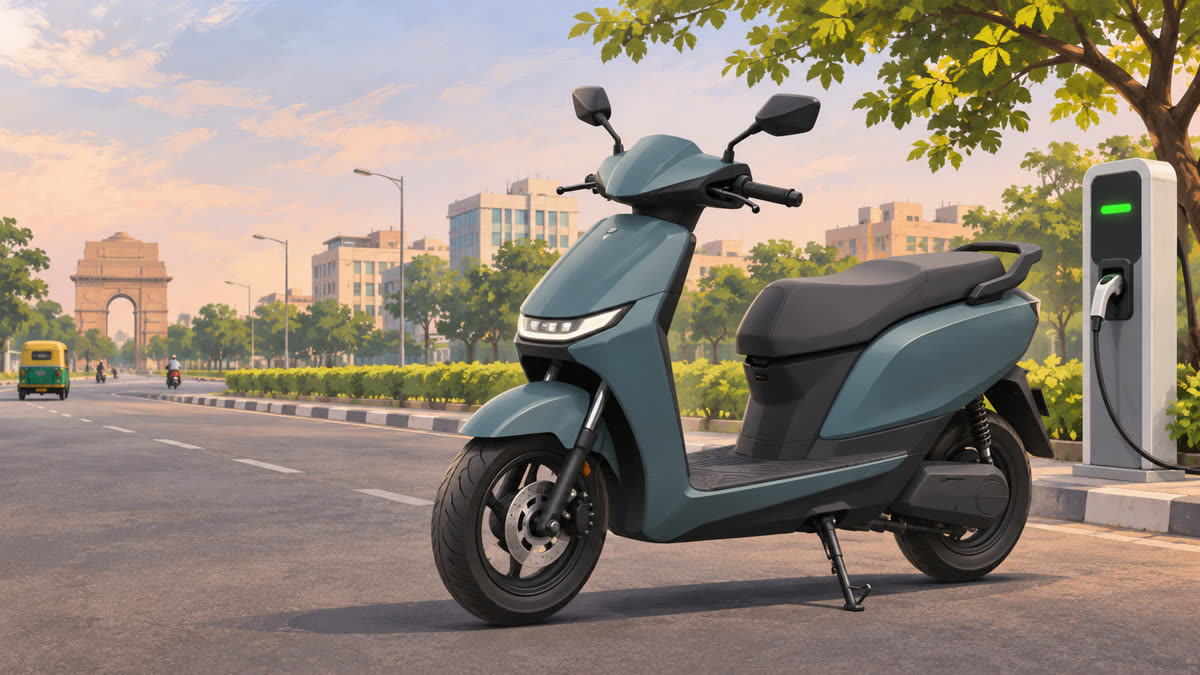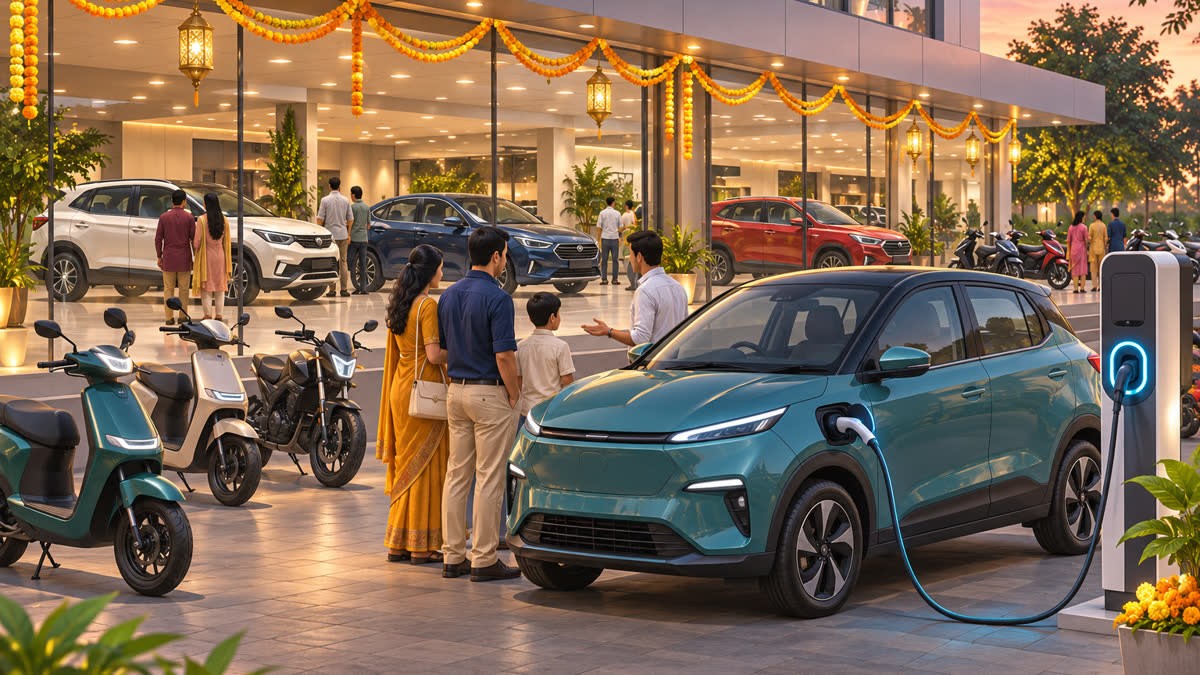
According to the Federation of Automobile Dealers Associations (FADA), India recorded 55,25,490 vehicle retail sales during the 42-day 2026 festive period, up 2.21% from the previous year. Electric vehicle (EV) retail crossed five lakh units for the first time in a single festive period while passenger-vehicle retail fell 7.16% against a high 2025 base, showing that EV demand is expanding even as the broader car market was more measured.
Key takeaways
- FADA counted 55,25,490 retail vehicles between 11 Oct and 21 Nov 2026, 2.21% more than in the comparable 2025 festive period.
- EV retail rose 52.62% to 5,09,667 units, or close to one in every ten vehicles sold in the period.
- Electric two-wheelers led the EV mix at 3,30,846 units, while electric passenger vehicles reached 52,104.
- Passenger-vehicle retail declined 7.16% to 7,48,616 units, even as two-wheelers, three-wheelers and commercial vehicles grew.
What the 42-day numbers measure
The underlying FADA release is dated 23 Nov 2026, and an updated Motorindia report on 27 Nov brought the figures back into the current news cycle. The festive window covers 11 Oct to 21 Nov 2026, from the first day of Navratri to 15 days after Dhanteras. These are vehicle retail and registration figures, not factory despatches, so they are closer to what dealers delivered and buyers registered during the period.
FADA said the data was collated with the Ministry of Road Transport and Highways and collected from 1,468 of India’s 1,469 regional transport offices. Registration data for three-wheelers, commercial vehicles and tractors was not available for Telangana, so that limitation matters when comparing category totals.
Market snapshot: two-wheelers led, cars lagged
| Category | Festive 2026 retail | Year-on-year change | What it shows |
|---|---|---|---|
| All vehicles | 55,25,490 | +2.21% | Highest-ever 42-day festive total |
| Two-wheelers | 43,13,276 | +3.67% | Largest volume segment |
| Passenger vehicles | 7,48,616 | -7.16% | Lower than a strong 2025 base |
| Commercial vehicles | 1,55,761 | +7.13% | Freight and business mobility demand grew |
| Total EVs | 5,09,667 | +52.62% | First festive period above five lakh |
Two-wheelers remained the market’s main volume engine. Passenger vehicles were the only major category in FADA’s table to decline year on year, falling from 8,06,322 units in the 2025 comparison period to 7,48,616 in 2026. FADA President Sai Giridhar said the car segment had been more than 18% lower at the Navratri stage before recovering around Dhanteras and Diwali. FADA also reported that 2026 passenger-vehicle retail was still 16.43% above the 2024 festive period, which shows why the year-on-year comparison needs context.
EVs crossed five lakh units
EV retail was the clearest growth signal. FADA recorded 5,09,667 electric vehicles in the 2026 festive window, up from 3,33,935 in the 2025 comparison period. India Today’s report on the same FADA data also described this as the first single festive period to cross five lakh EV registrations. In practical terms, the result points to a wider choice of electric scooters, motorcycles, cars and commercial vehicles reaching buyers at the same time.
- Electric two-wheelers: 3,30,846 units, up 61.10%.
- Electric three-wheelers: 1,20,330 units, up 25.45%.
- Electric passenger vehicles: 52,104 units, up 72.91%.
- Electric commercial vehicles: 6,387 units, up 154.56%.
The sales table is a market snapshot, not a guarantee that every EV will deliver the same running cost or ownership experience. Electricity tariffs, home or public charging access, daily distance, battery warranty and service availability can change the calculation. Drivers assessing an electric vehicle can use FuelPrice’s state-wise EV charging directory to check the infrastructure question alongside the vehicle’s claimed range.
What the data means for drivers, riders and fleets
For riders, the 61.10% rise in electric two-wheeler retail is more significant than the headline EV total because it covers the category used for commuting and delivery work at scale. It does not prove that an electric scooter is cheaper for every user, but it does show that the market is offering more products and that registrations are no longer confined to a small niche. A petrol-bike owner comparing routine usage can first map fuel spending with the fuel cost calculator, then compare that estimate with the vehicle’s charging and maintenance assumptions.
For car buyers, the 7.16% passenger-vehicle decline is a reminder not to read a record overall market as a blanket signal for every model or segment. The FADA figures do not provide model-level inventory, discounts, waiting periods or on-road prices. Those details remain specific to the vehicle, location and delivery date.
For commercial operators, conventional commercial-vehicle retail grew 7.13%, while electric commercial-vehicle retail more than doubled from a small base to 6,387 units. That combination suggests rising interest in both established and electric fleet options, but the EV commercial-vehicle total is still much smaller than the overall commercial segment. A route-level decision also depends on payload, charging downtime and depot access; the road-trip planner can help structure the route and stop-planning part of that assessment.
What to watch next
The next test is whether the EV share holds after the festive registration window and whether passenger-vehicle demand improves once the high 2025 comparison base moves out of view. FADA said December sales would offer a clearer read on the market and indicated that India could be heading towards more than three crore vehicle retail sales in calendar 2026. That is an industry-body projection, not a confirmed outcome. Monthly registration data and actual deliveries will decide whether the festive result represents a sustained shift or a seasonal peak.
Reader takeaway: The latest FADA data shows two simultaneous trends: India’s overall vehicle market reached a festive record, and EV adoption accelerated sharply within it. For a purchase or fleet review, use the figures as market context, then check the specific vehicle’s total cost, charging access, delivery timing and service support.
Sources
- FADA, “FADA Releases 42 Days Festive’26 Vehicle Retail Data”, 23 Nov 2026
- Motorindia via Aftermarket & Service, “42-Day Festive Vehicle Sales Hit Record High, EV Sales Cross 5 Lakh”, updated 27 Nov 2026
- India Today, “Festive cheer for auto industry as vehicle sales hit record 55.25 lakh”, 23 Nov 2026