India’s Finance Ministry has warned that the continuing Middle East conflict and risks to shipping through the Strait of Hormuz could keep the country’s oil-import bills and maritime freight rates volatile. The warning, in the Ministry’s November 2026 Monthly Economic Review released on 28 November 2026, is an outlook on cost pressure—not a notification of a petrol or diesel price revision.
Key takeaways
- The review says supply-side shocks could feed into wholesale and retail prices in the coming months.
- Higher tanker, rerouting, marine-fuel and risk-related costs can raise the landed cost of imported energy even when the crude benchmark itself eases.
- Recent moderation in crude prices and a stronger rupee may provide relief, but the Ministry says that depends on those trends continuing.
- Drivers should read the warning as a reason to track dated retail prices and trip costs, not as confirmation of an immediate pump-price hike.
What the Finance Ministry said
The review identifies the geopolitical situation in West Asia, shipping risks around the Strait of Hormuz and uncertainty over global trade policy as important factors for India’s economic outlook. It says these supply-side shocks could affect broader wholesale and retail price indices if the disruption persists.
Moneycontrol and Reuters both reported the Ministry’s assessment on 28 November 2026. Reuters also reported that India’s annual retail inflation had reached 6.09% in October 2026, while the review said domestic demand and industrial activity remained supportive. That inflation reading is context for the warning; it is not a forecast that petrol or diesel prices will rise by the same proportion.
The Ministry’s wording matters because it separates a risk from a confirmed change. The review does not set a new retail fuel rate, announce an excise-duty move or direct oil-marketing companies to revise pump prices. Any change at a petrol pump would need to appear through a dated price update or an official policy announcement.
Why a shipping risk can reach India’s fuel chain
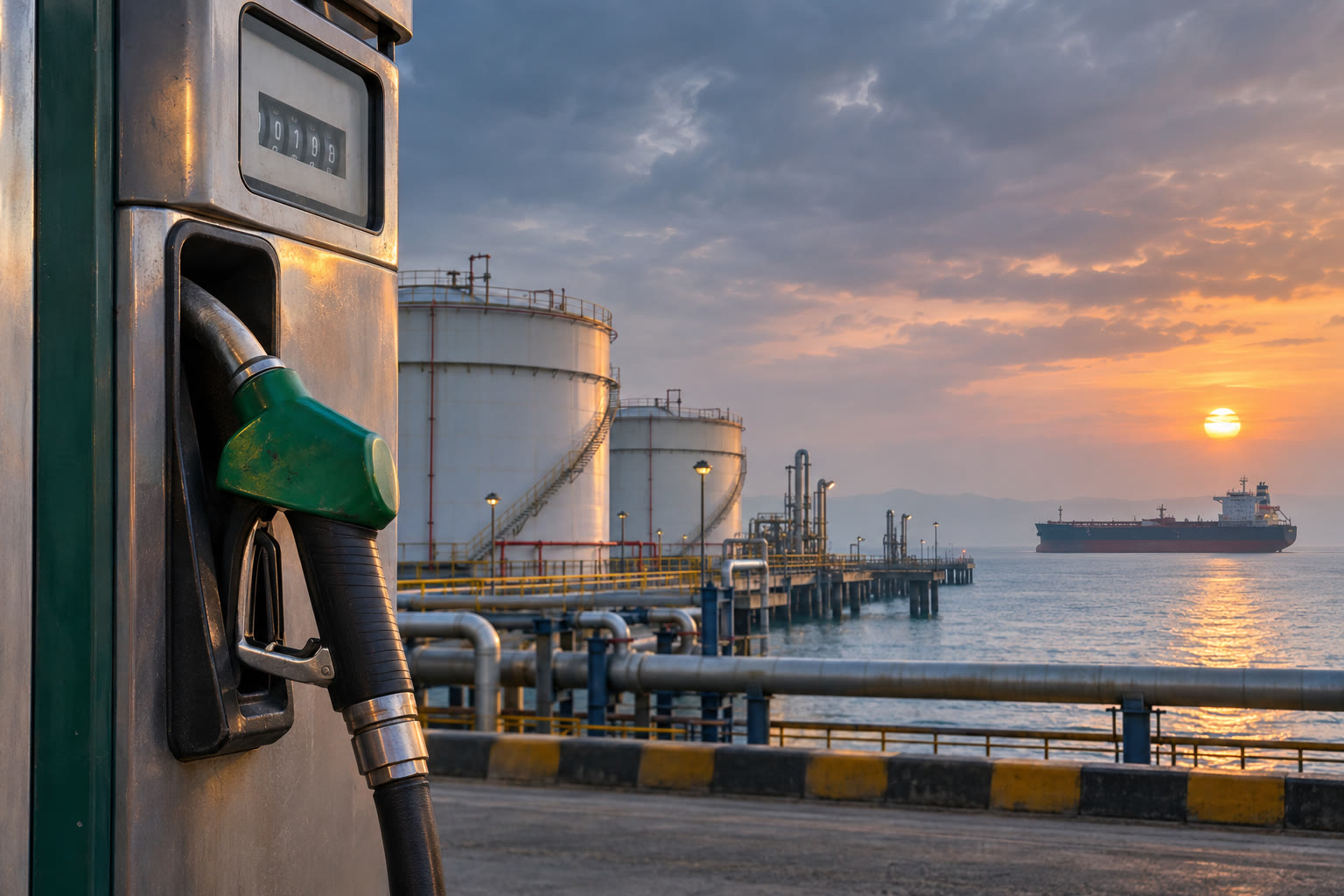
Crude is bought in a global market, but the cost of bringing it to a refinery also includes tanker availability, voyage length, marine fuel, insurance and other risk-related charges. When ships avoid or delay a risky corridor, the replacement voyage can be longer or more expensive. Those costs can affect the delivered cost of crude and refined products even if the headline oil price is moving in the opposite direction.
The United Nations Conference on Trade and Development’s Review of Maritime Transport 2026 describes the same transmission channel. It says Strait of Hormuz disruption affected tanker freight through constrained vessel capacity, longer and more complex trading patterns and elevated risk costs. It also notes that higher maritime fuel costs can increase import costs for energy and other goods, potentially feeding into consumer prices.
For India, this creates two separate questions. The first is whether enough crude and refined fuel can reach domestic terminals without a physical shortage. The second is how much it costs to secure, insure and transport each cargo. A diversified supply chain can reduce the chance of a sudden shortage, but it does not make freight volatility disappear.
What it means for drivers now
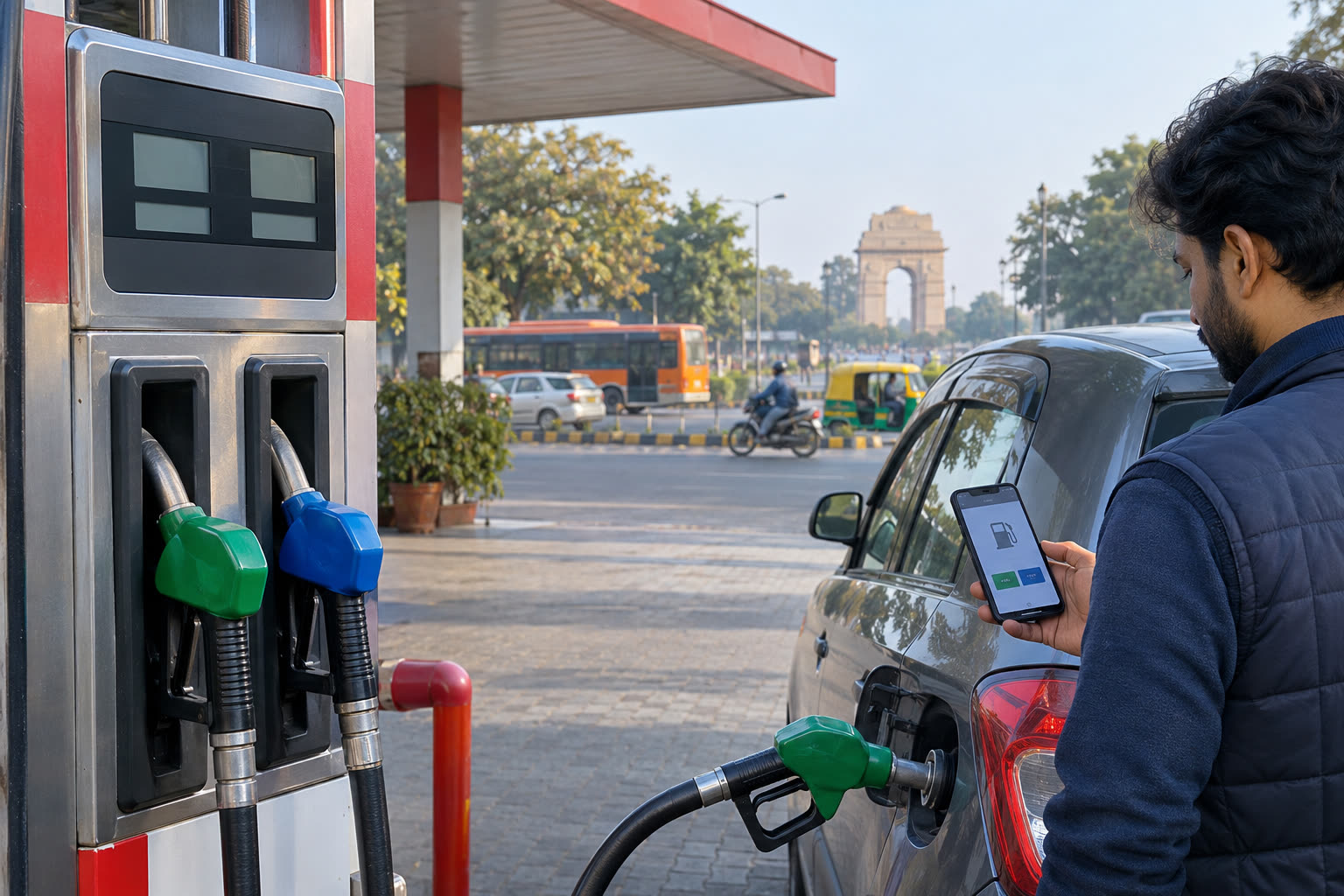
There is no confirmed pump-price hike in the Ministry’s review. For a private driver, the useful distinction is between a future risk to the cost base and a price that has actually changed at a local station. City prices can be checked on our live fuel-prices page, where the date and location matter.
If a fuel-price move is announced later, its effect on a journey will depend on distance, mileage and fuel used—not just the change per litre. A driver planning a long trip can use the fuel cost calculator to test the route with the current price and then compare the result after any verified revision.
Why transporters may feel the pressure first
Freight operators buy fuel as a recurring operating cost and also face changes in shipping, handling and inland transport charges. A rise in the delivered cost of fuel can therefore show up in freight quotes, logistics contracts or delivery surcharges before a household notices a change at the pump. That is a possible transmission path, not a claim that every transporter will increase rates.
The review also points to continued strength in goods movement and freight activity. That matters because firm demand can make it harder for supply-side cost increases to be absorbed indefinitely, while weak demand could limit pass-through. The final effect will depend on crude prices, the rupee, vessel availability, domestic inventories and pricing decisions made by the relevant companies and authorities.
What could ease the pressure
There are some countervailing signals. Moneycontrol and Business Today reported that global crude benchmarks had fallen below $100 per barrel in early November 2026 and that a stronger rupee could reduce imported-inflation pressure if the trend lasts. Those are conditional cushions, not guarantees: a renewed disruption, higher insurance costs or a reversal in the rupee could offset them.
This is also why one day’s global oil move should not be treated as a direct prediction for the next local fuel price. The landed cost, taxes, inventory timing, currency and domestic pricing decisions all influence the number a driver sees.
What to watch next
- Dated petrol, diesel and CNG prices in the city where the vehicle will be fuelled.
- Official statements from oil companies or the government if a price, tax or supply measure changes.
- Shipping and tanker-cost updates, especially if transit through the Strait remains disrupted.
- Whether the rupee and global crude prices continue to provide the relief described in the November review.
FuelPrice earlier covered the rise in oil-market risk after Ras Tanura and Hormuz incidents. The new Finance Ministry review adds a domestic cost-and-inflation assessment to that earlier market report; it does not convert the risk into a confirmed retail fuel-price change.
Reader takeaway: The Ministry’s message is a warning to watch the fuel and freight cost chain, not a notice that petrol or diesel has already become more expensive. Check the current local rate before travelling, calculate the trip cost using the dated price, and treat any future increase as confirmed only when it appears in an official or otherwise verifiable update.
Sources
- Moneycontrol — “Strait of Hormuz risks may add to inflationary pressures: Finance Ministry” — 28 Nov 2026
- Reuters via MarketScreener — “Weather, supply uncertainties may accelerate India inflation, report says” — 28 Nov 2026
- Business Today — “West Asia conflict, Hormuz risks cloud India’s economic outlook as 2027 approaches” — 28 Nov 2026
- UNCTAD — Review of Maritime Transport 2026: Shipping at a crossroads: Navigating risks, sustainability and resilience — Nov 2026