Indian Railways has flagged off the country's first LNG-powered train from Sabarmati Railway Station in Ahmedabad on 27 September 2026, using a diesel-LNG dual-fuel system in its Driving Power Cars (DPCs). For Indian fuel users and fleet operators, the significance is a live test of whether LNG can reduce diesel dependence and operating costs in rail services; it does not change petrol or diesel prices for road vehicles.
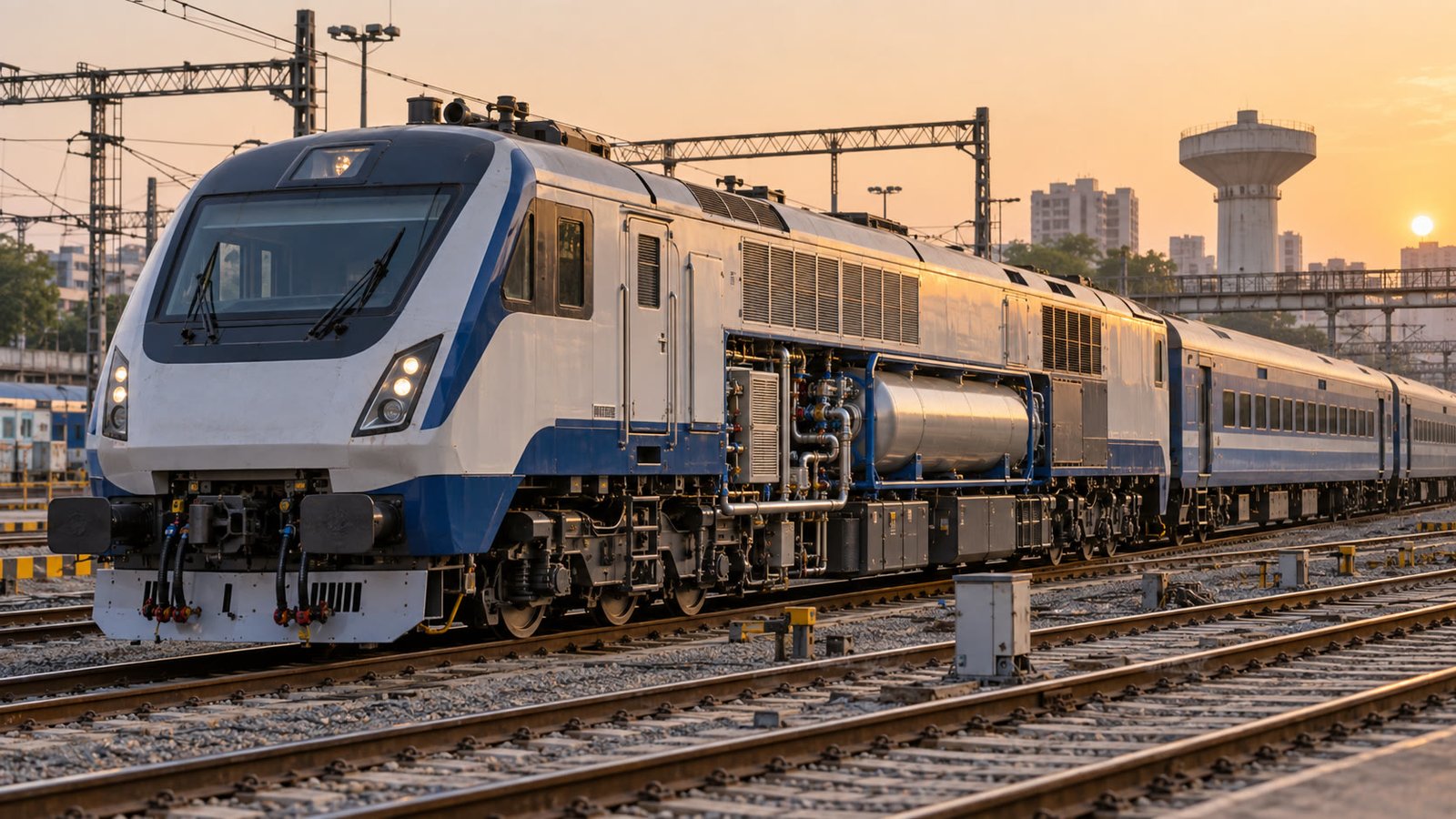
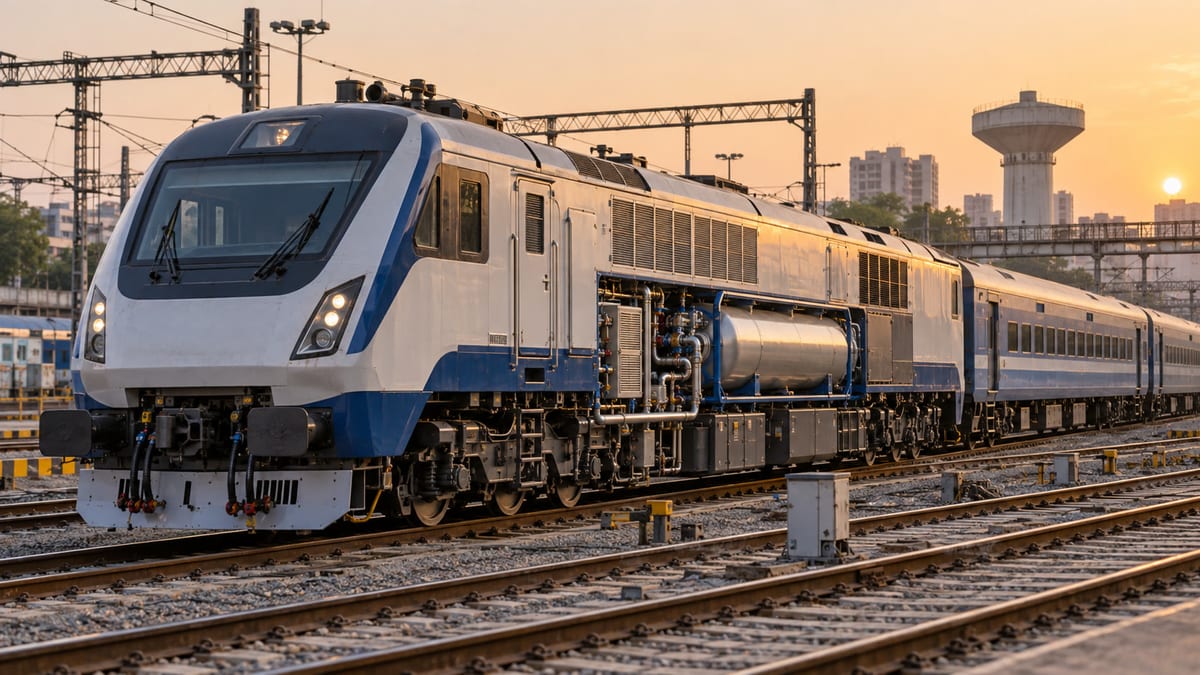 Generated editorial illustration of a diesel-LNG dual-fuel train at an Indian rail yard; it is not an official photograph. Credit: FuelPrice.
Key takeaways
- What happened: The first LNG-powered train was flagged off from Sabarmati on 27 September 2026.
- How it runs: Two Driving Power Cars were converted to use diesel and LNG together.
- The reported fuel share: LNG can substitute for around 40% of diesel consumption in the current system.
- What it does not mean: This is a targeted rail demonstration, not an immediate change to car, bike or truck fuel prices.
What was launched at Sabarmati
The official event release said Union Home and Cooperation Minister Amit Shah flagged off the train from Sabarmati Railway Station in Ahmedabad on 27 September. The same release described the LNG train as part of a set of railway projects inaugurated or started in Gujarat. The Indian Express, The Economic Times and The Times of India independently reported the flag-off and identified the train as India's first LNG-powered service.
The fuel system is installed in two Driving Power Cars at the Sabarmati Integrated Coaching Depot. The Indian Express, Economic Times and Times of India reports all describe each converted DPC as having 1,400 horsepower and being modified for diesel-LNG dual-fuel operation. That detail matters: the project converts two powered units for a defined operating test; it is not a claim that all Indian locomotives are being moved to LNG.
How the dual-fuel system changes diesel use
A dual-fuel train still retains diesel capability while adding LNG as a second fuel. That gives the operating team flexibility when LNG is available and avoids treating the trial as a complete diesel replacement. The Times of India reported that the converted units can operate on either LNG or diesel depending on fuel availability, while the Indian Express and Economic Times reported that LNG can replace around 40% of diesel consumption in the current arrangement.
The 40% figure is therefore a reported system or trial estimate, not a guaranteed saving for every train, route or vehicle. Actual results will depend on the duty cycle, the LNG supply arrangement, the amount of time spent under load, refuelling access and maintenance performance. The reports also describe lower fuel costs and emissions as expected benefits, but those claims need to be tested through regular service data rather than assumed from the flag-off alone.
What it means for fuel cost and transport
For road users, the immediate takeaway is limited but useful. The event does not announce a change in petrol or diesel retail prices, a new LNG subsidy for private vehicles or a road-fleet conversion programme. Drivers can continue to check dated local rates through the live fuel-price hub rather than treating the train's fuel mix as a signal of a pump-price move.
For logistics companies and fleet planners, the more relevant question is whether the railway can turn a fuel experiment into a repeatable operating model. A fuel switch only works when supply, storage, safe refuelling, trained maintenance staff and engine conversion costs fit the route. The same principle applies to road fleets: a headline percentage from a rail trial cannot be used to predict the saving for a truck, bus or car. Operators comparing routes can use the fuel cost calculator to model their own distance, mileage and fuel-price assumptions, while keeping conversion and depot costs separate.
Why the trial matters for India's fuel transition
The official release and media reports place the train within Indian Railways' wider effort to reduce diesel use and emissions. The train should still be read as a focused alternative-fuel demonstration, not as a reversal of the railway's electric-traction push or a nationwide LNG mandate. That distinction is important for readers because a demonstration can prove that a technology works in one operating context without proving that it is the lowest-cost option everywhere.
For the wider mobility sector, the project provides a concrete benchmark to watch. LNG is being tested in a powered rail unit with a defined depot and maintenance system, so the next evidence will be more useful than the launch announcement itself: fuel consumption over regular service, uptime, refuelling intervals, maintenance requirements and the cost of LNG compared with the diesel displaced. If those results remain favourable, the experience could inform other non-electric or specialised rail services. The sources reviewed do not announce a nationwide road-vehicle rollout, so any such extension remains unconfirmed.
What to watch next
- Operating data: whether the reported diesel substitution is sustained outside controlled trials.
- Fuel logistics: how LNG is supplied, stored and refuelled at the depot and along any future route.
- Total cost: whether conversion, maintenance and safety infrastructure change the headline fuel benefit.
- Scale: whether Railways announces another LNG unit or publishes a wider deployment plan.
Reader takeaway
India's first LNG-powered train is a meaningful alternative-fuel milestone, but it is not an immediate fuel-price story for motorists. Its value lies in testing a diesel-saving pathway in rail operations while keeping diesel as a backup. Fuel users and transport operators should watch the operating evidence, not extrapolate the reported 40% figure to their own vehicles without checking fuel availability, equipment compatibility and total cost.
Sources
- Shri Amit Shah: Union Home Minister inaugurates projects and flags off the country's first LNG-powered train from Sabarmati (27 September 2026)
- The Indian Express: Amit Shah launches railway projects worth Rs 1,472 crore in Gujarat: LNG train, WAG-12 loco, Kavach and more (27 September 2026)
- The Economic Times: India gets first LNG powered train in Gujarat; check details, technology and more (27 September 2026)
- The Times of India: After hydrogen train, India's first LNG-powered train has been flagged off from Ahmedabad (28 September 2026)