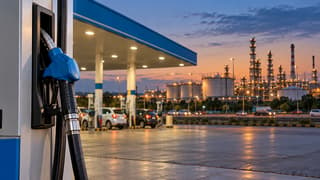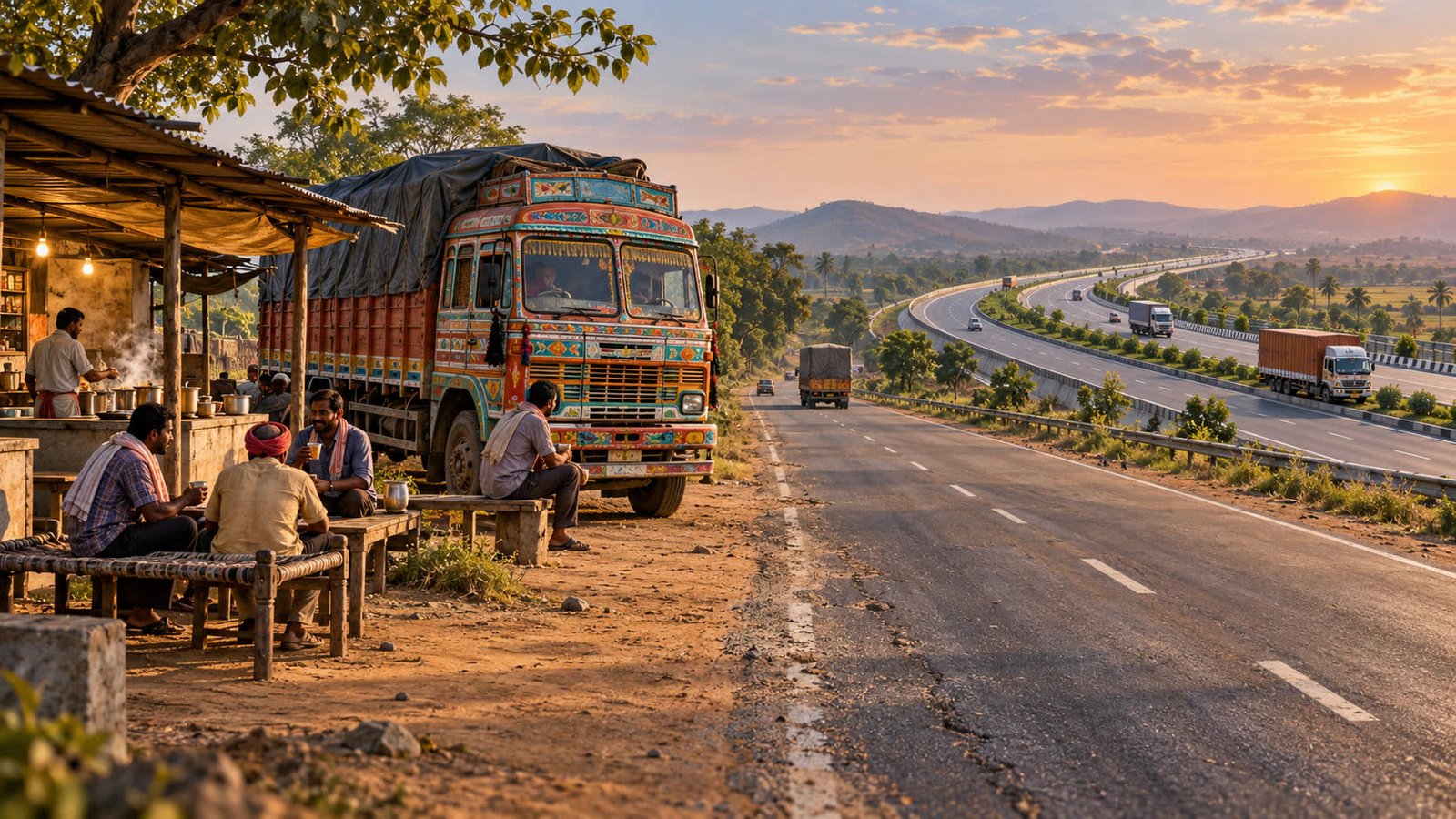
Bloomberg reported on 23 Oct 2026 that Indian truckers are avoiding some of the country’s new expressways, even though these roads are meant to move freight faster. The practical issue for transporters is that a shorter journey is not automatically a cheaper one: tolls, diesel, roadside food, parking, repairs and driver access all shape the final trip cost.
Key takeaways
- Bloomberg’s fresh report highlights a mismatch between expressway design and how many truckers plan a working route.
- ThePrint’s field reporting on the Delhi-Mumbai Expressway found transporters using older highways to avoid high tolls and because low-cost stops were easier to find.
- A Ministry of Road Transport and Highways answer lists truck parking, dhabas, toilets, drinking water and first aid among the wayside amenities needed along national highways and expressways.
- For freight and long road trips, the useful comparison is total journey cost and reliability, not the fastest estimated arrival alone.
Why a faster road can lose a freight trip
New expressways cut through the problems that older highways often create: stop-start traffic, village crossings, damaged surfaces and unpredictable junctions. ThePrint’s 3 June 2025 field report from the Delhi-Mumbai Expressway described a materially shorter Jaipur-Delhi trip on the smoother corridor. Better pavement can also reduce vibration, braking and some maintenance pressure.
But those benefits arrive with a different cost structure. An expressway usually limits where a truck can enter, leave, refuel, repair or take a longer break. A driver who misses a rest point may need to continue for many kilometres before finding a practical alternative. That extra distance, or the loss of a reliable loading window, can change the economics of a route that looked efficient on a map.
Bloomberg’s 23 October report puts that tension at the centre of the new expressway story: India is building US-style corridors to move goods faster, while many truckers still prefer older roads where food, repairs and rest are cheaper. It is a reported trend, not a universal rule for every route or fleet. The choice can differ by vehicle class, cargo, delivery deadline, toll agreement and whether the expressway is fully connected.
Tolls can cancel fuel and time gains
ThePrint’s field report gave a clear example of why operators compare more than fuel burn. It documented a trucker’s Mumbai-Delhi trip in which tolls were a major expense, and quoted a transport association leader saying that high expressway tolls could wipe out the savings from better mileage and lower maintenance. The report is a dated field account, not a current tariff notice, but the calculation it describes remains relevant to every fleet choosing between a tolled corridor and an older highway.
A route sheet that records only kilometres and driving time misses the trade-off. The cost comparison can include diesel, tolls, tyre and maintenance exposure, driver meals, parking, loading or unloading delays and the chance of finding a return load. For a fleet running repeated trips, a small difference per journey can matter more than a headline travel-time saving. A corridor that is cheaper but slower may still be selected when the delivery window allows it; a time-critical load may justify the expressway.
Readers planning a private-car journey can make the same distinction at a smaller scale. The toll-charge calculator separates the road fee from other trip costs, while the fuel-cost calculator helps estimate the diesel or petrol component. Neither replaces an operator’s negotiated rate or a current toll notice, but both help prevent the common mistake of treating a fast route as a low-cost route.
Rest and repair are part of road infrastructure
For truck drivers, a highway is also a workplace. A route with safe parking, affordable food, toilets, water and access to a mechanic can protect both delivery reliability and driver fatigue. ThePrint reported that drivers on the Delhi-Mumbai corridor valued older highway dhabas and private parking because they were familiar and inexpensive, while the expressway’s formal facilities were still developing.
This is where the road-building story becomes a logistics story. If a truck leaves the expressway to find food or repairs, the detour reduces the advertised time benefit. If the driver stays on the corridor without a safe stop, the operator faces a different operational risk. The answer is not necessarily to avoid expressways; it is to make the service layer match the speed of the road.
MoRTH’s written answer to Rajya Sabha question 2351, dated 9 August 2023, said the ministry’s wayside-amenity guidelines included truck parking, dhabas, separate toilets, drinking water, first aid and other facilities. The answer is an official snapshot from that date, not a current national count, but it shows why facility availability is part of expressway performance rather than an optional extra.
What the report means for Indian freight costs
When trucks choose older roads, the effect is not limited to toll revenue. Older corridors may carry more local traffic, add stop-start driving and increase exposure to road wear. That can raise diesel use, maintenance demand and the time needed to complete a trip. At the same time, a toll-saving route may preserve the margin on a low-value or backhaul load. The eventual cost to a customer depends on the transporter’s contract and how much of each expense is absorbed or passed through.
The debate also affects towns beside older highways. Expressways can shift traffic away from roadside eateries, mechanics, parking operators and small fuel-linked businesses. That may be an expected part of corridor modernisation, but it makes planned access, service areas and local connections more important. The goal is not simply to build a faster carriageway; it is to make the complete route usable for the people and vehicles that keep freight moving.
What transporters and drivers can check now
- Compare the current toll notice with the full route length and vehicle class; do not use a car estimate for a truck.
- Record fuel, toll, parking, food and maintenance costs separately so the reason for a route choice is visible.
- Check whether the expressway has usable truck parking, toilets, food and repair access at planned stopping points.
- Allow for detours at entry and exit points, loading delays and the likelihood of a return load.
- Use the road-trip planner to compare routes and stopping points, then verify live toll and road conditions before dispatch.
What to watch next
India’s expressway network will be judged not only by lane-kilometres and average speed, but also by whether freight operators can make a reliable margin on it. The questions to watch are practical: will toll pricing reflect the value of time saved, will wayside amenities arrive at useful intervals, and will route information show drivers the real cost of leaving or rejoining the corridor? Better answers could turn today’s trade-off into a stronger case for the new roads.
For now, Bloomberg’s report is a reminder that road users do not experience infrastructure as a single number. A trucker weighs time, money, safety, comfort and certainty together. That is the calculation behind the choice between a new expressway and the older road running beside it.