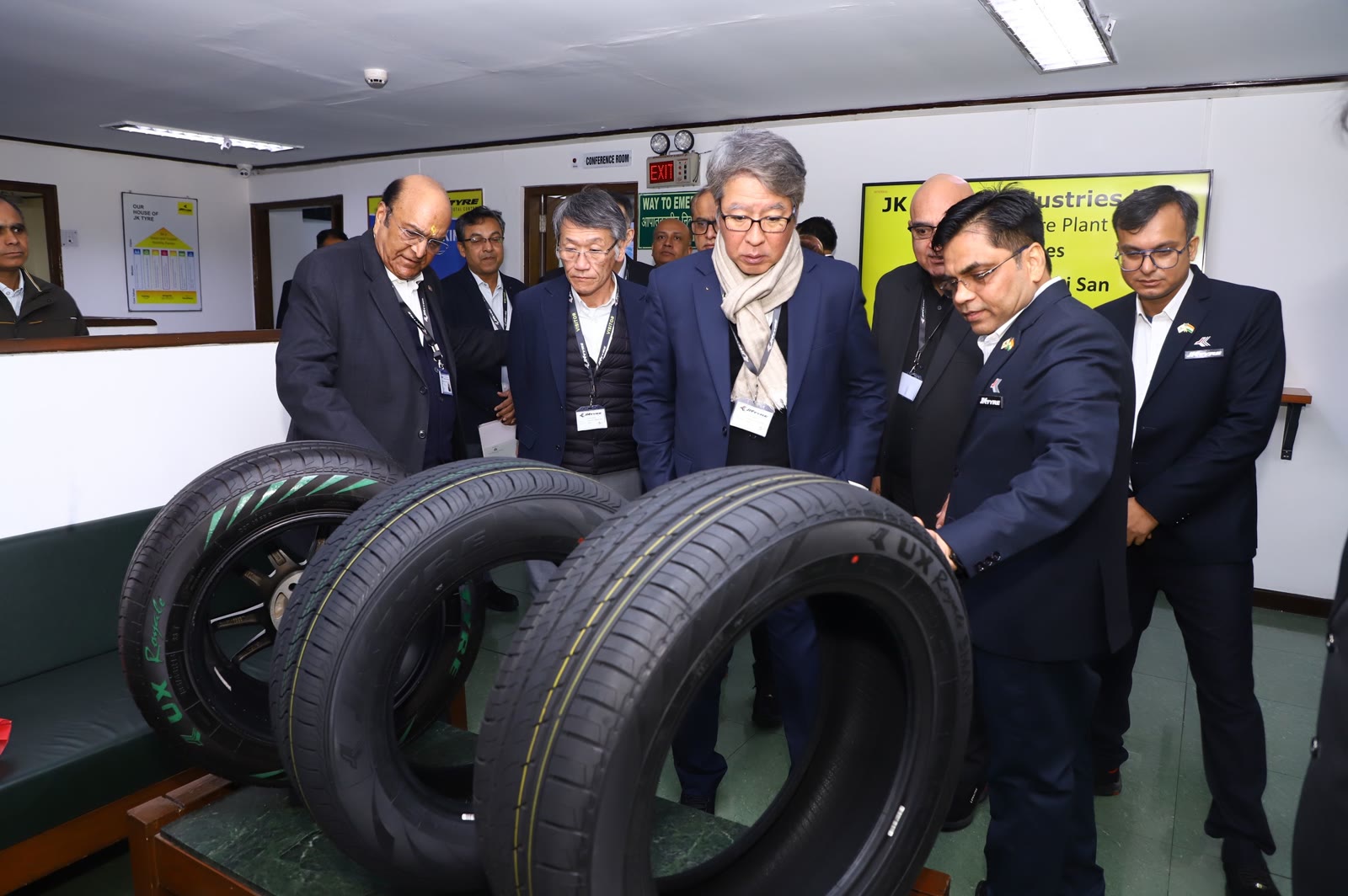
JK Tyre & Industries plans another 4–5% increase in tyre prices during October–December 2026, its managing director said after the company’s second-quarter results. The plan is not a new retail price list yet, but if implemented it could raise replacement bills for car owners, SUV buyers and transport operators.
The proposed move is being reported as the company manages higher rubber, other raw-material and container-freight costs. The useful distinction for buyers is that this is reported management guidance, not a confirmed product-by-product price change with an announced effective date.
Key takeaways
- JK Tyre is reported to be planning a 4–5% price increase in the October–December 2026 quarter, or Q3 FY27.
- The reported plan follows price increases of about 4–5% in Q1 FY27 and 7% in Q2 FY27, taking the first-half increase to roughly 11–12%.
- No size-wise retail price list, final effective date or complete product scope has been announced in the reports reviewed.
- A 4–5% increase would add about ₹240–₹300 to an illustrative ₹6,000 tyre, before fitting and other charges.
What JK Tyre has reported
PTI, in a report carried by The Economic Times on 23 October 2026, quoted JK Tyre Managing Director Anshuman Singhania as saying that the company intended to increase prices in Q3 by 4–5%. Autocar Professional separately reported the same guidance after the company’s post-results interaction. Both reports describe the move as a plan to recover cost increases, rather than as a price revision already applied to every tyre sold in India.
The company’s Q2 FY27 investor presentation records consolidated total income of ₹4,850 crore, EBITDA of ₹343 crore and profit after tax of ₹60 crore for the quarter ended 30 September 2026. It reports a 7.1% consolidated EBITDA margin for Q2 FY27, compared with 13.3% in Q2 FY26. Those figures provide the company’s primary financial context; the planned price move is being carried as management guidance in the two independent reports.
Why the next increase is being considered
Tyre manufacturing uses natural and synthetic rubber, carbon black and other petroleum-linked inputs. JK Tyre management has also pointed to elevated container freight and wider supply-chain pressure. When these costs rise, tyre makers may try to recover them through selling-price changes, although the timing differs between original-equipment supply and the replacement market.
The reports use different measures of input-cost pressure. The Economic Times cited management’s estimate that the raw-material price basket rose about 9% in Q2 from Q1 and about 30% over the first six months of FY27. Autocar Professional separately reported the company’s financial-results measure of material consumption, which rose 11.7% sequentially and 39% year on year in Q2 FY27. These figures are not directly interchangeable: one is a management estimate of the raw-material basket, while the other is an accounting line in the results.
Management also said prices had already been increased by about 4–5% in Q1 FY27 and by 7% in Q2 FY27. Adding those reported quarter-wise changes gives an approximate 11–12% first-half increase, but it should not be read as a universal increase in every tyre’s retail price. Product mix, channel, size and contract terms can change the actual pass-through.
What a 4–5% increase could mean for a tyre bill
JK Tyre has not published a new size-wise retail list with this plan. The table below is therefore an illustration using the reported 4–5% range, not a quote for any JK Tyre product.
| Illustrative current price per tyre | At 4% increase | At 5% increase | Extra per tyre |
|---|---|---|---|
| ₹4,000 | ₹4,160 | ₹4,200 | ₹160–₹200 |
| ₹6,000 | ₹6,240 | ₹6,300 | ₹240–₹300 |
| ₹8,000 | ₹8,320 | ₹8,400 | ₹320–₹400 |
On the illustrative ₹6,000 example, replacing four tyres would mean an additional ₹960–₹1,200 before fitting, balancing, alignment and any other workshop charges. Actual bills vary substantially by tyre size, load and speed rating, vehicle type, retailer and the final price list. Fleet operators may see a larger absolute effect because a replacement cycle can cover many vehicles, but the company has not published a fleet-specific schedule for this planned increase.
Who is likely to feel the impact
Private car and SUV owners: The most direct exposure is for owners buying replacement tyres during the quarter if the plan is passed through to the relevant sizes. A higher-rim SUV tyre and a small hatchback tyre do not carry the same rupee impact, even when the percentage change is identical.
Fleet and transport operators: Tyres are a recurring operating expense. A modest percentage increase can become material when multiplied across trucks, buses, delivery vehicles or a large replacement order. Operators also need to separate the tyre price from fitting, downtime and alignment costs when comparing quotes.
New-vehicle buyers: Original-equipment supply contracts can pass through input costs with a lag, according to Autocar Professional. That does not mean a 4–5% increase in JK Tyre’s replacement-channel prices automatically changes a vehicle’s ex-showroom price; no such vehicle-price revision was announced in the reports reviewed.
What drivers can check now
Anyone approaching a planned replacement can ask for a written, size-specific quote and check whether it includes fitting, balancing, valves and alignment. Comparing like-for-like size, load index, speed rating, warranty terms and manufacturing date is more useful than comparing only the headline percentage. A tyre that is damaged or below a safe tread level should not be kept in service simply to wait for a possible price change.
For a complete ownership estimate, use the fuel cost calculator to keep fuel spending separate from maintenance and tyre replacement costs. That makes a long-distance budget easier to update if a tyre quote changes.
For a journey where replacement work, fuel and tolls need to be timed together, the road-trip planner can help organise the route and stops. The tool cannot predict a tyre retailer’s final price, so the invoice or written quote remains the relevant number for the purchase.
What to watch next
The immediate watch point is a company or dealer communication specifying the effective date, tyre categories and size-wise prices. Until that appears, the 4–5% figure should be described as planned or reported, not as a confirmed nationwide retail hike. Competitor price notices may also show whether the pressure is spreading across the replacement market, but one company’s plan does not establish an industry-wide increase.
The practical takeaway is to treat tyre replacement as a possible near-term cost change, while checking the exact product and quote. The next formal update from JK Tyre in its Q3 FY27 business commentary should clarify how much of the cost pressure has been passed through and whether demand has absorbed the revision.
Sources
- JK Tyre & Industries — Investor Presentation Q2FY27 — 23 Oct 2026.
- The Economic Times/PTI — JK Tyre to hike prices by 4–5% in Q3 as raw material costs stay elevated — 23 Oct 2026.
- Autocar Professional — JK Tyre Plans Further 4–5% Price Hike in Q3 as Raw Material, Freight Cost Pressures Persist — 23 Oct 2026.
- JK Tyre — JK Tyre inaugurates Phase III Expansion of Banmore Plant for Passenger Car Radial Tyre — 14 Jan 2026; image credit.