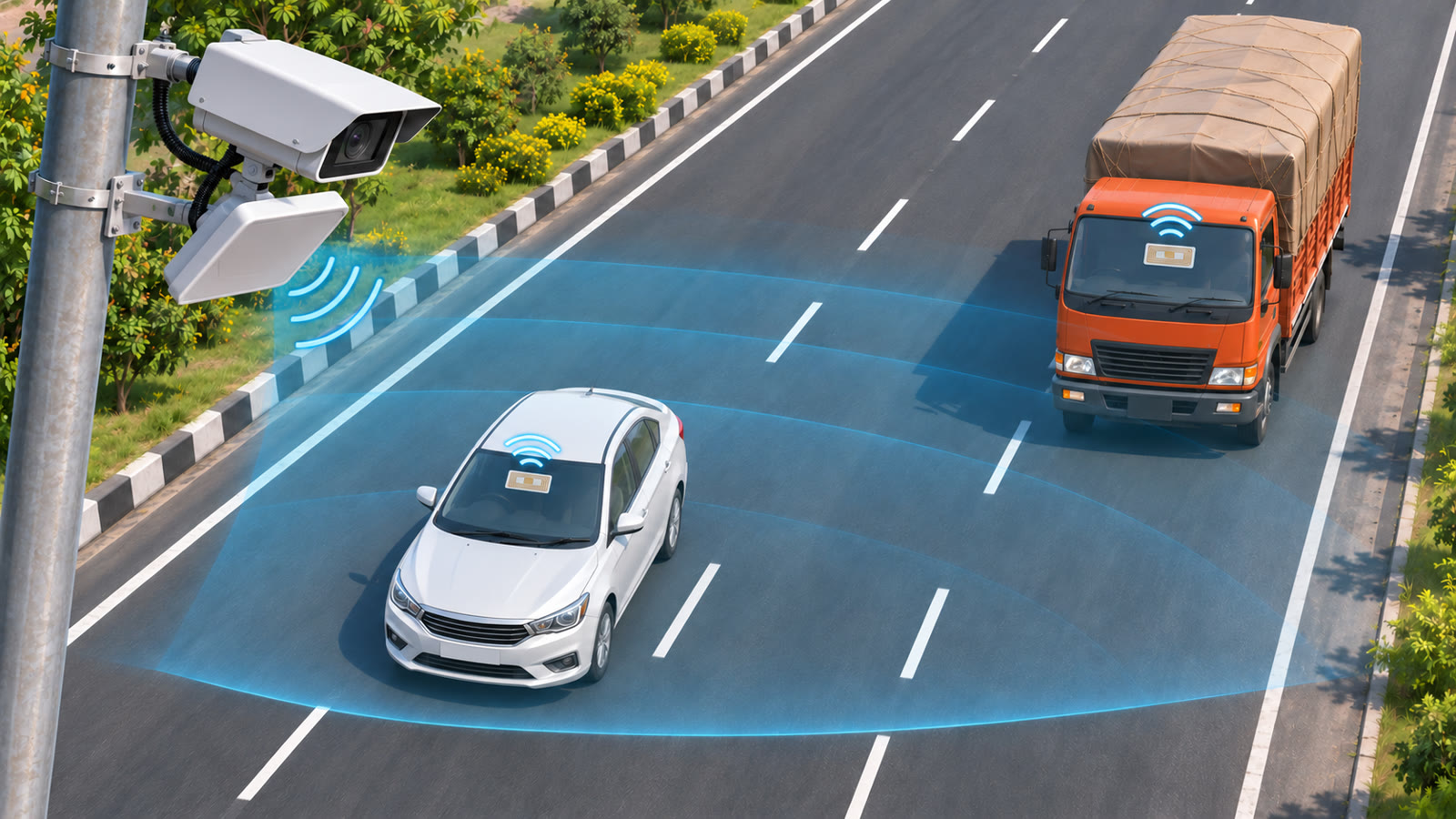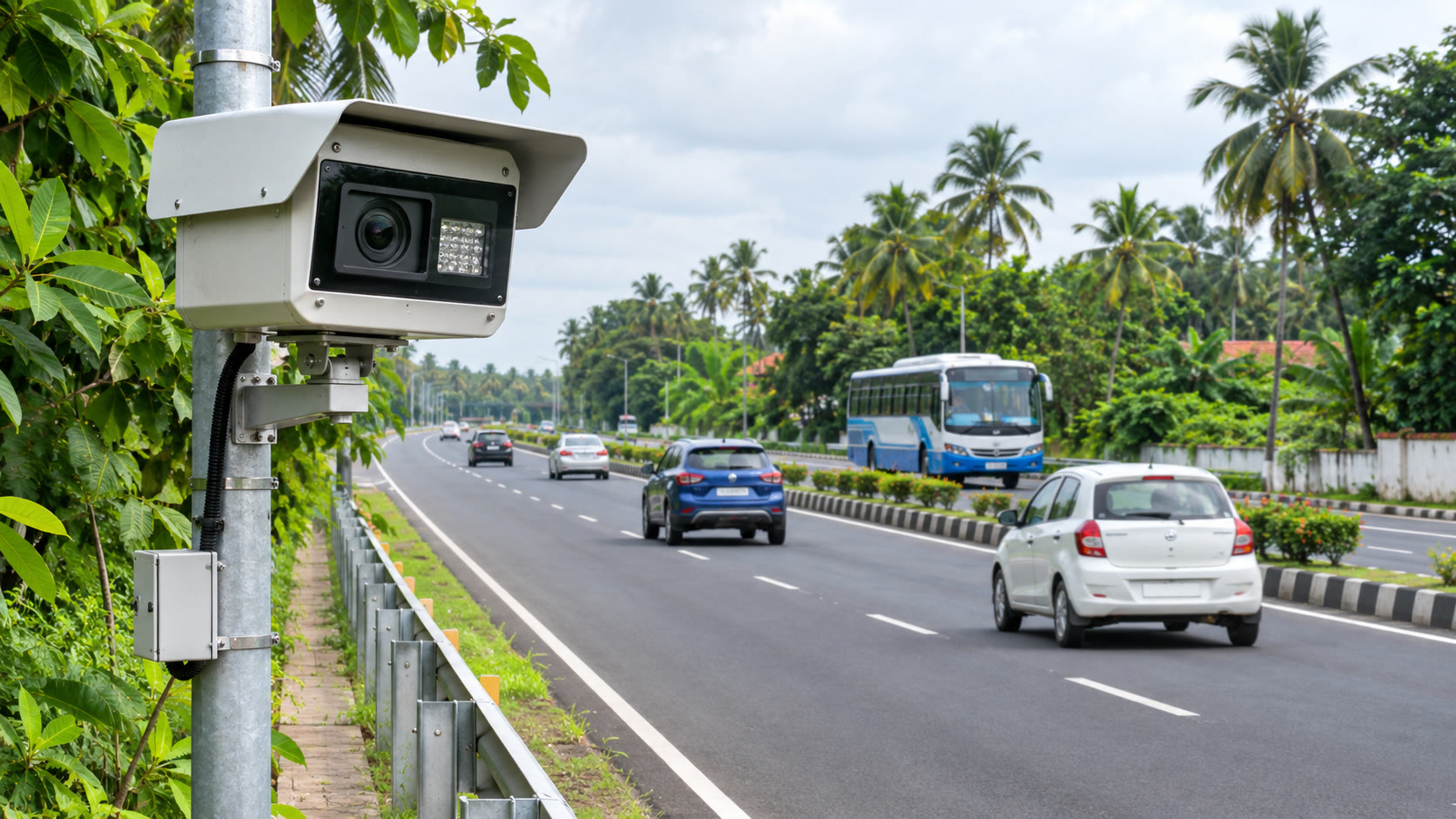
The Kerala High Court has directed Kerala's Transport Commissioner to identify accident-prone locations and add speed-violation detection systems after finding that only four such systems were operating among 726 electronic surveillance installations. The order matters to drivers because it calls for a wider enforcement network, but it does not yet announce a fixed camera count, installation date or new statewide speed rule.
Key takeaways
- The direction is recorded in a 3 Nov 2026 order in the Kerala road-safety case WP(C) No. 35016 of 2026.
- Kerala's department reported 726 electronic surveillance systems, including four Speed Violation Detection Systems (SVDS), across highways and major traffic corridors.
- It also reported 1,56,82,572 e-challans and aggregate fines of ₹1,017.46 crore through 30 Oct 2026; the order notes that the amount actually collected was not provided.
- The Transport Commissioner must identify high-risk locations, propose additional systems and give the court an implementation timeline.
What the court found
The Division Bench of Justices Raja Vijayaraghavan V and K. V. Jayakumar was reviewing compliance with earlier road-safety directions. The proceedings were registered suo motu after the court took note of continuing road deaths and what it described as systemic failures affecting road safety.
In the affidavit placed before the court, Kerala's Motor Vehicles Department said that the Safe Kerala Project had installed 726 electronic surveillance systems through the Kerala State Electronics Development Corporation, or KELTRON. The breakdown recorded in the order was 675 artificial-intelligence cameras, 25 Parking Violation Detection Systems, 18 Red Light Violation Detection Systems and four SVDS units.
The broader network can detect several categories of violations, including helmet and seat-belt offences, mobile-phone use, red-light violations, unauthorised parking and overspeeding. The distinction matters: a large camera network does not mean that every camera is a dedicated speed detector.
The department's report, as recorded in the order dated 3 Nov 2026, also said that 1,56,82,572 electronic challans had been issued up to 30 Oct 2026, with aggregate fines of ₹1,017.46 crore. The court specifically noted that the department had not supplied details of how much of that imposed amount had actually been collected.
What the direction changes
The court directed the Transport Commissioner to identify places with a high incidence of speed violations and frequent accidents, take steps to install additional SVDS units at those locations, and submit the identified sites, proposed systems and implementation timeline. It did not prescribe how many additional detectors Kerala must install.
The bench also directed the commissioner to formulate a comprehensive enforcement protocol covering regular monitoring, coordination and follow-up. The department must place records before the court to show that the enforcement measures are being implemented on the ground. This makes the next stage about documented site selection and execution, rather than an immediate blanket deployment across every road.
For motorists, the practical point is that existing traffic enforcement continues under the Motor Vehicles Act. The order does not change speed limits, create a new penalty schedule or say that extra cameras are already active. Drivers should also avoid assuming that an electronic surveillance camera is necessarily a speed camera, because the systems have different functions.
Why it matters on highway trips
The order records that enforcement and patrolling teams had been deployed around the clock along National Highway 66 to prevent unauthorised parking, support lane discipline and assist road users. However, only 85 enforcement squads were functioning across Kerala under the Safe Kerala Project, and the department said staff shortages made continuous 24-hour coverage difficult. A proposal for additional manpower was under the government's consideration.
That combination of automated detection and limited field staff affects how road users experience enforcement. Cameras can create an electronic record, but patrol coverage, verification, signage, road design and follow-up action still influence whether dangerous driving is prevented. For a longer Kerala journey, the road-trip planner can help compare route time and distance before departure. If a safer route adds distance, the fuel-cost calculator can help estimate the trip-cost effect using the vehicle's actual efficiency and current fuel price.
The wider road-safety plan
The order also records several initiatives that are still at the proposal or implementation stage. The state has planned a Road Safety Mission from 15 Nov 2026 around education, enforcement and engineering. Kerala's Motor Vehicles Department is also proposing a GIS-enabled integrated monitoring platform that would bring together camera enforcement, vehicle-location data, road-maintenance information, black-spot tracking, hazard reporting and compliance dashboards.
Another department submission mentioned in the order is SurakshaMitr, a platform receiving real-time movement data from vehicle-location devices. It had 2,35,236 public-transport vehicles registered at the time of the submission. The department also proposed a Kerala Busz platform for vehicle tracking, permits, route management and the regulation of stage-carriage timings and speeds.
These measures are not the same as a confirmed statewide camera rollout. The court gave the respondents three weeks to submit concrete proposals and an updated status report, and directed that the matter be listed after 30 Nov 2026. That next filing should show which locations are being prioritised, how many additional detectors are proposed, what timetable is being considered and how the enforcement protocol will be monitored.
What drivers should watch now
Until a location-wise plan is published, the confirmed change is the court's direction—not a new list of speed-camera sites. Road users can expect attention to remain on accident black spots, overspeeding and dangerous driving, while Kerala's departments work on the requested proposals. The useful distinction is between what is already operating, what the court has ordered authorities to plan, and what still requires implementation and reporting.
Sources
- Kerala High Court order in WP(C) No. 35016 of 2026 — 3 Nov 2026.
- 1.5 crore challans, only 4 speed cameras: Kerala High Court flags road safety gaps — The Indian Express, 12 Nov 2026.
- Speeding A Major Road Safety Concern: Kerala High Court Directs Installation Of Additional Speed Cameras At Accident-Prone Locations — LiveLaw, 12 Nov 2026.