Kia India is reportedly weighing a new production line at its Anantapur plant in Andhra Pradesh, with the reported expansion capable of adding about 2 lakh vehicles a year. The plan is not a confirmed investment decision from Kia, so it does not change current prices, bookings or delivery commitments.
For Indian car buyers, the development matters because more factory capacity could give Kia room for additional models and powertrain combinations over time. The practical effect will depend on a formal announcement, an approved capacity figure, the models assigned to the line and the date production actually begins.
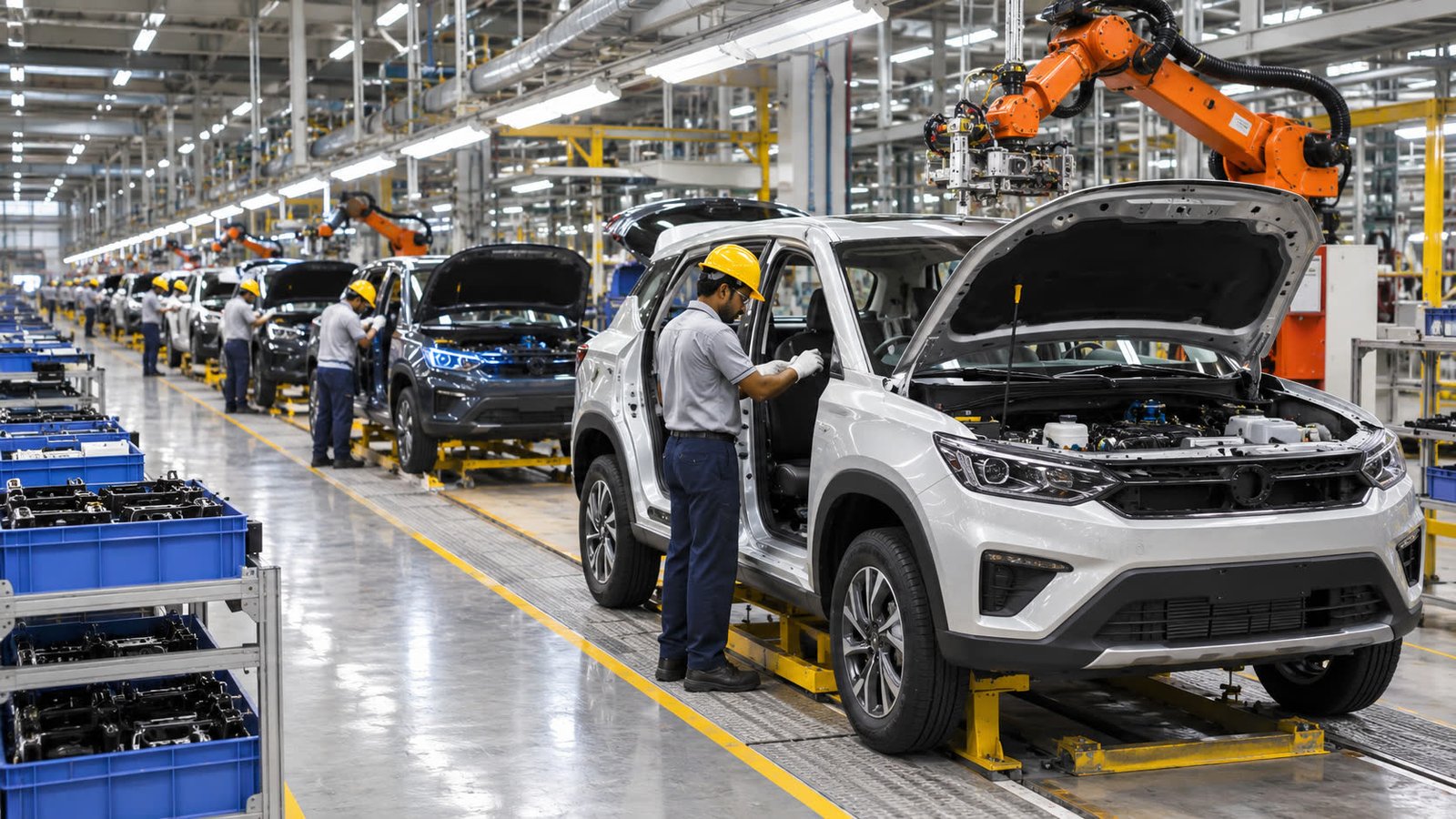
Image note: illustrative AI-generated factory-floor visual; not a photograph of Kia's Anantapur facility.
Key takeaways
- What is reported: The Economic Times reported on 6 Nov 2026 that Kia was considering a new production line at Anantapur. Autocar Professional had independently reported an early-stage study of a line with about 2 lakh units of annual capacity.
- What is confirmed: Kia has an operating manufacturing facility in Anantapur, but the company has not publicly confirmed the reported expansion amount, approval or production start date.
- Why it matters: If approved and built, additional capacity could support future SUVs and a wider petrol, CNG, hybrid or electric powertrain mix. No specific model allocation is confirmed.
- What changes now: Nothing changes immediately for existing owners or people booking a Kia vehicle. Prices, features and waiting periods remain tied to current company and dealer updates.
What has been reported about the plant
The Economic Times said Kia was planning a possible expansion of its manufacturing operations in Andhra Pradesh and that a formal announcement or memorandum of understanding could be discussed at an Andhra Pradesh investor summit in Visakhapatnam the following week. The report attributed the plan to people familiar with the proposal and said Kia's written response spoke about responding to demand and expanding its portfolio, but did not confirm the reported investment or a final project schedule.
That distinction is important. A reported plan, an investor-summit announcement and an approved factory project are three different stages. Until Kia or the Andhra Pradesh government publishes a signed commitment with scope and timing, the proposed line should be treated as expected or under evaluation, not as operating capacity.
Autocar Professional reported in August that Kia was studying an additional production line of around 2 lakh vehicles a year at the same plant. It said the proposal was at an early stage and that a final investment decision had not been taken. The earlier report also linked the study to Kia's planned product expansion and broader powertrain options, but those future products and their India launch timing remain unconfirmed.
Why the reported expansion matters to buyers
Extra capacity can improve a carmaker's ability to serve demand, but it does not automatically shorten a waiting period. Delivery time also depends on the utilisation of the existing plant, supplier availability, production sequencing, variant mix, transport to dealers and the allocation of cars across markets.
For buyers, the clearest possible benefit is wider choice. A larger line could give Kia more room to build additional SUVs or to manage vehicles with different engines, batteries and transmissions. That may matter as Indian buyers compare petrol, CNG, hybrid and electric options, but a possible production line is not evidence that any particular model or powertrain has been approved.
There is also no immediate basis for assuming a price cut. Factory expansion involves capital, tooling, supplier development and potentially new technology. Prices will depend on the final product, localisation, taxes, equipment and the company's commercial strategy. The reported proposal therefore should not be used as a reason to delay or accelerate a purchase.
Public capacity figures need a careful reading
The reported 5-lakh-vehicle end-state should not yet be treated as a confirmed number. Kia's public material does not present one consistent capacity figure, and the figures describe different points in time or different company updates.
| Source and date | Capacity figure | What it says |
|---|---|---|
| Kia India profile, accessed 07 Nov 2026 | About 3 lakh vehicles a year | Describes the Anantapur facility's annual production capacity. |
| Kia India release, 01 Oct 2026 | 4 lakh vehicles a year | Lists a different installed-capacity figure in the company's sales update. |
| Economic Times report, 06 Nov 2026 | About 5 lakh vehicles a year | Describes the potential capacity after the reported expansion. |
The difference between Kia's two public figures is why the expansion should be reported as a proposal. The final comparison will require Kia to state the current baseline, the extra line's rated capacity, the usable output after commissioning and whether the figure includes exports.
What to watch next
Four confirmations would turn the report into a concrete manufacturing development: Kia's formal approval, the investment and line scope, a production start date, and the models or powertrains assigned to the facility. A signed state-government agreement would clarify the project's location and commitments, while a company production plan would be more useful to buyers than a headline capacity number.
Until then, buyers comparing a vehicle's running cost can use the fuel-cost calculator for a typical commute or road trip. People considering an electric model can check the state-wise EV charging directory before treating future product availability as a buying factor.
For a family or fleet use case, the road-trip planner can help compare distance and travel time separately from a manufacturer's future production plans. That keeps the decision based on a vehicle's currently available price, equipment, fuel or charging access and delivery status.
Reader takeaway
Kia's reported Anantapur expansion is a potentially significant supply-chain development, but it remains unconfirmed. The useful signal for buyers is the possibility of more capacity and powertrain choice later; the facts that matter today are the model's current price, specification, running cost, availability and warranty terms.
Sources
- The Economic Times — Kia plans to spend $1.5 billion to boost capacity in Andhra Pradesh — 06 Nov 2026
- Autocar Professional — Kia Studies New 2 lakh-Unit Production Line at Anantapur Plant — 15 Aug 2026
- Kia India — Kia's Brand Story in India — accessed 07 Nov 2026
- Kia India — Kia India Records Highest-Ever Monthly Sales Since Inception at 32,017 Units in September 2026 — 01 Oct 2026