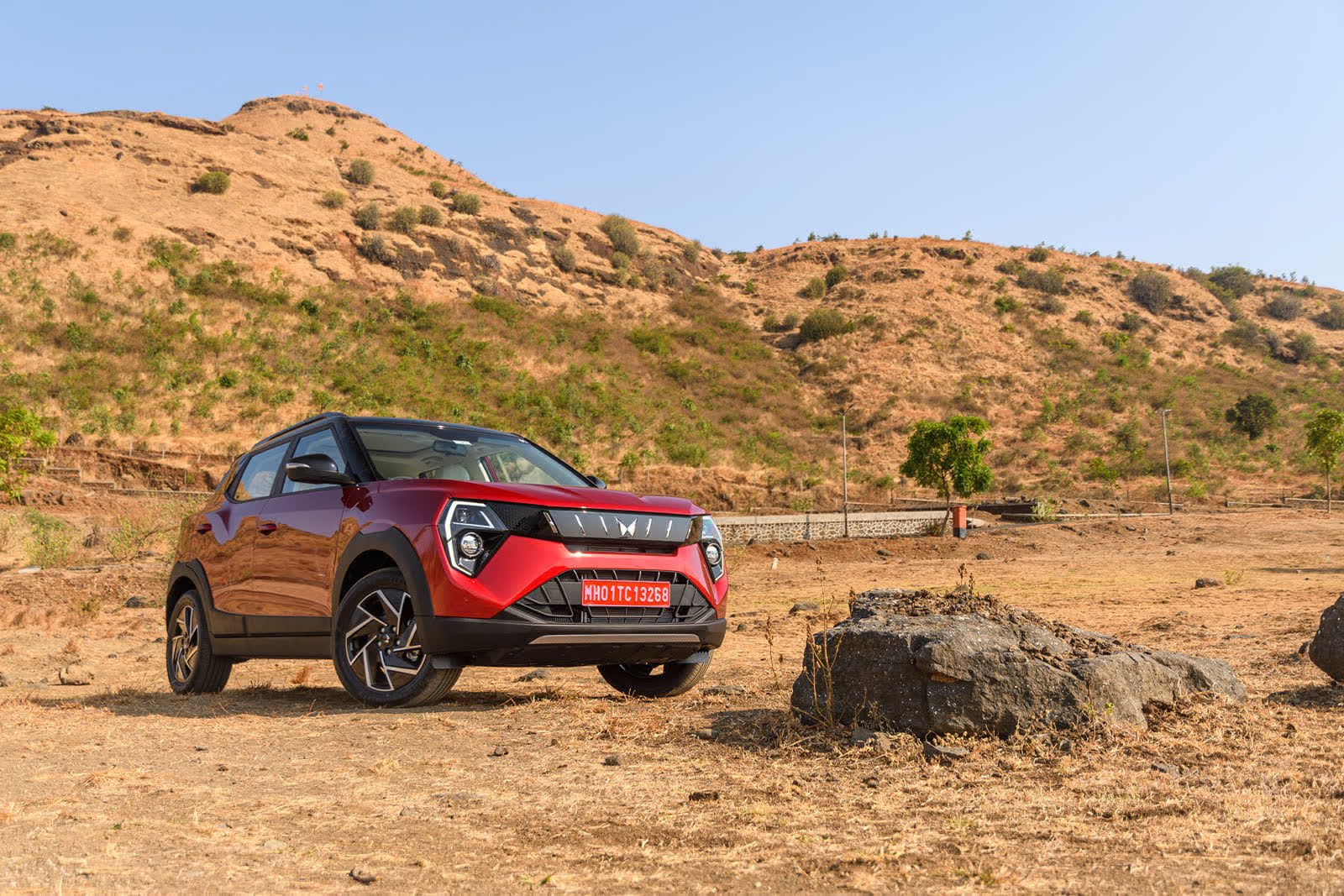
Mahindra said on 6 Nov 2026 that its XUV 3XO ZNG factory-fitted CNG SUV has received a 5-star Bharat NCAP rating, making it, in the company’s wording, India’s first sub-compact CNG SUV to reach that rating. The result matters to CNG buyers because the official Bharat NCAP record reports the CNG family’s adult and child protection scores, while also spelling out which crash-test results were carried over from the petrol and diesel XUV 3XO.
Key takeaways
- The XUV 3XO ZNG is listed with 29.36 out of 32 points for Adult Occupant Protection and 45 out of 49 for Child Occupant Protection.
- Bharat NCAP says the CNG variant underwent a frontal offset barrier assessment; side and pole results were carried over because the vehicle structure and safety systems remain the same.
- The updated 45/49 child score applies to vehicles manufactured from VIN MA1NS2NVPS2B98575 onwards; earlier production vehicles retain the 43/49 score shown in the official record.
- Mahindra says the CNG SUV has six airbags, ESC, ISOFIX mounts and an integrated gas-leak detection system that can switch the vehicle to petrol mode.
- The XUV 3XO ZNG was launched at ₹9.99 lakh ex-showroom on 15 Oct 2026, with Mahindra’s listed variants reaching ₹12.27 lakh ex-showroom.
What the new Bharat NCAP result says
The Bharat NCAP vehicle record was revised in November 2026 to extend the XUV 3XO’s existing rating to its CNG family. It records 29.36/32 in Adult Occupant Protection (AOP) and 45/49 in Child Occupant Protection (COP). Mahindra’s announcement and reports by HT Auto and Autocar India carry the same scores.
The test scope is important. Bharat NCAP identifies the AX5 CNG as the vehicle used for the frontal offset deformable barrier test. It says the side and pole test results were carried over because the XUV 3XO’s body structure and safety systems remain unchanged. That means the rating is an official extension to the listed CNG variants, not a claim that every CNG trim went through a completely separate set of every crash test.
Which CNG variants are covered?
The official record lists the CNG family as MX1, MX2, MX EDGE, REVX EDGE (O), AX5 and REVX A. The result is therefore broader than the AX5 CNG test vehicle, but buyers should still match the exact variant against the Bharat NCAP applicability list rather than relying only on the five-star label.
There is also a production-date detail. Bharat NCAP says the revised 45/49 COP score applies to vehicles manufactured from VIN MA1NS2NVPS2B98575 onwards. Vehicles manufactured before that VIN threshold are shown with a 43/49 COP score. This distinction is particularly relevant when comparing an early delivered vehicle with one produced later in the ZNG run.
Safety equipment and CNG-specific protection
Mahindra says the XUV 3XO ZNG has more than 35 standard safety features, including six airbags, Electronic Stability Control and ISOFIX child-seat mounts. The Bharat NCAP record also lists standard seat-belt reminders, side-head protection through curtain airbags and pedestrian-protection compliance across the applicable variants.
The CNG installation has its own safety layer. Mahindra says an integrated gas-leak detection system can identify a leak and automatically switch the vehicle to petrol mode. That is separate from the crash-test rating: the rating measures occupant protection under the assessed protocols, while the gas-leak system is designed to respond to a fuel-system risk during operation.
Price, efficiency and the running-cost question
Mahindra launched the XUV 3XO ZNG on 15 Oct 2026 at a starting price of ₹9.99 lakh ex-showroom. Its official variant table lists the range up to ₹12.27 lakh ex-showroom, figures also reported by Team-BHP. Mahindra has quoted certified efficiency of 24.7 km/kg in CNG mode.
At that certified figure, a 100-km trip would use about 4.05 kg of CNG on paper. Actual consumption will change with traffic, load, tyre pressure, air-conditioning use and driving conditions. To estimate a real journey, enter your route and vehicle details in the fuel cost calculator and check the latest CNG prices across Indian cities instead of applying one national rate. The road-trip planner can also help compare fuel use across alternate routes.
What the rating means for buyers
The new result gives CNG shoppers a clearer safety reference for a sub-compact SUV, especially because the CNG cylinder layout and fuel system are often part of the safety conversation. It does not guarantee the same outcome in every collision, and a star rating should be read alongside the exact variant, production date, standard equipment and the test scope.
Before treating the result as confirmed for a particular vehicle, check four details in the documentation: the variant name, the Bharat NCAP applicability list, the vehicle identification number or production date, and the safety features listed as standard on that trim. The policy and equipment actually supplied with the vehicle matter more than a broad model-family description.
What to watch next
The immediate development is the November 2026 rating extension, not a new price announcement or a change to the CNG fuel system. The useful follow-up for owners and prospective buyers will be whether the listed variants and production-date score are reflected consistently in dealer documents, vehicle identification records and the final safety information supplied with each car.
Sources
- Mahindra — XUV 3XO ZNG secures 5-star Bharat NCAP rating — 6 November 2026
- Bharat NCAP — Mahindra XUV 3XO vehicle record and CNG rating revision — November 2026
- HT Auto — Mahindra XUV 3XO ZNG gets 5-star Bharat NCAP safety rating — 6 November 2026
- Autocar India — Mahindra XUV 3XO CNG secures 5-star BNCAP crash safety rating — 6 November 2026
- Team-BHP — Mahindra XUV 3XO ZNG secures 5-star BNCAP rating — 6 November 2026
- Mahindra — XUV 3XO ZNG launch price and specifications — 15 October 2026
- Autocar India — Mahindra XUV 3XO CNG image source — accessed 6 November 2026