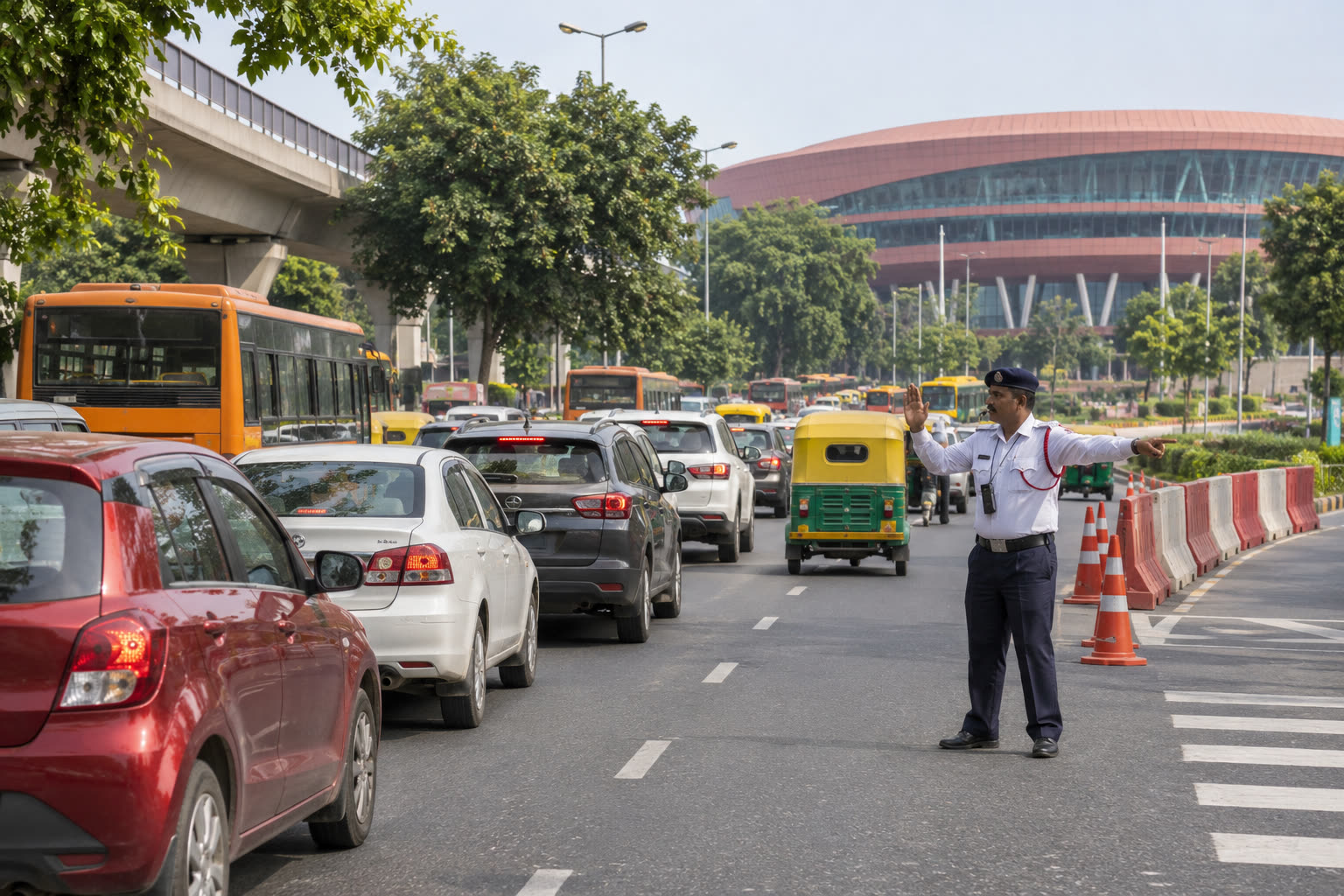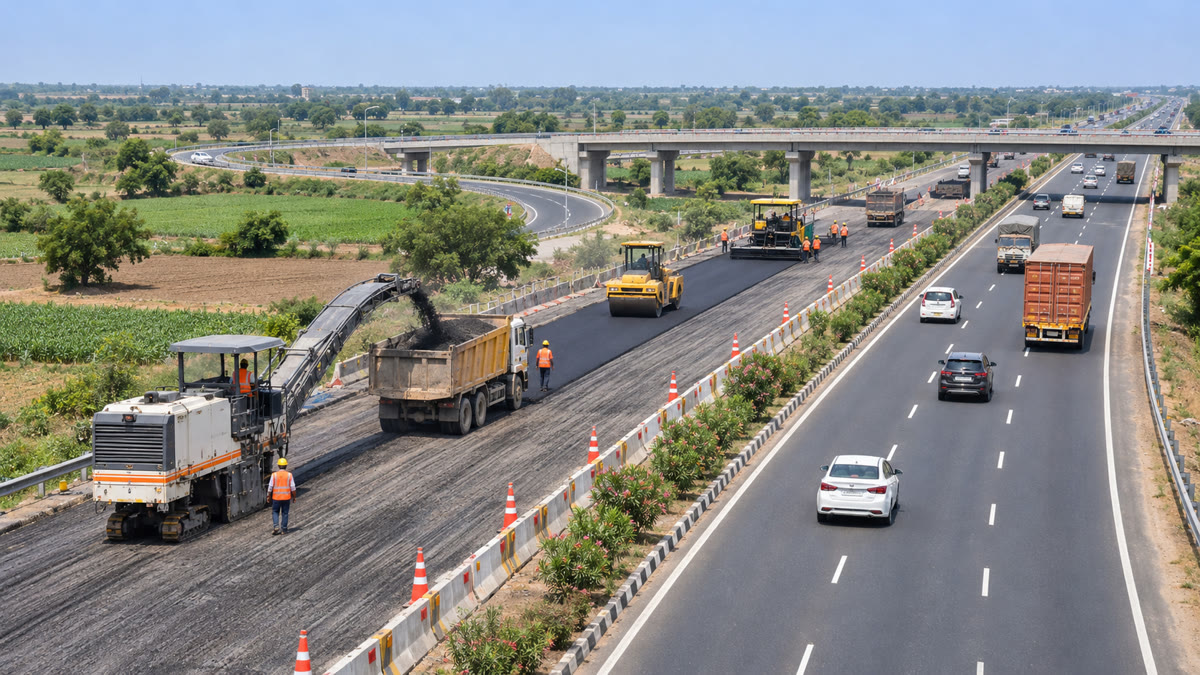
NHAI has opened bids for a proposed ₹324.34-crore capacity upgrade across 102.3 km of NH-48 between Ahmedabad and Vadodara. The project is still at the bidding stage, so drivers should treat it as a future road-capacity and work-zone development—not as an immediate toll or travel-time change.
Key takeaways
- The proposed work covers NH-48 from km 6.400 to km 108.700 in Gujarat.
- The estimated project cost is ₹324.34 crore, excluding GST, according to the bid details reported on 15 Nov 2026.
- Bids close at 11 AM on 11 Dec 2026 and are scheduled to open at 11 AM on 12 Dec 2026.
- The public notice does not announce a construction start date or a new toll rate.
- If awarded, the bid documents reported by Financial Express provide a 21-month completion period and five years of maintenance.
What NHAI has proposed
Financial Express reported on 15 Nov 2026 that the National Highways Authority of India has invited bids for the Ahmedabad–Vadodara section of NH-48 through the Engineering, Procurement and Construction (EPC) model. The official NHAI e-procurement listing records the same work as an open tender under Tender ID 2026_NHAI_297685_1 and reference number PROJ-19016(36)/4/2026-PIU Ahmedabad/317790.
The stated stretch runs from km 6.400 to km 108.700, or about 102.3 km. The estimated value is ₹324.34 crore, while the bid deadline is 11 AM IST on 11 Dec 2026. The official listing schedules bid opening for 11 AM IST on 12 Dec 2026. These are procurement milestones; they do not mean a contractor has been appointed or that road work has begun.
The bid-stage report puts the construction period at 21 months and the maintenance obligation at five years. Those periods would apply within the eventual contract framework, subject to award, the notice to proceed and any later changes recorded through corrigenda. NHAI has not published a start date in the notice, so a completion date cannot yet be calculated from 15 Nov 2026.
What the proposal could mean for drivers
Short term: no confirmed change to a journey today
There is no confirmed lane closure, diversion, toll revision or travel-time saving attached to this tender as of 15 Nov 2026. A driver travelling between Ahmedabad and Vadodara should therefore plan using the currently available route and fee information. The proposed project should not be presented as a completed widening or as a promise of faster trips.
If a contract is awarded later, capacity work on a live national-highway corridor can bring temporary lane shifts, reduced speeds, construction vehicles and changing access points. Those are potential work-zone effects, not a current advisory. The useful trigger for trip planning will be a subsequent NHAI or project authority notice that gives the work schedule and traffic-management arrangements.
Long term: capacity matters to cars, buses and freight
The Ahmedabad–Vadodara corridor carries both passenger and commercial traffic, so the value of the proposal is not limited to private-car journeys. Better-handled bottlenecks can improve schedule reliability for buses, delivery fleets and long-distance trucks, but the actual benefit will depend on the final engineering scope, the construction sequence and how traffic is managed while work is under way.
For a private driver, the simplest way to see the money impact is to separate today’s known costs from future assumptions. Estimate the current fuel requirement with the fuel-cost calculator, then keep any expected time saving out of the calculation until NHAI publishes a confirmed operating plan.
What changes for tolls and trip costs now?
The tender is for capacity augmentation; it is not a toll-rate notification. The published bid details do not announce a new fee plaza, a revised user-fee rate or a replacement for the existing Ahmedabad–Vadodara travel options. A toll amount shown in a route estimate should therefore be dated and tied to the specific road or expressway used.
Drivers comparing the existing NH-48 route with the parallel Ahmedabad–Vadodara Expressway can use the toll-charge calculator to keep the fee component separate from fuel and parking. That matters because a future road upgrade does not automatically change the toll charged on another corridor.
What happens next in the procurement
The immediate next step is the bid process: eligible contractors must submit documents by the published deadline, after which NHAI will evaluate the offers. A selected contractor, a letter of acceptance, a contract award and a notice to proceed would be separate developments. The 21-month period reported in the bid details should be read from the eventual work-start date, not from the publication date of the tender.
Readers who use this corridor regularly should watch for four concrete updates:
- the name of the selected contractor and the award date;
- the final scope, including any lane, junction, bridge or service-road work;
- the construction start date and the work-zone traffic plan; and
- any separate notification on toll collection, diversions or restrictions.
Until those updates arrive, the practical takeaway is straightforward: the ₹324.34-crore proposal signals planned investment in a busy Gujarat corridor, but it does not change a motorist’s route, toll bill or arrival time today. Use the road-trip planner with current information, and recheck the route only when an official traffic notice is issued.