Bharat Petroleum Corporation Limited (BPCL) has clarified that a widely shared Karnataka photograph from an E20 petrol test showed an unfinished stage of the procedure, not the final reading. The clarification matters because a cloudy intermediate image cannot by itself establish that fuel contains more ethanol than the prescribed specification.
In a related official release, the Ministry of Petroleum and Natural Gas said an OMC and Centre for High Technology monitoring exercise found 893 E20 samples across 27 States and Union Territories within the prescribed 19–21% ethanol range. That record is relevant to drivers, but it does not remove the need for properly documented, independently verifiable testing when a local sample is disputed.
Key takeaways
- BPCL said the Karnataka image was captured before the ethanol-water and petrol layers had separated completely.
- The ministry said 893 samples tested across 27 States and UTs were within the prescribed 19–21% range.
- The clarification addresses how the image should be read; it is not a new fuel-price, insurance or vehicle-compatibility rule.
- Drivers should rely on completed tests and documented quality checks, rather than judging E20 from a social-media photograph.
What BPCL said about the image
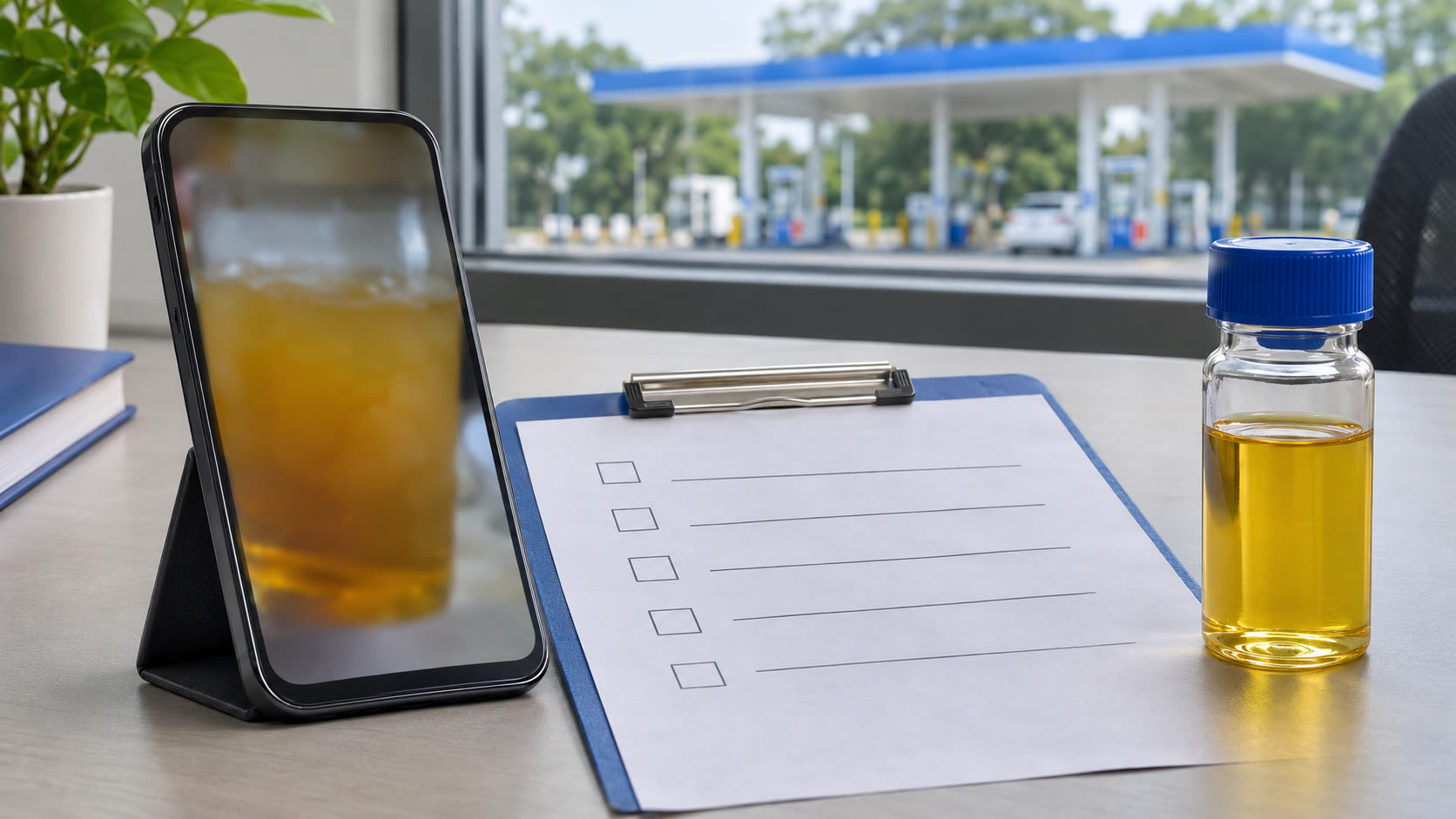
On 13 Nov 2026, BPCL said its officers had been demonstrating the E20 ethanol-separation test at fuel stations in Karnataka as part of a consumer-awareness exercise. According to the company’s explanation, the photograph that triggered questions was shared before the separation process was complete and was later removed because it could be misinterpreted.
The procedure described in reports of BPCL’s statement mixes 100 ml of E20 ethanol-blended motor spirit with 30 ml of water. The mixture can initially look hazy or milky. It must then be allowed to separate so the ethanol-water layer and the petrol layer can be assessed. BPCL said the sample in the photograph was within the prescribed specifications, but the image did not show the completed test.
That distinction is important for vehicle owners. A photograph of a liquid before the layers separate is evidence of an incomplete demonstration, not a standalone measurement of ethanol content. It also cannot establish that every pump in a city or state is dispensing fuel outside the standard.
What the official monitoring found
The ministry’s 7 Nov 2026 release said the OMC and CHT Quality Coordination Cell tested 893 E20 samples drawn from oil-company depots and retail outlets across 27 States and Union Territories. It said every sample was within the prescribed 19–21% ethanol range under IS 17021.
The Times of India and The Week, reporting BPCL’s statement, also described the 893-sample monitoring exercise and the 19–21% range. The ministry additionally said the exercise covered 56 samples from Karnataka and that the three public-sector oil marketing companies had asked for joint sampling and independent testing under the prescribed procedure.
There are therefore two separate points in the public record. First, the Union ministry and oil companies say their documented monitoring results were compliant. Second, reports of higher ethanol readings from a Karnataka exercise have been disputed because the oil companies questioned the sampling, laboratory and documentation process. FuelPrice is not treating either side’s disputed local result as a settled nationwide finding.
What this means for E20 drivers
- Do not use appearance as a fuel test. Cloudiness during the separation process can be an intermediate stage. It is not a reliable way for a motorist to calculate ethanol content at the pump.
- Separate quality from compatibility. Whether a vehicle is designed for E20, how its mileage changes and what its warranty or insurance documents say are different questions. Fuel quality testing does not automatically answer all three.
- Keep the earlier context in view. FuelPrice has already explained the distinction between E20, motor insurance and possible mileage variation in its earlier E20 petrol and motor-insurance guide.
- Use verified information for trip planning. A quality clarification does not change the price at a pump. Drivers can check current rates through the live fuel prices page and estimate the rupee effect of a journey with the fuel cost calculator.
What happens next
The ministry release said the oil companies sought complete sampling documents, outlet-wise laboratory reports and access to counterpart samples so that the disputed readings could be checked through an authorised laboratory and a jointly verifiable method. That is the useful next step for consumers: a test that identifies the outlet, preserves the sample trail and states the applicable standard and method.
Until such a process produces a new, documented finding, BPCL’s clarification should be read narrowly. It explains why the viral photograph was misleading as a final reading and restates the company’s position on fuel quality. It does not change the E20 specification, create a new customer obligation or prove that every vehicle will deliver the same mileage.
For drivers, the practical takeaway is simple: do not make a vehicle, maintenance or refuelling decision from an incomplete social-media image. Look for a completed test, the applicable BIS method and a dated result from the relevant authority or laboratory.
Sources
- Ministry of Petroleum & Natural Gas, “E20 Petrol Supplied by PSU Oil Marketing Companies Meets Prescribed Quality Standards; 893 Samples Across 27 States and UTs Found Compliant” (7 Nov 2026)
- The Times of India, “BPCL says E20 petrol samples across 27 states pass quality test, clarifies viral test image” (13 Nov 2026)
- The Week, “BPCL says E20 petrol meets quality standards clarifies viral test image” (13 Nov 2026)