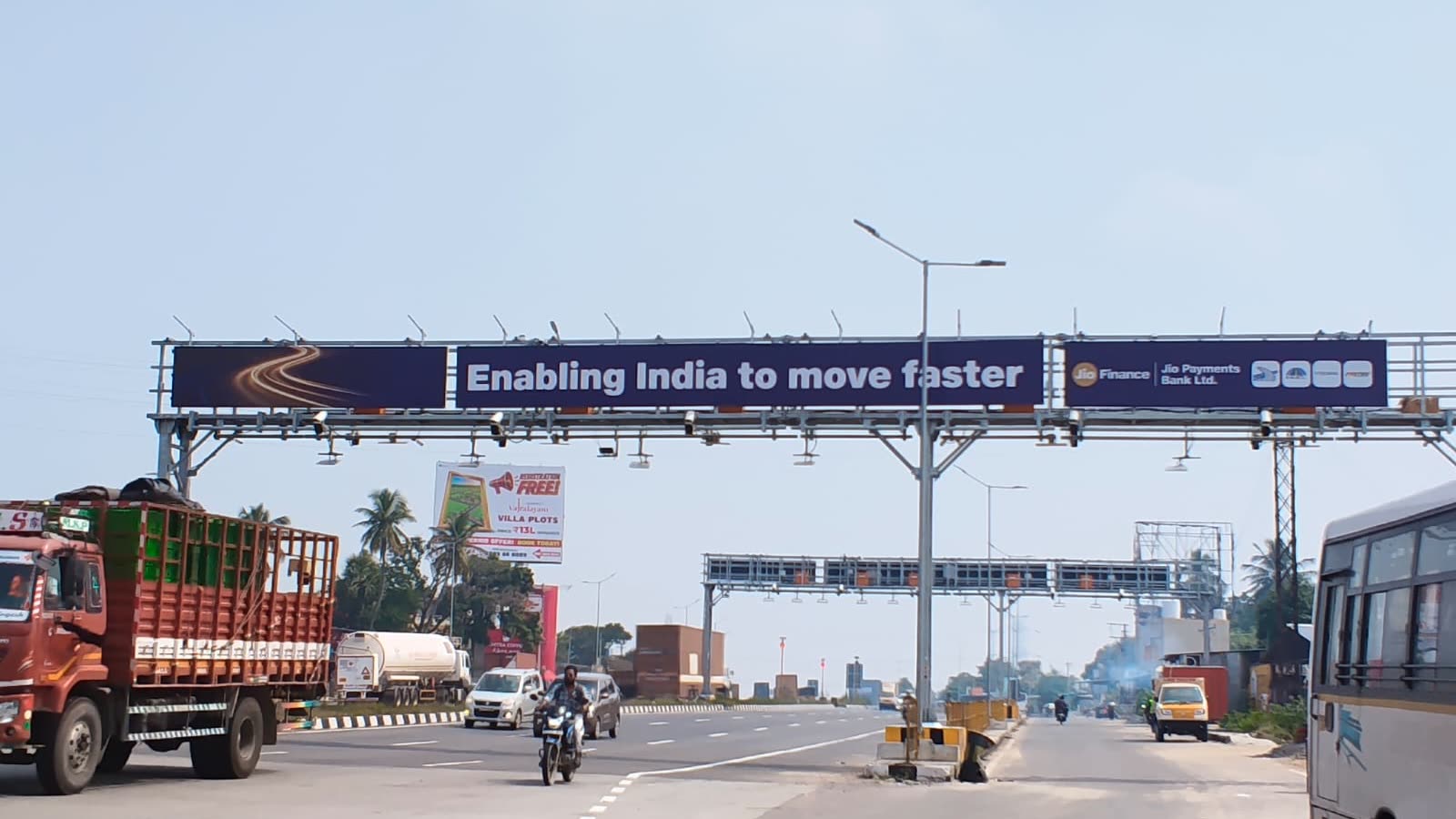
NHAI is deploying AI-based Vehicle Fingerprinting and integration with the VAHAN vehicle registry to identify vehicles whose number plates are hidden or tampered with at barrier-free toll plazas. The move, reported by NDTV on 26 Nov 2026 and detailed by the Ministry in a 23 Nov release, means toll-evasion attempts may be traced to the registered owner even when a camera cannot read the plate.
- What changed: NHAI says vehicle fingerprinting and VAHAN integration are being used to identify suspected toll evasion.
- Who is affected: Every driver using a Multi-Lane Free Flow (MLFF) plaza, including people whose FASTag payment fails because of low balance or a non-functional tag.
- What can cost more: Under the National Highways Fee rules, an unpaid e-notice can become twice the applicable toll after the 72-hour payment window.
- What to do: Keep the FASTag functional, ensure the registration plate is readable, and check the official e-notice channel promptly after a failed deduction.
What NHAI’s AI toll-enforcement update means
Barrier-free tolling is designed to let vehicles pass under a gantry without stopping. FASTag readers and cameras record the passage, and the user fee is deducted when the tag and vehicle details match. The enforcement problem arises when a plate is covered, altered, cloned or otherwise unreadable: a vehicle may cross, but the system cannot confidently connect the passage to a registered owner.
In its 23 Nov 2026 release, the Ministry of Road Transport and Highways said NHAI is deploying AI-based Vehicle Fingerprinting along with VAHAN integration to identify such vehicles and trace their registered owners. NDTV’s 26 Nov report explains the approach as identifying a vehicle through characteristics such as its make, model, colour and body structure, rather than relying only on the registration characters.
This is an enforcement update, not a new toll rate. It also does not mean every vehicle is being penalised by an automated image alone. The reported system is intended to help NHAI and enforcement agencies connect a vehicle image with a registered record; police check posts are being used at some barrier-free locations to intercept offending vehicles and issue challans.
How the FASTag e-notice rules work
The financial consequence for an ordinary driver is tied to the e-notice process that has been in force since 17 Mar 2026. The National Highways Fee (Determination of Rates and Collection) (Second Amendment) Rules, 2026 define an unpaid user fee as a toll recorded by electronic toll infrastructure but not received from the vehicle.
| Situation | What the rules provide |
|---|---|
| Payment within 72 hours of the e-notice | Only the original user fee is payable. |
| Payment after 72 hours | The unpaid user fee becomes twice the applicable toll. |
| Dues unpaid beyond 15 days, with no pending grievance | The amount may be recorded in VAHAN and vehicle-related services may be restricted until clearance. |
The same NHAI rule summary gives vehicle owners 72 hours from the notice to submit a representation through the designated portal. The authority is required to examine it within five days; if the grievance is not resolved in that period, the claim lapses. This matters because an e-notice is not proof that the driver deliberately hid a plate. Low FASTag balance, an inactive tag or a technical mismatch can also lead to a notice, according to the NDTV report.
What drivers should check now
Before a highway trip, check that the FASTag is linked to the correct vehicle registration number, has sufficient balance and is fixed properly on the windscreen. The registration plate should be visible and compliant; covering even part of it to avoid detection can turn a toll-payment problem into a traffic-enforcement problem. Commercial operators should also keep vehicle records and driver handovers clear, because the rule framework can affect national permits and other vehicle services when unpaid dues remain unresolved.
If a deduction fails or an e-notice arrives, note the passage date, location and amount shown. Pay or raise a grievance through the official channel within the permitted window, and keep the confirmation. Do not rely on an SMS link that looks suspicious; use the government’s designated e-notice portal through a trusted browser route. For a planned route, the toll-charge calculator can help separate the expected toll from any later notice, while the road-trip planner can help organise stops and route details.
What this means for highway trips
NHAI’s wider MLFF programme is meant to reduce stopping, queueing and sudden lane changes at toll points. In its 23 Nov release, the Ministry said the seven plazas included in its comparison had recorded a 19.84% combined weighted increase in net revenue against their pre-MLFF baseline as of 31 Oct 2026. FuelPrice has already explained the early revenue and travel implications in its earlier MLFF tolling report; the new development is the stronger identification and recovery layer for vehicles that do not produce a clean FASTag-and-plate match.
For drivers, the practical trade-off is clear: a barrier-free lane can save a stop, but it also makes the vehicle’s digital and physical identity more important. A correct FASTag record and readable number plate reduce the chance of a preventable notice. If the system flags a genuine mismatch, the grievance window is the safeguard, so the notice should be checked rather than ignored.
That is also relevant to trip budgeting. The fuel-cost calculator can estimate the running-cost side of a journey, but it cannot include an unexpected doubled toll or a delayed trip caused by resolving a notice. Drivers who regularly use an MLFF corridor should treat FASTag balance, plate visibility and notification access as part of the pre-trip checklist.
What to watch next
NHAI says barrier-free tolling will continue to expand across the National Highway network, while enforcement is being strengthened with state governments. The immediate questions are how widely vehicle fingerprinting will be rolled out, how authorities will verify an AI match before taking action, and how motorists can challenge an incorrect identification. NDTV’s reporting also highlighted the need for human verification, periodic testing and safeguards for vehicle data, especially in fog, rain or conditions where similar vehicles may be difficult to distinguish.
Until those operational details are published, the confirmed takeaway is narrower: NHAI is adding AI-assisted identification to the existing FASTag, camera, e-notice and VAHAN framework. Drivers do not need to change their toll route because of this update, but they should keep the vehicle and FASTag records accurate and respond quickly if an official e-notice is issued.
Sources
- Ministry of Road Transport and Highways / PIB, “NHAI’s Barrier-less MLFF Tolling System Boosts Net Toll Revenue by 19.84% Across Operational Fee Plazas”, 23 Nov 2026
- NDTV, “How AI Will Help Highways Authority Catch Motorists Hiding Number Plates”, 26 Nov 2026
- NHAI, “National Highways Fee Rules, 2026 Amended to Strengthen Toll Compliance and Digital Enforcement”, 18 Mar 2026
- The Indian Express, “ ‘Unidentified’ vehicle menace: NHAI wants police to man barrier-less toll booths”, 21 Nov 2026