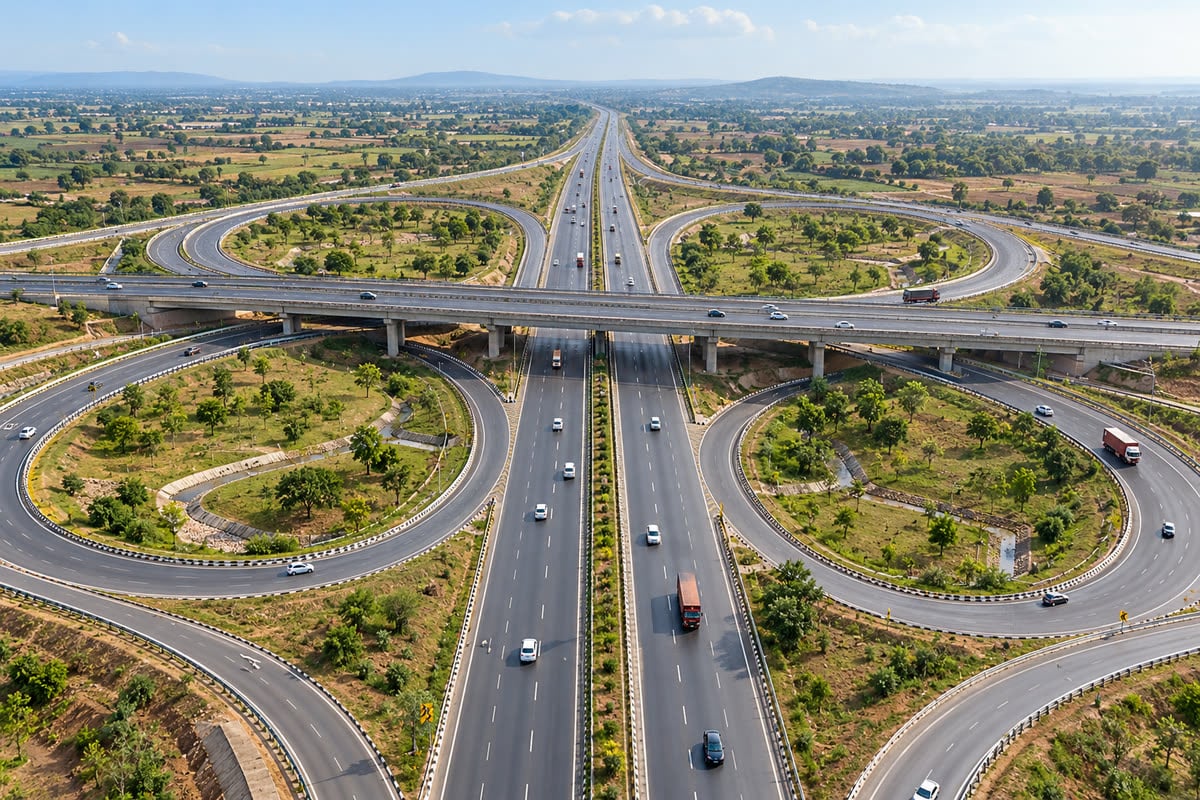
NHAI has restricted unplanned soil removal from interchange loops, areas between ramps and carriageways, and similar land acquired for national highway projects. The instruction matters to drivers because preserving ground levels and drainage around ramps can reduce the risk of waterlogging and deterioration during and after highway construction.
Key takeaways
- Land inside interchange loops, between ramps and carriageways, and similar NHAI-acquired areas cannot be used as a convenient borrow area for unrelated construction work.
- Excavation that is part of an approved design remains allowed for foundations, structures, grading, drainage and authorised cut-and-fill work.
- Work beyond the approved drawings, levels or quantities needs prior written approval supported by technical details.
- The reported instruction does not announce a new toll fee or FASTag payment rule; its effect is on highway project planning and contractor compliance.
What NHAI's restriction changes
The New Indian Express reported on 24 October 2026 that NHAI has restricted the borrowing or extraction of earth from land enclosed within interchange loops, between ramps and carriageways, and from other similar areas acquired for national highway projects. The report said the land should not be treated as a borrow area merely because it is available within the project right of way or is convenient for moving soil.
Hindustan reported on 23 October 2026 that the NHAI directions were issued on 22 October 2026 and cover acquired areas around highways, expressways and interchange loops. The two reports point to the same operating change: project agencies must bring construction earth from an approved source instead of removing it from protected highway land simply to reduce transport or material costs.
What remains permitted
The restriction is not a blanket ban on every excavation near a highway. Excavation specifically required by the approved highway design remains permitted for foundations, structures, designed grading, drainage works, cut-and-fill operations and other authorised engineering purposes.
Even then, the excavation has to stay within the approved drawings, ground levels and quantities. If a project needs work beyond those requirements, the reported NHAI direction requires prior written approval from the competent authority. The proposal must include a technical justification, proposed ground levels, drainage arrangements and an assessment of how the work could affect the land's intended use.
Why the change matters for highway users
Interchange infields are not just spare land between roads. They can be used for plantation, landscaping, ecological improvements and drainage management. Unplanned removal of soil can leave depressions, change how rainwater moves and create places where water collects. That can make later restoration more expensive and can affect how safely water is moved away from ramps and carriageways.
This is consistent with the wider approach in the Ministry of Road Transport and Highways' high-speed highway guidelines released in September 2026. The official release says loop areas and spaces below flyovers are part of landscaping plans, while drainage planning should identify water disposal points and help prevent waterlogging around underpasses, flyovers and depressed medians.
For a driver planning a long highway journey, the practical benefit is gradual rather than immediate. A project-level restriction cannot remove every pothole or guarantee that a particular interchange will stay dry, but it gives engineers and supervisors a clearer requirement to preserve the land and drainage arrangements that are meant to support the road. Use the road-trip planner when comparing a route that includes new interchanges or expressway construction.
What it means for toll users and transporters
There is no announced change here to the amount charged at a toll plaza, the operation of FASTag or the eligibility of a toll pass. The notice is about how highway projects use acquired land. Toll users can still estimate route charges with the toll-charge calculator and should treat any construction-related diversion or delay as a separate route condition rather than a new toll rule.
For fleet operators, the main issue is reliability during the construction period. A poorly managed interchange can create detours, slow merges or waterlogging that add time and fuel use even when the toll itself is unchanged. Comparing the route's fuel requirement through the fuel cost calculator can help separate the fixed toll amount from the operating cost of a longer or slower route.
What project agencies must check now
- Whether proposed earth is being taken from an interchange loop, an area between a ramp and carriageway, or another NHAI-acquired parcel that is intended for a highway-related use.
- Whether the excavation shown in the site plan matches the approved drawings, levels and quantities.
- Whether drainage paths, water disposal points, plantation areas and future highway use remain protected after the work.
- Whether a written approval and technical justification are in place before any excavation beyond the approved design is considered.
NHAI has also directed concerned officials to monitor compliance and prevent unauthorised removal from the specified areas, according to the New Indian Express report. That makes the rule relevant to ongoing projects as well as new highway works.
What drivers should watch next
Drivers do not need to make a new FASTag payment or change a vehicle document because of this instruction. The visible effect, where projects implement it properly, should be better-preserved interchange land, more disciplined drainage work and fewer construction decisions based only on the convenience of a nearby soil source.
If a toll or user-fee transaction is wrong, the government says highway users can use the 24-hour helpline 1033, their FASTag issuer's helpline or the RajmargYatra app. That channel addresses user-fee grievances; construction hazards and waterlogging should be reported through the relevant highway or project authority as well.
Reader takeaway
NHAI's reported restriction is an upstream construction-control measure, not an immediate toll hike or FASTag change. Its value for road users will depend on project teams preserving the ground levels and drainage systems around loops, ramps and carriageways while carrying out only the excavation that the approved design requires.
Sources
- The New Indian Express, “NHAI restricts soil excavation, removal near national highway interchanges and ramps”, 24 Oct 2026
- Hindustan, “बुनियादी ढांचे की नींव खोखली करने वाली कंपनियों पर शिकंजा”, 23 Oct 2026
- Press Information Bureau / Ministry of Road Transport & Highways, “NHAI Guidelines to Strengthen Technology Integration and Sustainability in Development of High-Speed National Highway Corridors”, 24 Sep 2026
- Press Information Bureau / Ministry of Road Transport & Highways, “FASTAG BASED TOLL COLLECTION AND DIGITAL TOLLING SYSTEM”, 22 Jul 2026