The National Highways Authority of India (NHAI) and Sardar Sarovar Narmada Nigam Limited (SSNNL) signed a Memorandum of Understanding (MoU) on 22 Sep 2026 to create a simplified, time-bound approval framework for National Highway, canal and pipeline crossings across Gujarat. The agreement includes a mutual waiver of various fees, charges and levies for crossings covered by the arrangement. For motorists and fleet operators, the immediate point is that this is an infrastructure-delivery measure—not a new toll or FASTag fee announcement—so any direct travel benefit will come only as individual projects move forward.
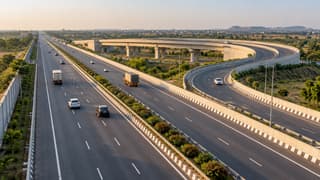
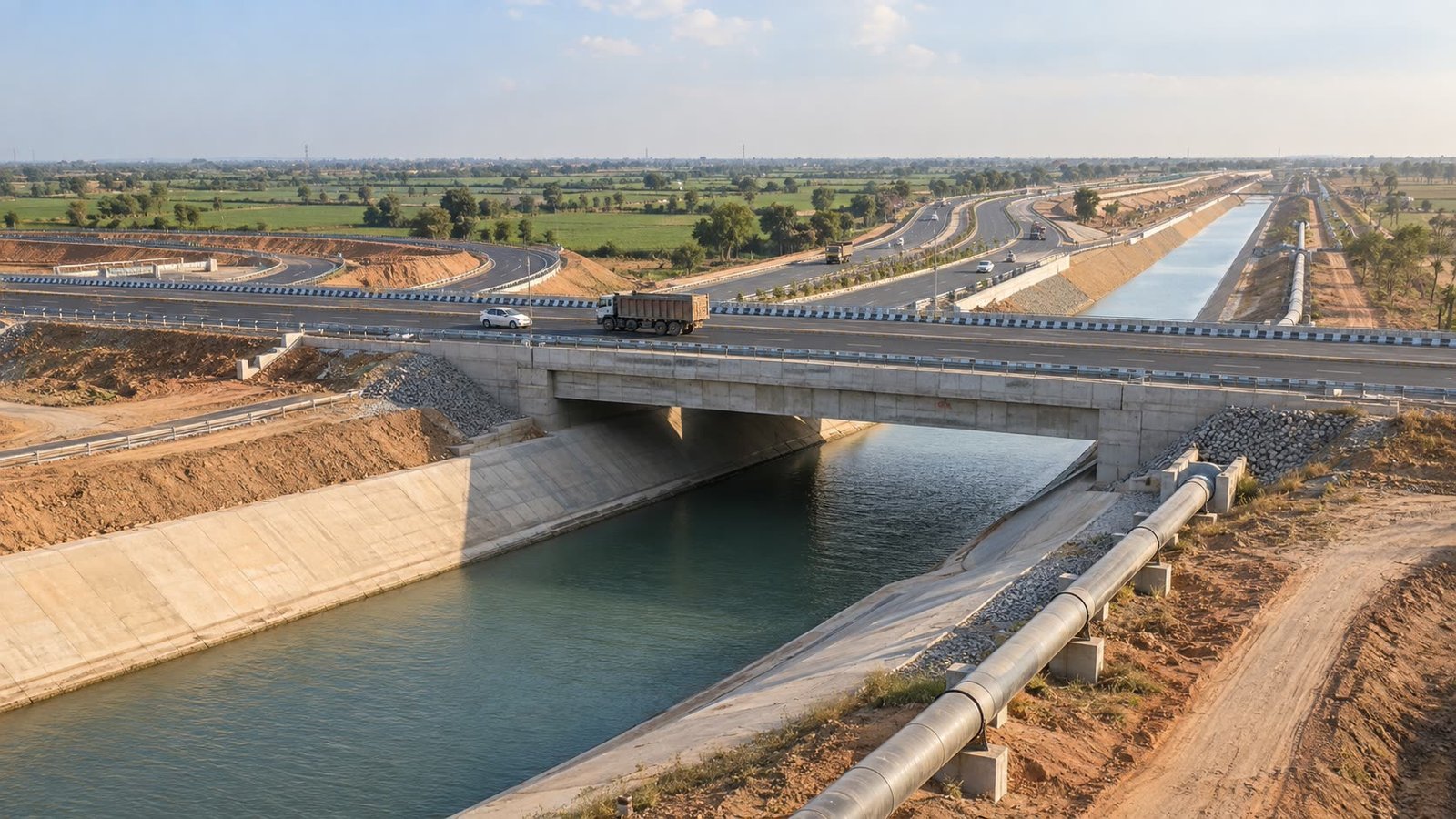
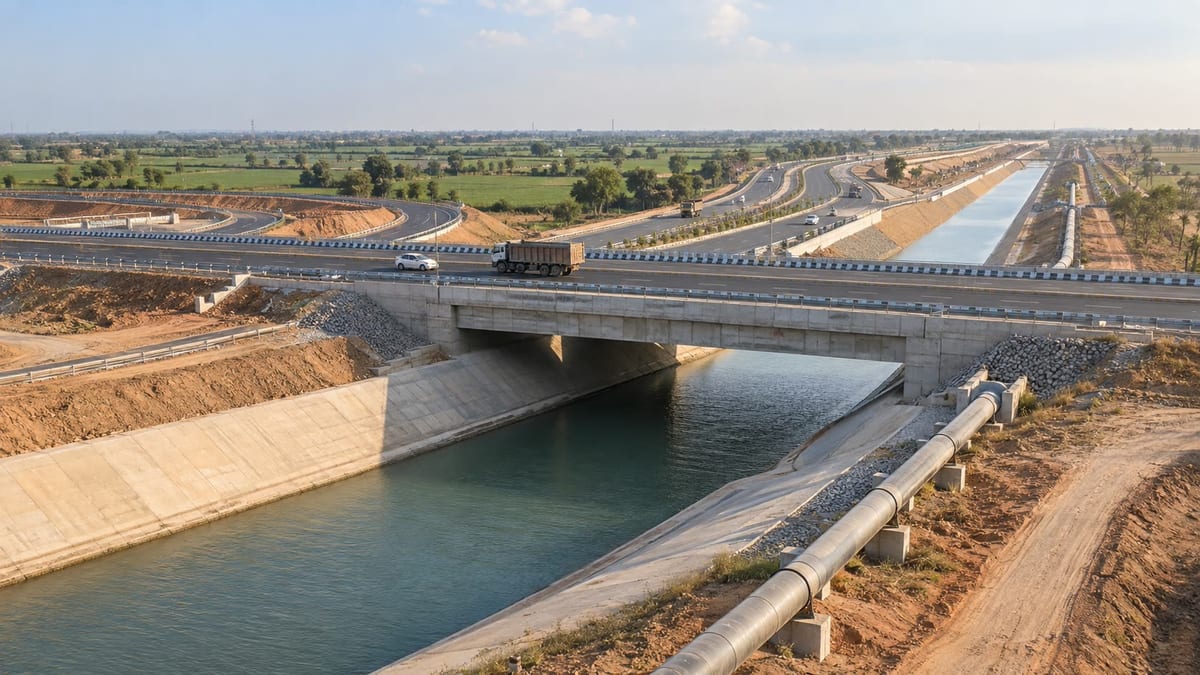 Illustrative highway-and-irrigation crossing; FuelPrice AI-generated image, 23 Sep 2026. It is not an official project photograph.
Key takeaways
- NHAI and SSNNL signed the Gujarat MoU on 22 Sep 2026.
- The framework covers National Highway, canal and pipeline crossings handled under the agreement.
- It provides for mutual waiver of various crossing-related fees, charges and levies.
- Early information sharing, standardised engineering practices and clearer construction and maintenance responsibilities are part of the framework.
- The announcement does not change an existing toll rate, FASTag balance or fuel price.
What the NHAI-SSNNL agreement changes
A highway project can involve more than the road agency that builds or manages the carriageway. A new alignment, widening package or access structure may cross an irrigation canal or a pipeline, requiring the highway authority and the utility or irrigation agency to exchange drawings, approve designs and decide who will build and maintain the crossing. The NHAI-SSNNL agreement is intended to make that coordination more predictable in Gujarat.
Covered fees can be waived
According to the Ministry of Road Transport and Highways release, NHAI and SSNNL will mutually waive various fees, charges and other levies for National Highway, canal and pipeline crossings covered by the MoU. That is a project-level cost and process measure. It is not a reduction in the price paid by a car, two-wheeler or truck at a toll plaza.
The distinction matters for anyone budgeting a journey. A crossing-fee waiver does not by itself change toll schedules, FASTag account rules, fuel prices or state taxes. Those are separate matters and would need their own notification or pricing decision. Drivers checking a planned Gujarat corridor can use the toll charges and trip-cost calculator for the current route information rather than assuming that a project agreement has altered a toll.
Approvals and responsibilities are meant to be clearer
The official announcement says the parties will share project information earlier, adopt standardised engineering practices and define responsibilities for construction and maintenance of crossing structures. The Economic Times also reported that the pact is meant to simplify and speed up approvals by strengthening coordination between departments.
In practical terms, the value is less about a single fee and more about reducing uncertainty at the point where two public infrastructure systems meet. If drawings, responsibilities and maintenance arrangements are agreed earlier, a contractor is less likely to wait for a separate decision before progressing a crossing package. That may help a wider road project maintain its schedule, although the MoU itself does not promise a completion date or a particular reduction in travel time.
What it means for drivers, fleets and toll users
There is no immediate route change for a private driver on the basis of this announcement. The release does not name a newly opened corridor, give a kilometre figure, publish a toll table or announce a FASTag rule. It also does not say that an existing toll will be reduced or removed.
The possible user benefit is later and project-specific. A highway crossing that is approved and delivered with fewer administrative delays could eventually support a smoother bypass, safer junction or more direct freight movement. For a truck or bus operator, fewer detours and less waiting can reduce fuel burn and operating hours; for a private traveller, a completed link may make a route more predictable. Those are potential outcomes of faster project execution, not savings confirmed by the MoU.
For longer journeys, the road-trip planner can help compare route options once a particular Gujarat project is open and its traffic arrangements are known. Until then, users should treat the agreement as a framework announcement rather than evidence that a new road is ready for traffic.
What to watch next
- Project-specific notices: NHAI and the relevant Gujarat agencies will need to publish the corridor, package or crossing details to show where the framework is being applied.
- Construction and traffic management: A project can still involve diversions, temporary closures and speed restrictions while a crossing is built. These will be communicated separately from the MoU.
- Maintenance ownership: The agreed responsibilities should become clearer as individual crossing designs and work orders are finalised.
- Separate toll decisions: Any change to a user fee would require a separate authority or concessionaire announcement. The 22 Sep 2026 release contains no toll revision.
Reader takeaway
The NHAI-SSNNL pact removes a coordination and cost hurdle for covered highway, canal and pipeline crossings in Gujarat. It may improve the odds of smoother project delivery, but it does not immediately lower what a driver pays. When a relevant corridor is announced or opened, compare its toll, distance and fuel requirement with the existing route using the fuel cost calculator and the official route notices.